Frontier Foundations: A Love Letter to the Wild
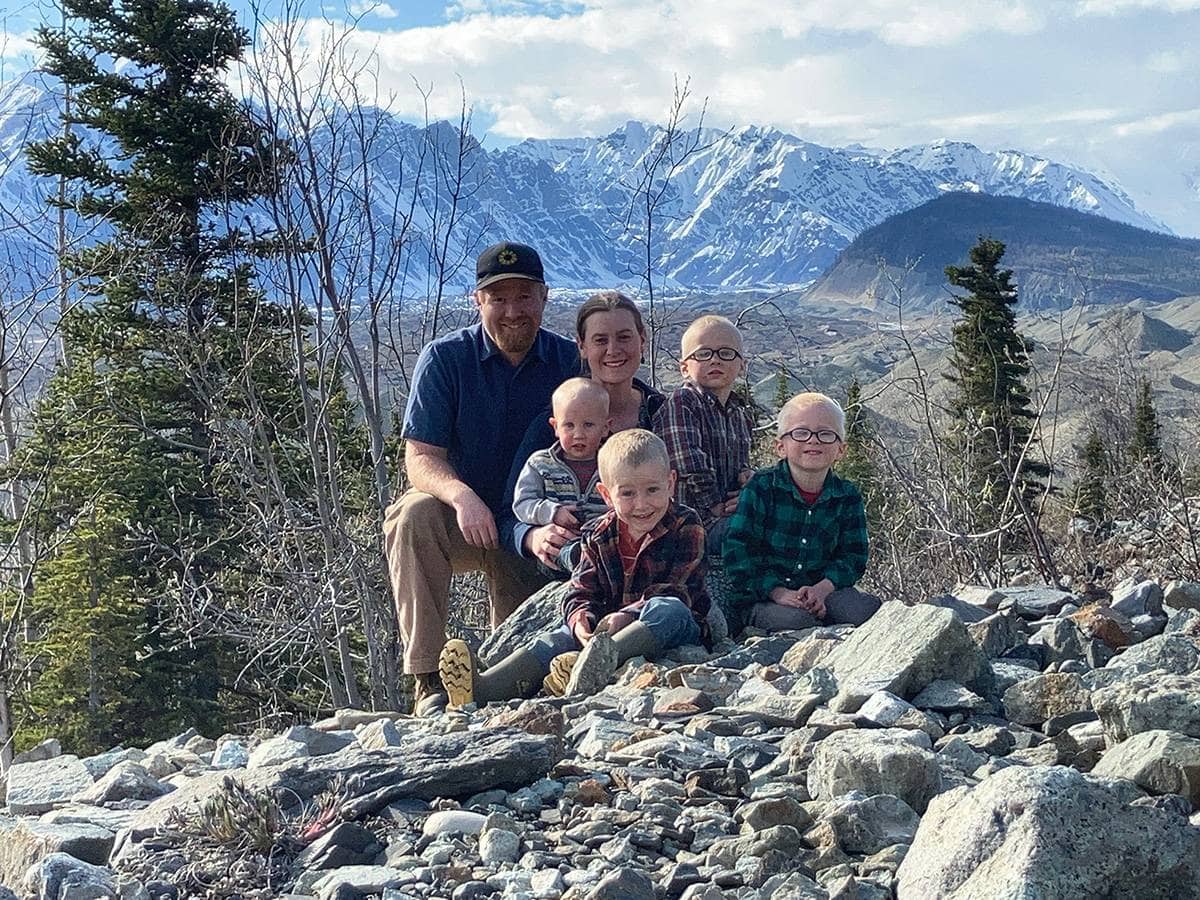
In the lower 48, we often measure the success of our gardens by the first red tomato of July, or by the weight of a summer squash. But for Hannah and Keenan Herrmann, young parents building a life in the heart of the Wrangell-St. Elias National Park, the successes – and the stakes – are a bit different.
In the remote corners of Alaska, a garden isn't just a hobby; it’s a testament to grit, a hedge against isolation, and a beautiful, slow-motion conquest of “hungry country.”
It’s also key to survival.
The Herrmann’s story, part of our Saturday Stories series, might seem worlds away from a tale told from a suburban plot in Alabama, or from a homestead in Upstate New York. Yet, at its core, it’s a universal yarn – of returning to the land, of prioritizing family, and of the quiet satisfaction that comes from building a life by the sweat of your own brow.
Whether you are hauling water from a mountain stream, or just trying to live a little more intentionally, Hannah and Keenan’s journey offers inspiration for finding resilience in the wilderness – and in ourselves.
Born of the Tundra
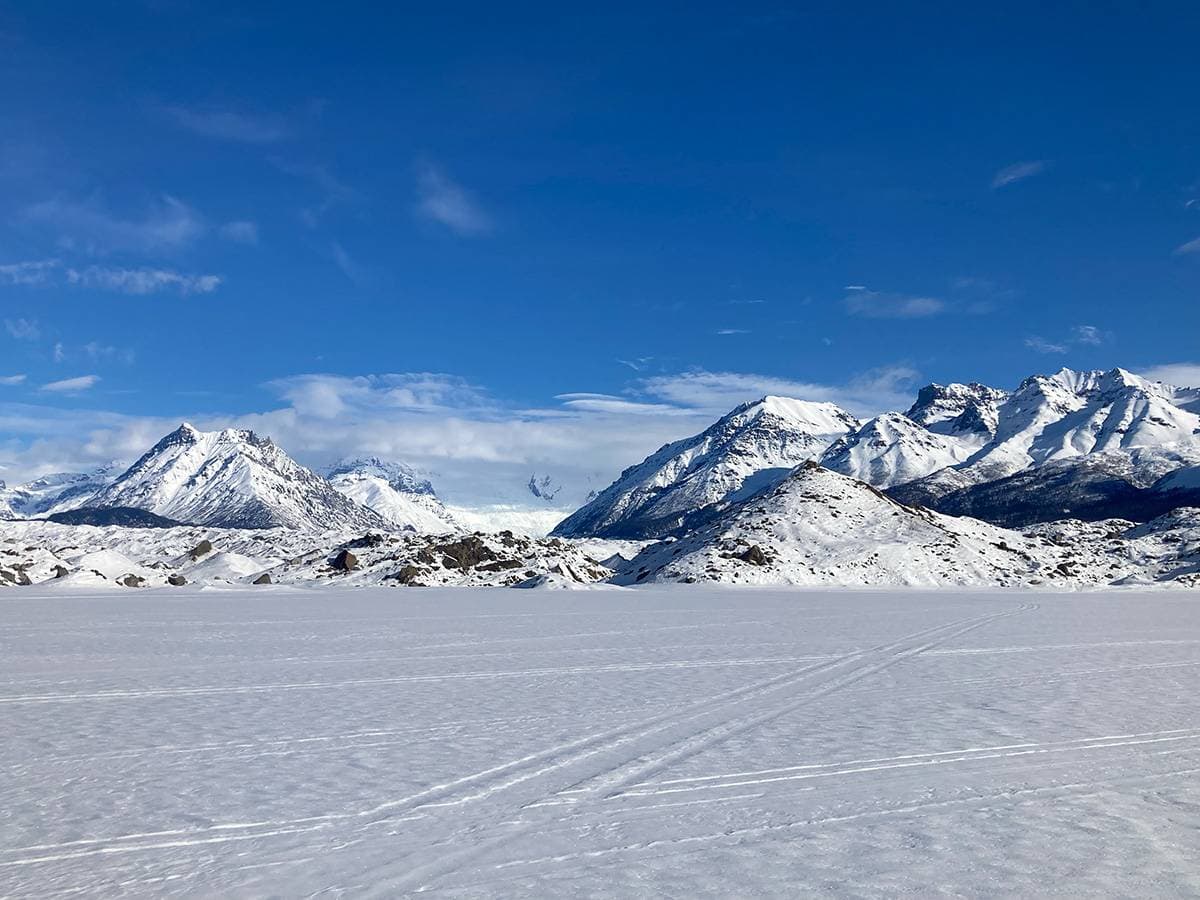
For many Alaskans, the “off-grid” lifestyle isn't a modern trend; it’s a generational heritage. Hannah grew up in McCarthy, a tiny community tucked into the southeast corner of the mainland, where the mountains are vast and the glaciers are everywhere. Raised in a home where they produced their own power and water, she learned early on that preparedness wasn't a choice – it was a survival skill.
Keenan’s upbringing in Dillingham, Southwest Alaska, followed a similar rhythm. While most of his peers were drawn to the commercial fishing industry, Keenan grew up on a small-scale market garden farm just outside city limits. His father was a plumber by trade, and his day job “supported his farming habit.”
You can take a boy out of Alaska…
When Keenan came of age, he decided to leave home to pursue a dream: mission aviation. He found an excellent training program and moved to Michigan to earn his aircraft mechanics license. While there, he says, the “heat” – yes! Michigan was too hot! – got to him. So did the city.
After earning his license, he heeded the strong, magnetic pull of the north. He had missed Alaska’s lack of regulations, and, of course, the kind of true, untouched wilderness long gone in most of the Lower 48.
Hannah felt that same pull towards the wild, the kind she’d grown up with as a child. When the two married, they didn't look for a life of convenience; they looked for a place where they could build something from nothing, where nature would inspire awe and respect.
Building on Untouched Soil
In 2022, the couple moved to McCarthy. Hannah had family there, and the area was one of the most picturesque and demanding in all of Alaska. Later, they would start their own plumbing and heating business. (No A/C needed. 😉)
But first, they needed a home. They purchased ten acres of property that, as far as they could tell, had never seen human influence in all of its history.
“We were literally starting with 100 percent untouched, virgin land,” Hannah says. “Keenan’s amazing… he’s a jack of all trades, and I have some skills, too. We knew we could tackle it. Between the two of us, we got to work carving a home out of the mountainside.”
Building a home in the unforgiving Alaskan wilds requires grit, a focused mindset, and a determination to squint at the landscape with an eye for opportunity.
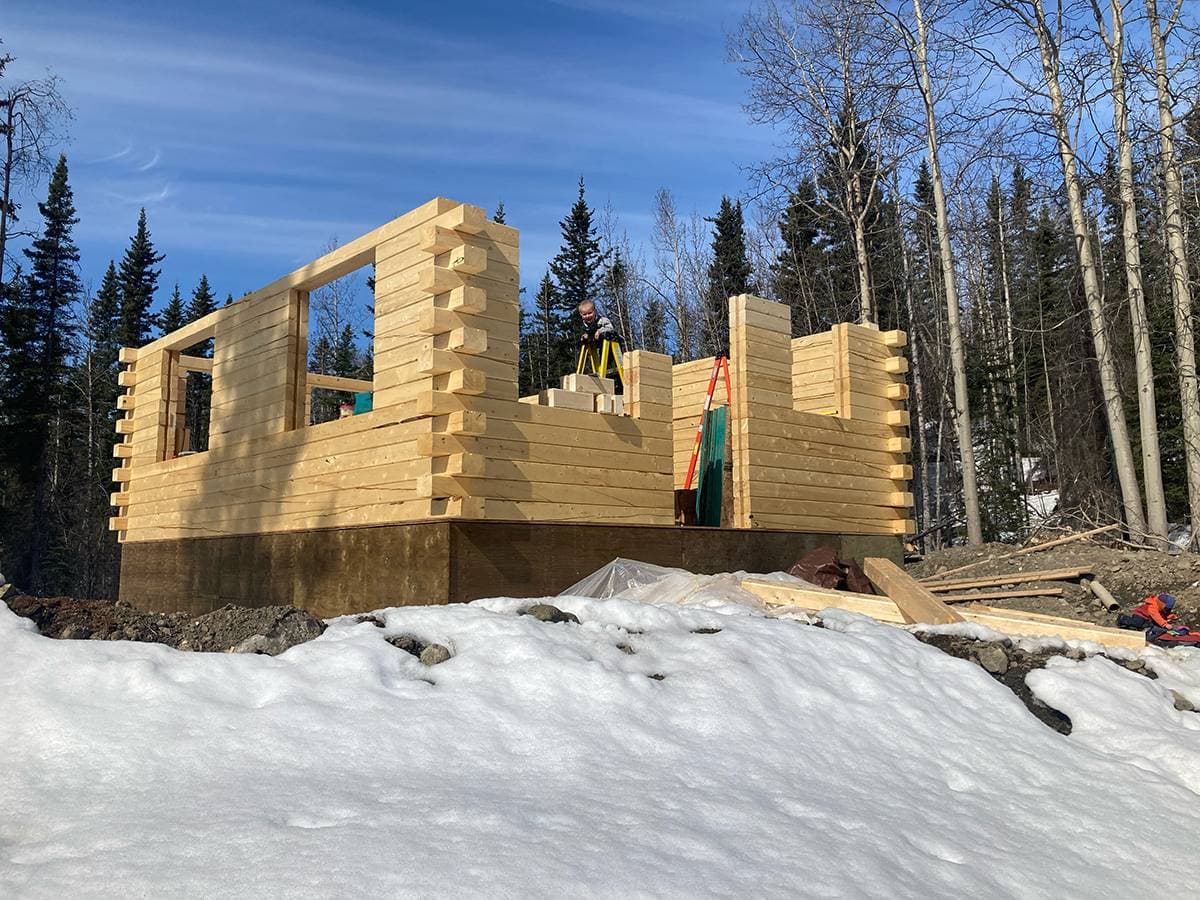
For example, the couple’s prized vehicle is not a truck, but rather a snow machine. One December, Keenan used his to his to locate, commute to, and transport all the timber the family would need to build their cabin.
Yes, December. That’s the ideal time to travel over the rock-hard, frozen rivers that act as winter highways. For weeks, Keenan would drive the machine miles downriver, to a stand of good trees, felling and moving log after log to the river bank. He’d then transport as many logs as he could carry back up the river, to the couple’s property.
The logging was back-breaking work – literally. Keenan suffered a broken rib during the process, yet the structure went up.
In Alaska, community isn’t an option
The structure went up because of the community around them, only about 50 people deep in the winter. (The population ticks upward, towards a whopping few hundred, when the summer tourists arrive.)
In remote Alaska, Hannah says, people “take pride in taking care of themselves.”
It’s rare to ask for help, but those same fiercely independent residents don’t hesitate to jump in when they notice a dire situation.
Keenan broke his rib in early spring, right as the river highways were about to melt into floating ice. There was precious little time to gather logs, so a neighborhood coterie jumped onto their own snow machines and got to work. Inside of a day or two, the volunteers had deposited all of Keenan’s logs onto the couple’s property.
“That’s community around here,” Keenan says. The couple modestly admit they’ve aided others in need as well.
As he recovered, Keenan spent most of the spring literally hammering away at the log cabin, and, by June, a month when the sun barely sets, the family moved in. At the time, the cabin had “no doors, no windows, and no ridge cap on the roof, but it didn’t matter, because we were home.”
For Hannah and Keenan, the priority was clear: shelter first, everything else second.
This meant their first year's garden was, in their words, a “sad excuse,” yielding only a single meal of kale and a few turnips before the local moose decided to help themselves to the rest.
But in the wild, you don't count failures.
You count little wins, and lessons.
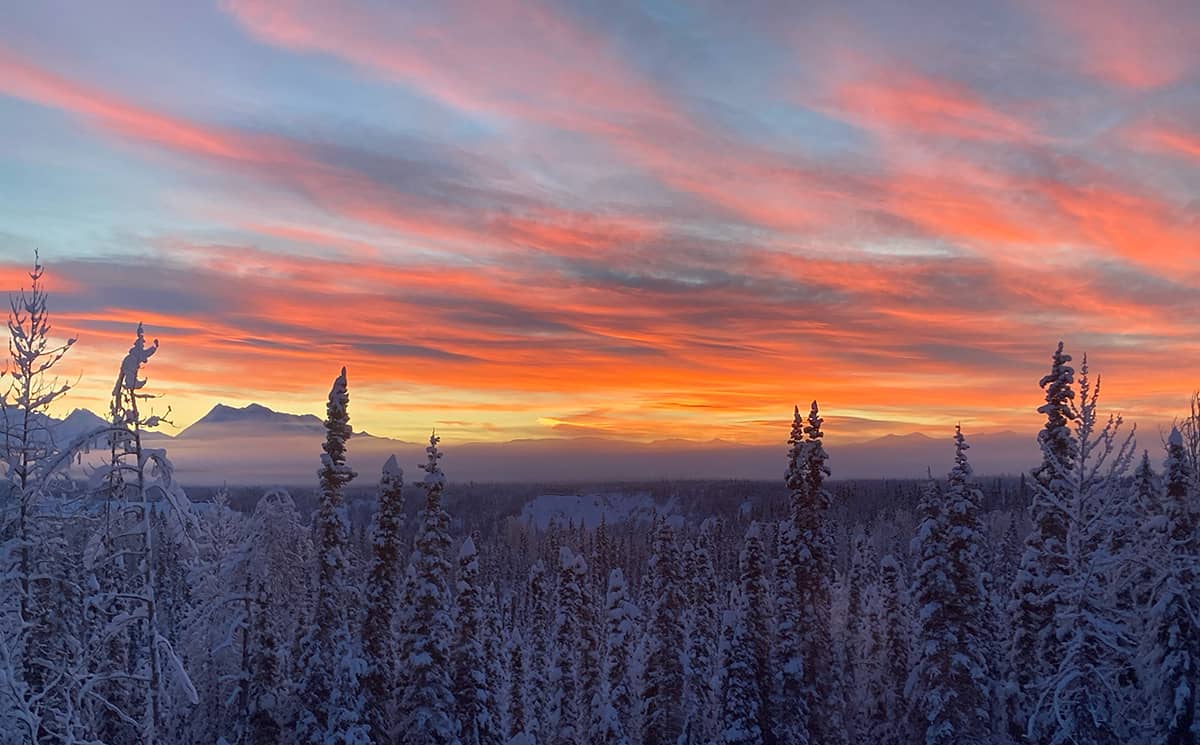
The Holy Grail of the North
Once they were settled in their home, Keenan and Hannah set out to grow food. Yes, Keenan could (and does) bring back provisions from the city when making business runs, but this is a frugal family. And besides, eating from the store simply isn’t nearly as satisfying as growing it yourself.
But growing it themselves would be no easy task for the Herrmanns.
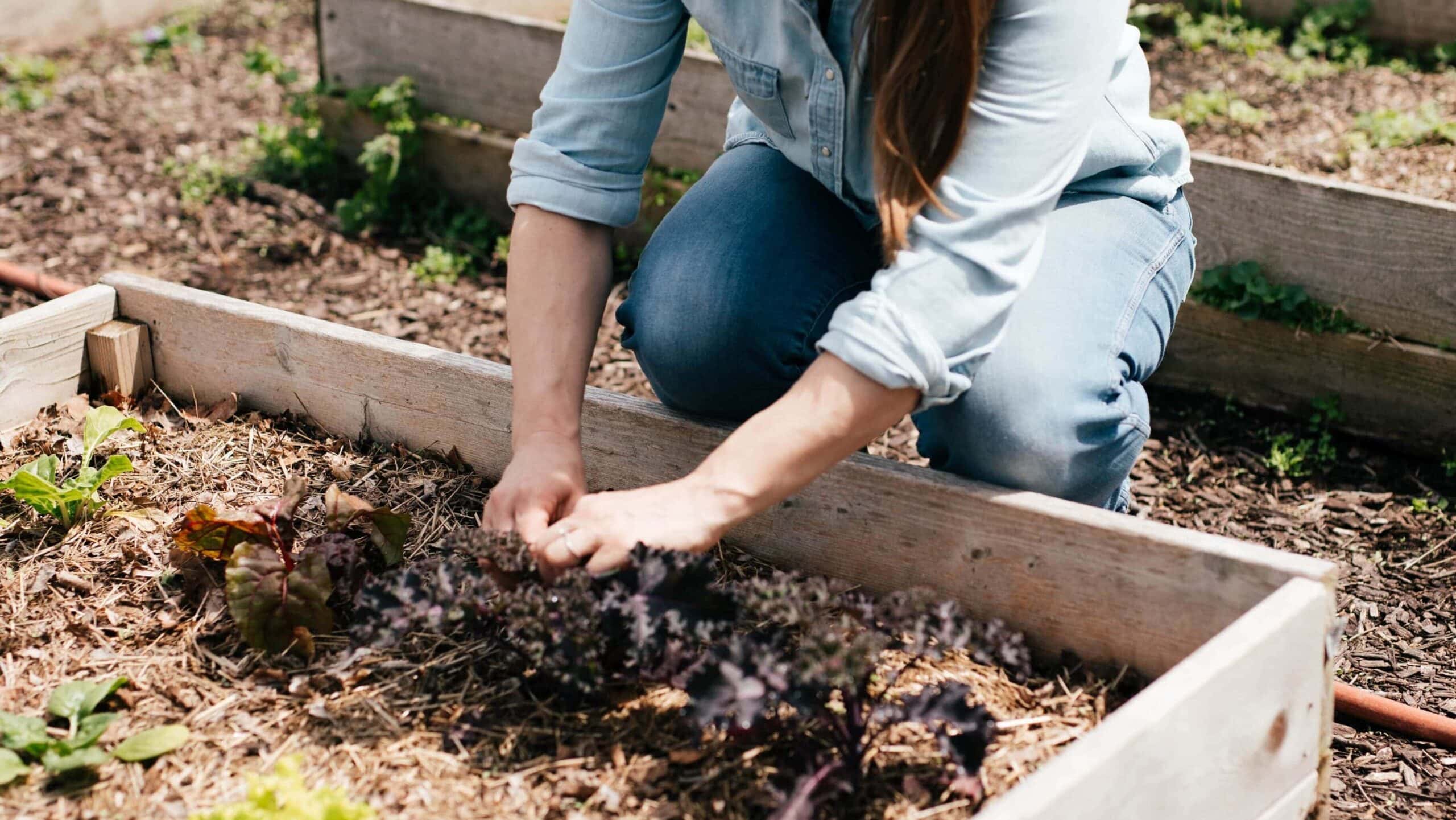
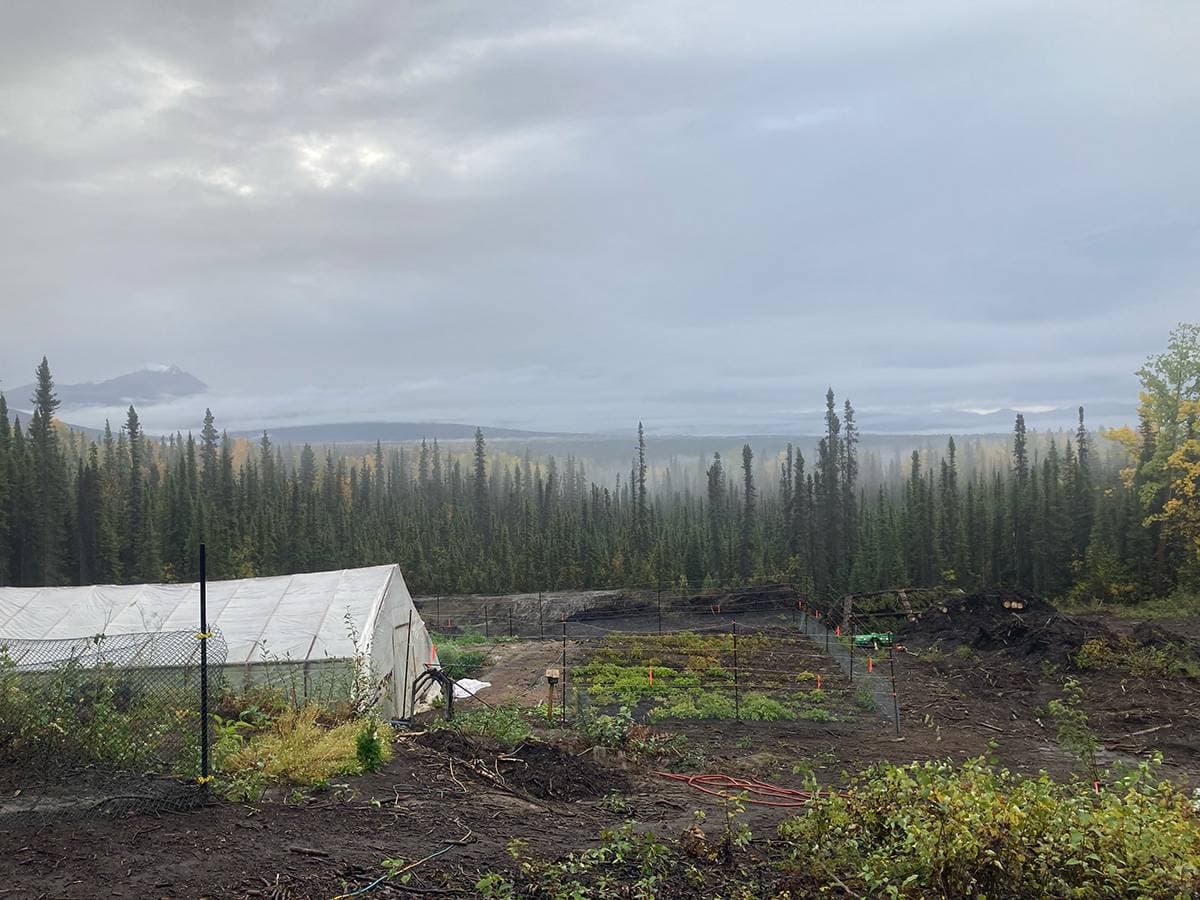
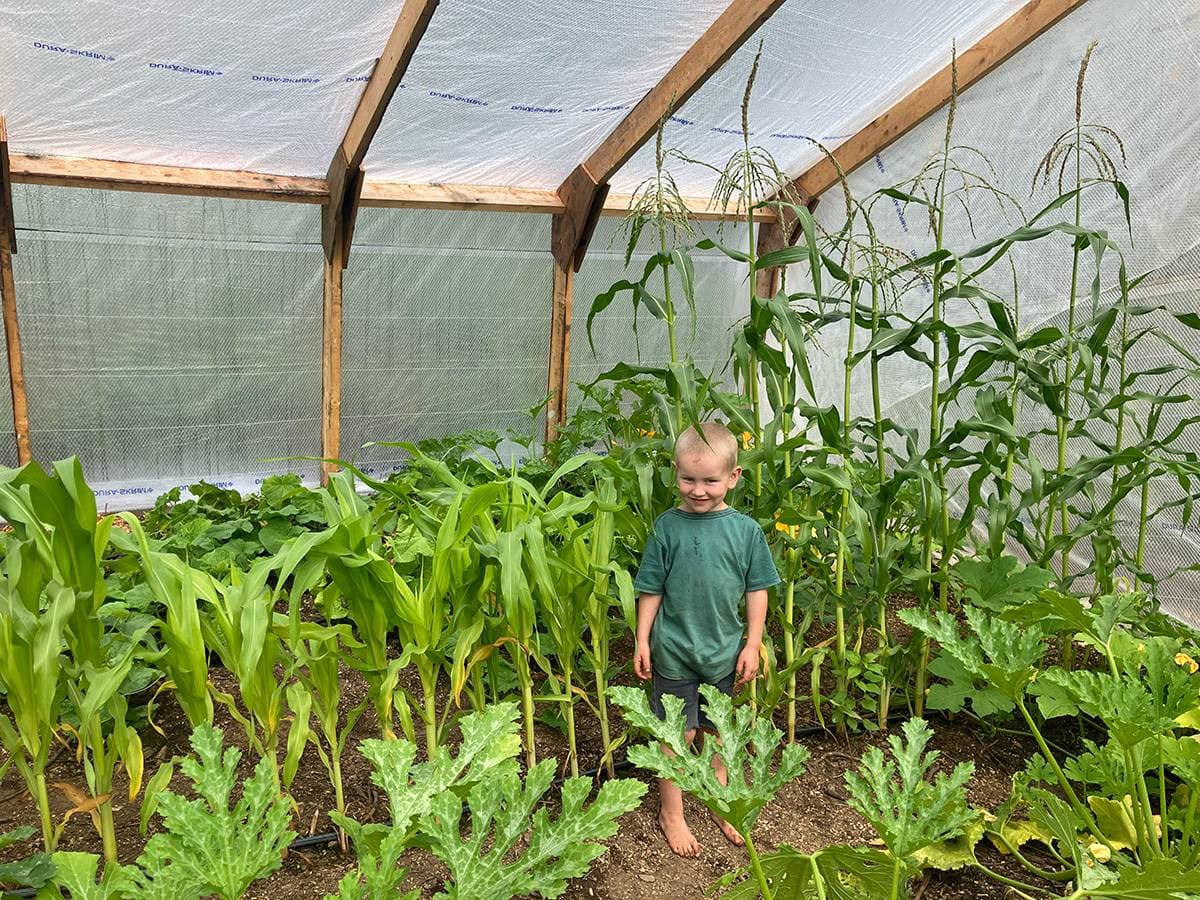
Gardening in Alaska, and particularly in McCarthy, is an exercise in patience and experimentation. While the summer sun does indeed provide intense light, the soil on the Hermann’s property is poor – a mix of tundra peat and glacial clay. To improve it, the family composts chicken manure and “perfectly organic” spruce shavings from a local sawmill.
Despite the hurdles, which still include moose, Keenan and Hannah have found success with staples such as potatoes, carrots, and brassicas. But the family likes a challenge, and they know that the real victory lies in the “warm” crops.
“Tomatoes are the holy grail of gardening achievements in Alaska,” Keenan says. Last year, the Herrmanns successfully harvested 50 pounds of them, thanks to a makeshift high tunnel built of board scraps and construction plastic.
Living so far from a grocery store – a seven-hour drive to Anchorage – also means that the family’s diet is dictated by the seasons, and by what’s in storage.
Hannah makes nearly everything from scratch, from sourdough bread to condiments, to avoid the refined sugars that trigger Keenan’s migraines. Protein comes largely from the wild: salmon, black bear, and moose harvested from the surrounding Wrangell-St. Elias wilderness. Much of it sits in the family’s freezer, their personal grocery store.
“We prefer it that way, anyway,” Hannah says of their scratch-made life. Self-reliance also extends to medical care, of which Hannah also has learned a great deal. Growing up in the area, without a hospital nearby, and now several hours from the nearest urgent care facility, Hannah has always known that medical skills are vital for survival.
To that end, she has “an incredibly well-stocked medical supply kit; everyone does around here.” She supplements that kit with the abundant, wild medicinal herbs that surround the family: highbush cranberry, yarrow, and rose hips all grow right on their property. (As for that broken rib, Keenan, who knew that little could be done by doctors, simply powered through the healing process.)
One Step at a Time
When asked what advice they would give to anyone dreaming of a more self-reliant life – whether in the Alaskan bush or in small town Alabama – Hannah and Keenan recall a piece of wisdom they were once given. When Hannah’s father found out the couple was expecting twins, his response was simple:
“One step at a time.”
“Homesteaders are infamous for our overachieving, overambition, and burning out,” Keenan reflects. “You prioritize what’s important, and you take it one step at a time. That’s why we don’t have that dairy cow I really want… yet. We have a few things yet to do [first].”
The couple acknowledge that enjoying challenges is also key to embracing a less convenient life, one where you are more producer than consumer, where you rely less on big systems, and where the benefits of all that daily work include jaw-dropping beauty, satisfaction in accomplishment, and a well-earned night’s sleep.
The Herrmann’s story, in other words, is a reminder that the “good life” isn't necessarily the easy one.
It’s the one where you know where your water comes from, where your neighbors jump in to help you haul logs when you're hurt, and where a single tomato represents a season of hard-won triumph.
The one where you are the first, and perhaps the only, people to trudge through virgin snow, and where you notice the exact spring day the swallows return in full force to join you in the fight against mosquitoes.
It’s a life of grit, of gratitude, and of the steady, quiet work of building a foundation that lasts.
And it can be had… anywhere.
You just have to start.
About Saturday Stories
Saturday Stories is a weekly series from the School of Traditional Skills, dedicated to the people in our community who are quietly building a more beautiful, intentional world.
Every Saturday, we highlight a different journey – from urban homesteaders and traditional craftsmen to neighborhood mentors – to show that a life of purpose and self-sufficiency isn't reserved for those with a hundred acres. It’s possible right where you are.