“No gardening. Not [even] much cooking,” she says. CeAnne’s mom had many gifts and interests, CeAnne says lovingly, but cooking necessarily wasn’t one of them.
“So, my husband taught me how to cook, the little he knew. Which was Uncle Ben’s instant rice and frozen stir fry.”
Her one dish was her grandmother’s spaghetti, based on Campbell’s tomato soup.
Years later, she realized she had to learn spaghetti from scratch, too.
“Campbell’s tomato soup has corn syrup in it, and lo and behold I have an allergy to such things.”
She pauses, registering the irony.
“I’ve come from absolutely nothing to everything-from-scratch.”
And how! Not only did CeAnne learn to cook real foods, she learned to grow them, too. She also learned to grow herbs and make tasty, healing teas with them… which culminated in her founding the popular healthy drink business, Farmhouse Teas.
The Learning Curve
That journey from Campbell’s soup to running a farm-based herbal tea business didn’t happen all at once. It happened in pieces.
CeAnne has been sick, in one form or another, since she was about two years old. Her husband Paul – she calls him The Farmer – has also seen illness dramatically affect the arc of his life, having survived cancer years ago.
The irony, CeAnne recounts, is that the Western medical system both saved him and damaged him.
“It took us a good ten years to get him functioning better,” she says.
They got there, eventually, thanks to what CeAnne learned about nutrition. Out went anything processed. In came the kombucha, sauerkraut, and lacto-fermented pickles. CeAnne revamped the family’s diet, changing everything about how they ate.
The transformation in health was a huge lesson for CeAnne, who saw firsthand the power of food (and herbs, which she has been studying for 13 years.)
CeAnne is grateful for modern medicine. At the same time, she’d be very happy to help people avoid ever having to go through what her family went through.
That desire – to hand someone the thing that helped your family and say, here, it’s yours – is how Farmhouse Teas eventually got built.
A From-Scratch Life
Cooking and nutrition weren’t the only new areas of study for CeAnne as she catapulted into adulthood: in her early twenties, she also became a parent, eventually adopting four children from around the world.
Most of the children came from orphanages; with that came a wide range of special needs. One child in particular had tremendous energy when he was little; he’d often huck his shoes over the fence. (Their rental had a small backyard with little room to play.)
CeAnne jokes that she didn’t have the money to constantly buy him new shoes, nor the energy to bother the neighbor, but she knew, in all seriousness, that the kids needed more room, and that something needed to change.
An answer came in a way that may or may not have been an accident (CeAnne sees it as Divine Providence): she came across two books.
The first, from the 1940s, was Rural Roads to Security: America’s Third Struggle for Freedom by Monsignor Luigi Ligutti, focusing on the benefits experienced by families living on homesteads.
Then there was The Out-of-Sync Child, about children with sensory processing difficulties. The therapy tools recommended in that book included balance beams, and carts of books to push down hallways for proprioceptive input.
CeAnne put two-and-two together.
“I thought, ‘Why do we need a balance beam? What about a log on the farm? Why do we need to push a cart of books? What about a wheelbarrow?’”
She connected the two books out loud.
“Why do we need [specialized] therapy? We just need to live on a farm.”
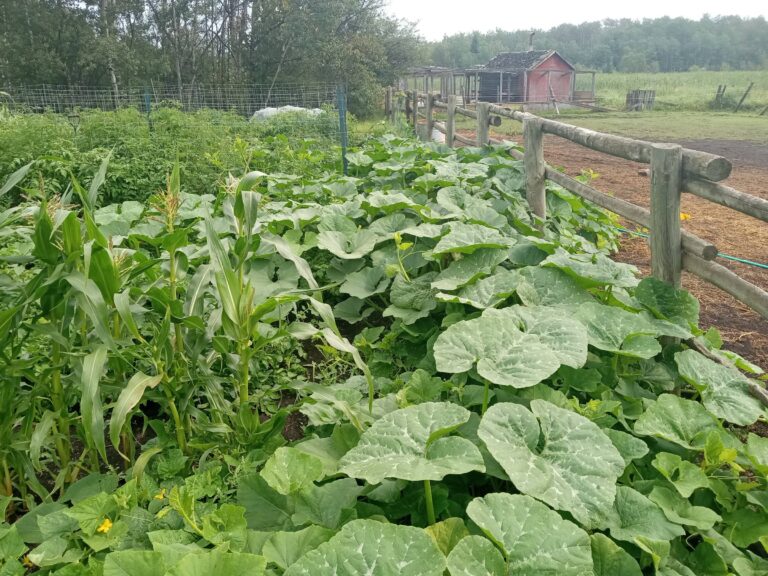
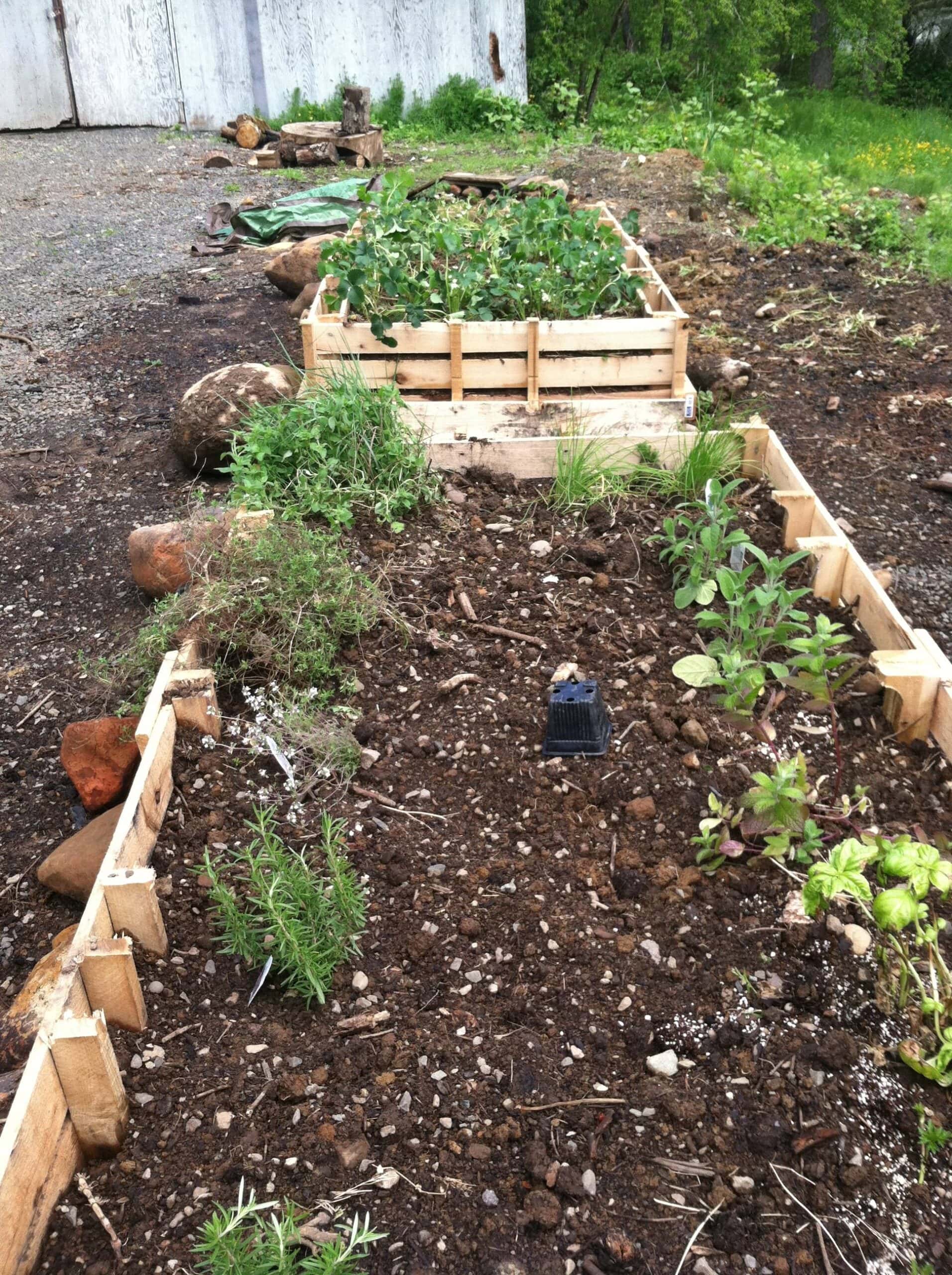
Shortly after that epiphany, the family moved to just shy of two acres outside town. They built three pallet square-foot gardens right away. One of them had mint in it.
“Don’t put mint in a pallet garden,” CeAnne says wryly.
Blooming where she’s planted
Speaking of gardening, CeAnne, again, had had to learn that, too, from scratch.
As is CeAnne’s wont, the learning first started on the page, thanks to a book on square foot gardening.
“I started with one four-by-four bed. I ended up with nine.”
This was back at the rental.
By the time they left it, four years later, the entire duplex yard was gardens. Beans up the back fence. Mini trellises. CeAnne planted to her heart’s content.
“Just whatever. It was exciting and fun to throw some seeds somewhere.”
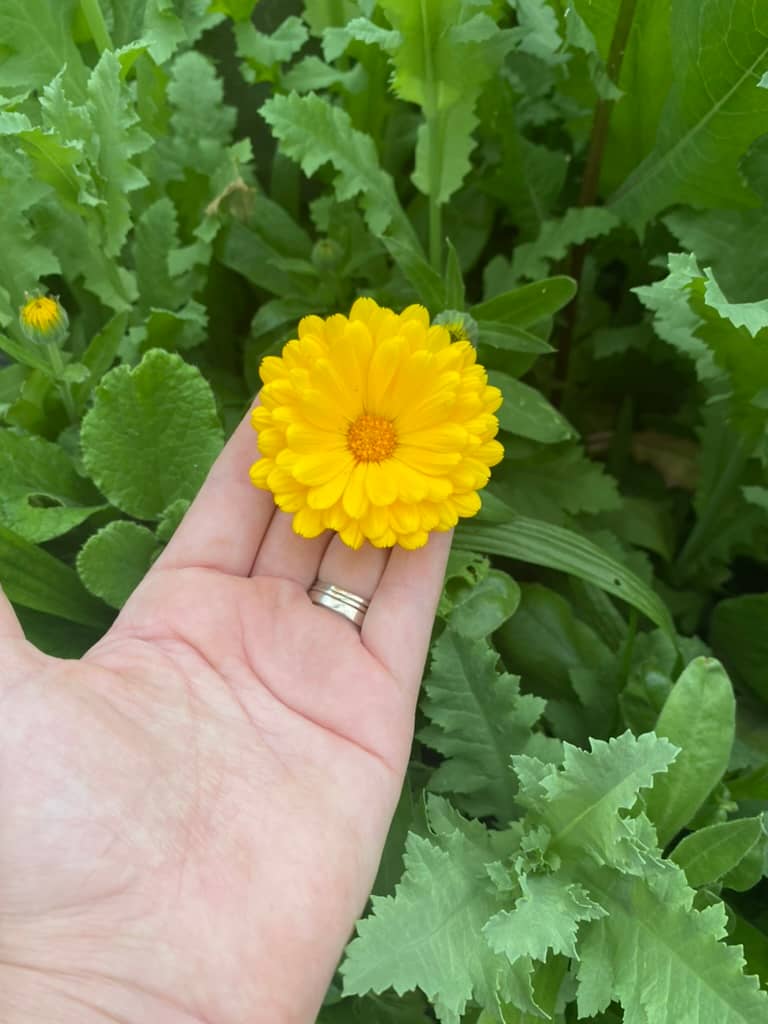
One surprise was the calendula. Early on, CeAnne had planted some seeds on a lark.
“I’d killed every houseplant in existence [before that], so at that point, it was amazing to me that something outside would be successful.”
She cut the flowers; they came back.
She researched what to do with all of them and realized she’d already been using calendula cream; she just didn’t know that she could make it herself.
One day, she made calendula tea.
“And that’s kind of what got me into tea and herbs. It was abundant, and it was working. I had this little win.”
When they moved to the farm, the calendula came too, and bloomed, and blessed the place.
God’s Medicine Cabinet
The farm, CeAnne says, was a medicine cabinet, ready for the using when they arrived.
There was plantain in the yard, a comfrey patch she didn’t plant. One day, she recognized a bloom – marshmallow.
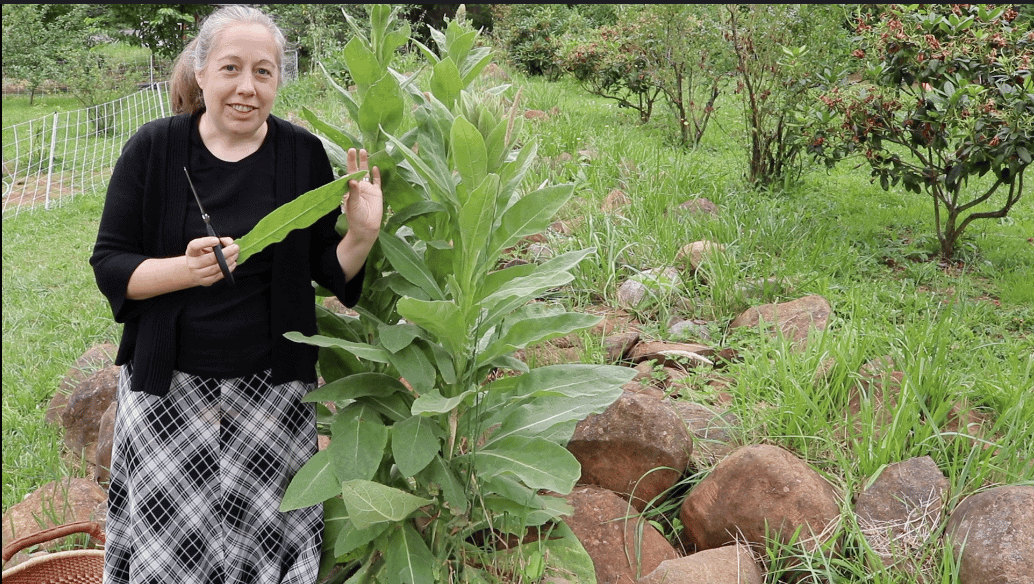
There was also mullein everywhere, which was particularly welcome, since mullein is well known for supporting the lungs and CeAnne had long dealt with chronic illnesses. Her property even has Old Man’s Beard, a lichen that’s fabulous, she notes, for that particular “boggy, damp, weighted feeling that settles in when it’s been gray for six months.” (She’s in the Pacific Northwest.)
CeAnne is an avid herbalist. She sees medicine everywhere.
More importantly, for her, she sees the Maker behind all of it.
“Wherever you live, God placed some plant there for whatever ailment tends to hover in that particular climate,” CeAnne notes. “We’ve got Oregon grape root growing along the highway as landscaping. During covid, I was driving past it, thinking, Okay, antibiotic, antiviral… we need the weed on the side of the road!”
When her husband complained about the Russian olive trees overrunning his home state, she looked them up, suspecting they might just be medicine.
Her hunch was right.
“They’re great for arthritis,” she says, smiling. Someday, if he needs it, she might just make The Farmer some Russian olive tea.
–
What CeAnne wants people to understand about Farmhouse Teas, and about herbs in general, is that none of this is a trend or an alternative. It’s just normal… a normal that somehow got lost along the way.
“Your medicine cabinet and your spice cabinet should be the same thing,” CeAnne says.
“A hundred and fifty years ago, every homemaker knew how to use the weeds in her yard,” she continues. “They didn’t know it was medicine. They just ate the elderberries. They fermented the food to preserve it, not because it was healthy. [These days], we have to find a reason to do things that used to just be… life.”
She describes her approach as “no-woo” Christian herbalism: stewardship of what God made, without injecting spiritism or magic into the plants themselves.
“He made the plants, and He made them to do what they do. It’s not some magical, superstitious thing. I want to make a reel about this someday. Don’t say: ‘She [plants are always ‘she’ in woo-speak] whispers her medicine across the threshold of the body.’ Just say: ‘The elderberry contains antioxidant compounds.’”
CeAnne has been trying to figure out how to say this diplomatically for years. She hasn’t cracked it yet.
“Every time I try and explain it, I get in trouble,” she says, and grins. “Because I can’t say it PC.”
The future of the Farmhouse
Farmhouse Teas started in CeAnne’s garden and kitchen, then moved above the garage.
It’s now a thriving business with a dedicated production facility separate from the home farm, with a full line of teas, herbal supplies, kombucha kits, coffee alternatives, and a magazine called Grow Create Sip.
But it’s also, at its beating pulse, still very much a family business, in the deepest sense of the phrase. CeAnne and Paul have built it to give all of the children, even the ones who will live at home as adults, wonderful options: meaningful work, familiar surroundings, and people who care about and understand them.
It’s working: when the business outgrew the garage and moved to a new facility, one child, who has significant autism, came to CeAnne “glowing” that first day.
“He said, ‘I’m going to work, Mom.’ He was so proud. Even though he’d [already] been working upstairs.”
He works a half day now, comes home, and spends the afternoon photographing the airplanes and birds that pass over the property.
“You wouldn’t believe how many times jets refuel over our house,” CeAnne says. “It’s his relaxing time, and it’s educational.”
CeAnne’s daughter from Bulgaria is the official chicken keeper and calls herself the rooster tamer. She has a goat whom she’s taught to shake hands and to lie down on command. She treats it like a pet.
Each day is “more or less the same,” CeAnne says, joking that it’s not exciting enough for YouTube or Instagram. It nearly always starts with family prayer time. Then the boys, who are older, head to the shop.
CeAnne then teaches the girls catechism; Paul teaches them reading, writing, and math in the afternoons.
The main meal is at noon, a practice that started one Lent four years ago and stuck — digestive systems start winding down at 4 p.m., CeAnne explains, and a big meal at 7 “just sits there.” Moving the big meal to lunch has been a game changer.
“I have more energy in the middle of the day to cook. Though the kids actually do most of it now, because I worked myself out of a job,” she jokes, adding that she does “a lot of sitting and pointing these days.”
In the evenings, everyone comes together again to say the rosary. Then the kids might hang out, play music, or read. One son is studying for his contractor’s license and running what CeAnne calls “business idea number ten or something.” She’s excited for him.
“Our routine is the same every day,” she says again.
Which sounds unremarkable. But for a family assembled across three countries, four adoptions, illness, and ten years of building a business – stability and routine is not nothing.
It’s the whole point.
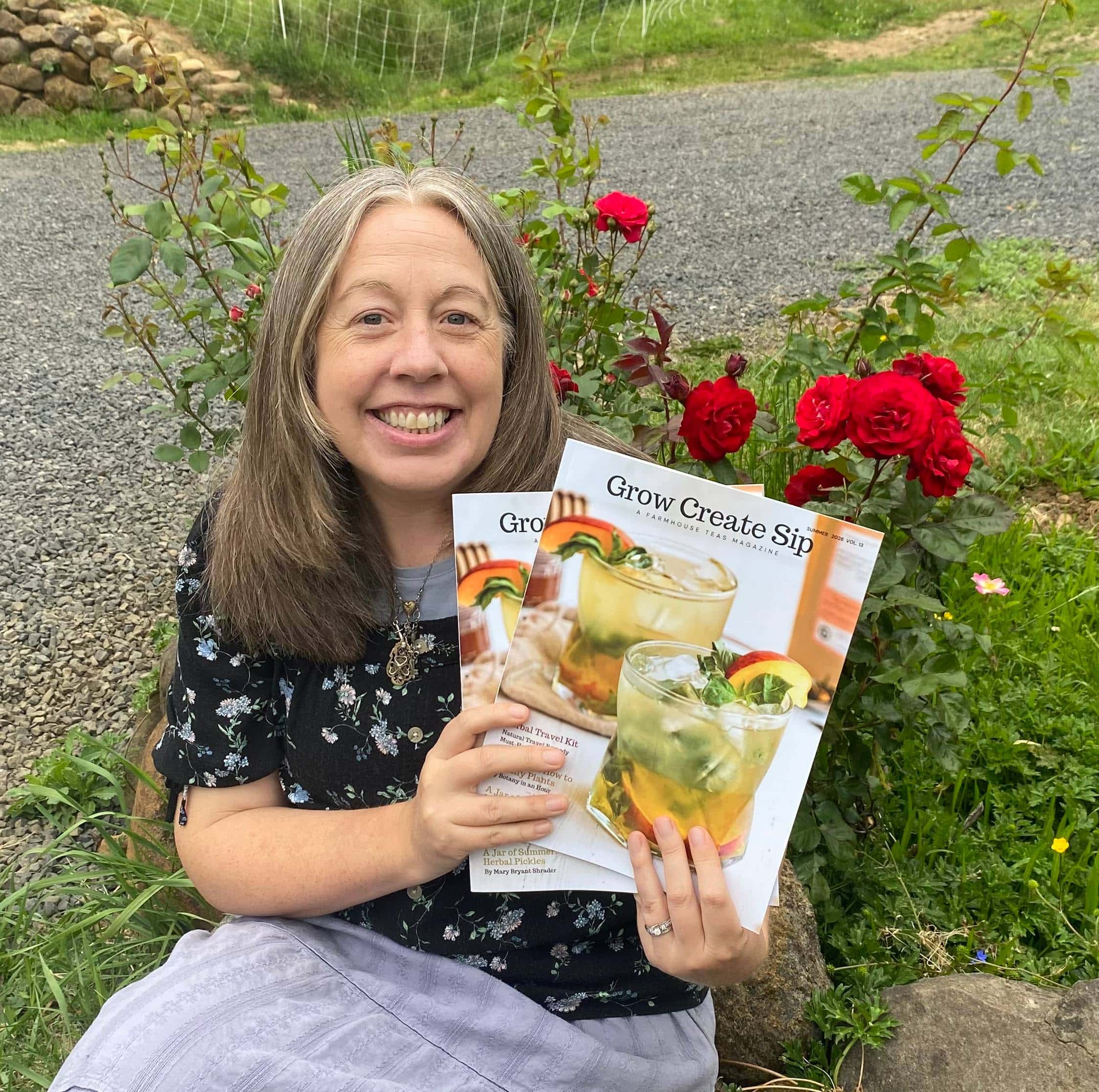
You can find CeAnne at Farmhouse Teas
About Saturday Stories
Saturday Stories is a weekly series from the School of Traditional Skills, dedicated to the people in our community who are quietly building a more beautiful, intentional world.
Every Saturday, we highlight a different journey – from urban homesteaders and traditional craftsmen to neighborhood mentors – to show that a life of purpose and self-sufficiency isn't reserved for those with a hundred acres. It’s possible right where you are.