There was the Smoothie Friend: the high school neighbor whose parents' freezer was perpetually raided for whatever fruit combination the two girls could dream up, blender splotched purple with evidence.
There was the Coffee Cake Friend (as in, cake “made with coffee… not ‘coffee cake,’” notes Brianna): the one who, despite having no particular fondness for a certain math teacher, decided every year to show up to his class with a homemade espresso layer cake with chocolate-covered espresso beans on top – “Because, Why not?” – and who needed Brianna to help pull it off.
Today, there are the Facebook group friends, the School of Traditoinal Skills (STS) friends, the raw milk farm friends.
And then there's the Pressure Canning Friend.
“She definitely has some homesteading skills,” Brianna says.
The Pressure Canning Friend wasn’t a stereotypical homesteader. She was simply a woman who was about to undergo major surgery and knew she needed convenience meals that would help her heal without breaking the bank.
“She knew she would be out from the surgery for a long time and was also in a very tight financial situation,” Brianna says. “And so she pressure canned a ton of meals in a jar ahead of time. That really helped keep things easy and simple.”
When Brianna was ready to try pressure canning herself, having taken Carolyn Thomas’s “excellent STS class,” but still harboring a deep respect for pressurized vessels, she called the Pressure Canning Friend for an in-person tutorial.
“It was really helpful to have someone personally tell me, ‘Yeah, this is what you're looking out for,'” she says. “She wasn't at rebel canning level. She was following the recipe, but she had canned tons of broth so she didn’t need it.
“It was so nice to have someone in person saying, '10 PSI is fine. No worries.'”
They canned chicken broth together. It worked. The pressurized vessel did not explode.
Learning skill after skill is all part of Brianna’s Master Plan…
The garden she forgot to water
Brianna grew up in coastal Virginia, ten minutes from Colonial Williamsburg, in the kind of suburban neighborhood where HOAs have strong opinions about front lawns.
This did not stop her, at roughly age ten, from planting 25 watermelon seeds in hers.
“My parents probably breathed a huge sigh of relief that I forgot to water them,” she says.
She wanted chickens, too. The HOA had thoughts about that as well.
What she got instead were occasional visits to farm Open House days, a Boy Scout survival book borrowed from her brothers, and a mother who, though “not a from-scratch cook” by nature, believed firmly in feeding her family real food.
No Crisco. Sure, Stouffer's lasagna made the occasional appearance, but the instinct was there: ingredients over products, whenever possible.
“My dad accidentally bought white bread one time,” Brianna says. “There was much rejoicing among the children…
“But not with my mom.”
Over the years, Brianna dabbled in projects, learning to sew, to bake and help with those chocolate-coffee cakes, etc. Nothing really “stuck”, but for Brianna, the desire to grow things and make things, to produce rather than just consume, was always running underneath, looking for an outlet.
It just hadn't found the right conditions yet to bloom.
Learning fast and on the fly (and a shoestring)
After graduating with a degree in psychology, Brianna married her engineer fiancé, Evan, in January 2020 – “Thank goodness,” she notes, “because we almost waited until May” – and found herself, almost immediately, navigating a tight budget in a new city while her husband finished his PhD.
She temped. She dog-sat. She tutored. At home, she made things from scratch because she couldn't afford not to.
“I remember texting a friend: I made a chicken pot pie from scratch!” she says. She then filled the rest of the text with a lament about how much work it had been to cook all the ingredients first.
“And she goes, ‘Brianna – people normally make a pot pie after they had a rotisserie chicken the night before.'”
She laughs. “That blew my mind.”
She kept going.
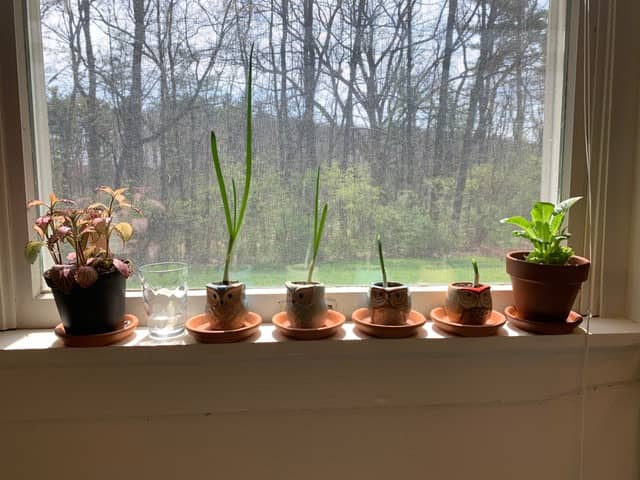
Making cents – and sense – of Real Food
For Brianna, who knew she wanted to stay home once she started having children, learning skills came down to one core issue: the budget.
She and Evan didn’t yet have a garden of their own, and local purveyors were few and far between, so the grocery store was where they needed to concentrate their money.
She wanted to eat healthful foods, but she also couldn’t afford to go 100% organic. That didn’t stop her from focusing on ingredients and avoiding ultra-processed foods.
From the beginning, she has bought the highest quality ingredients her family can afford. She’s dogged about per-unit pricing. For example, instead of one pack of chicken breasts (the most expensive cut there is), she’ll purchase value packs of chicken, then divide and freeze them. She’ll also plan meals based on what she has, buying meat on sale before she needs it.
“Carolyn Thomas talks somewhere about eating what you have [first],” Brianna says. “And it occurred to me… if we butcher a cow one day, that should be the first beef I reach for. It shouldn't be, we're out of ground beef, I'll just go buy more, when I already have roasts in my freezer. That doesn't make financial sense. And it means things get freezer burned. You're also paying money every day to keep that item frozen.”
She pauses. “I'd never thought of it that way before.”
Brianna is equally eagle-eyed about when produce goes on sale. She buys fruit in season. She makes a year's worth of sauerkraut every St. Patrick's Day when cabbage prices dip.
“The fermentation can help break down some of the pesticides and other things we don't particularly enjoy,” she says. “So I really do try to encourage people – even if you do have land, start with the kitchen skills. Even if you can only afford conventional produce, you can ferment it. That's still so much better than ultra-processed food.”
From the kitchen to the rest of the house
Although Brianna has focused on from-scratch cooking, her focus on what’s natural has extended to other aspects of life as well. For example, she has discovered that natural products have made a difference with her health.
For years, Brianna suffered from migraines. She switched to organic personal care products, mostly on a whim when they went on sale for the same price as regular ones. The migraine frequency dropped. Her doctor said: let's work on removing endocrine disruptors. That made a difference with her fertility. (She had also endured a few painful miscarriages and gets “really angry when [she thinks] about the endocrine disruptors” in many products made for women.)
Now she's thinking about making her own soap, too, ultimately from ingredients that her future homestead produces.
She doesn’t have the property yet, so for now, she’s preparing, focusing on the kitchen.
Real Bread Can Taste Good!
When Evan finished his PhD, and the couple moved to New England for his engineering job, they found themselves, for the first time, with a decent grocery budget.
They also had, to their delight, a month's worth of grocery money left over from the frugal tail end of grad school.
Brianna rejoiced. She’d been researching freshly milled flour and its wealth of nutrition, and it turned out that those excess funds amounted roughly… to the price of a grain mill.
“So I bought the Mockmill,” Brianna says simply. “I started experimenting with non-bread items. And then Kristen Noble's class came out at STS, and that was so helpful. After watching that class, I started making our own bread from grain that we mill.”
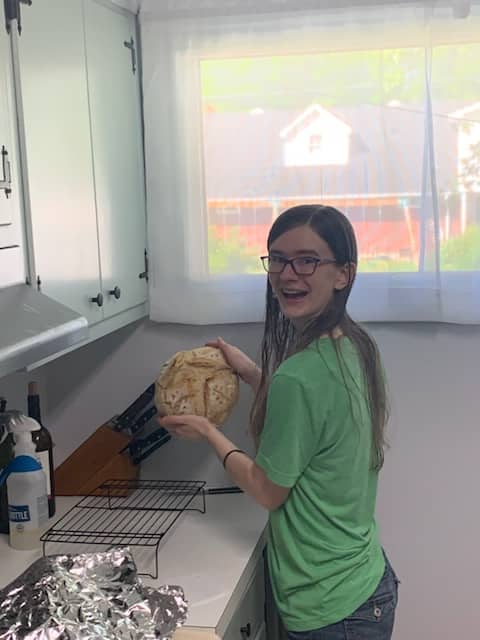
It was a revelation. Brianna had grown up eating the dense, faintly cardboardy whole wheat bread of the health-conscious 1990s; she had developed a proper aversion to it.
But fresh-milled was different.
“I don't know if it's the lemon juice [that Kristin adds] or just milling it at home or what,” she says, “but the texture… it's not Wonder Bread, but it is soft. It's not super dense. And I love it.”
Following Kristin’s Big Bake style, Brianna bakes every two to three weeks now: two sandwich loaves, maybe some garlic knots or hamburger buns alongside them. She takes the bread to gatherings and watches people eat it with uncomplicated pleasure.
“These cookies are so good,” they say.
Brianna can’t help herself: “They're whole grain!”
The Plan Develops…
Over the past few years, Brianna has focused on the indoor side of homesteading: budgeting, cooking from scratch, preserving.
This is all in preparation for the Big Dream. It’s all part of the plan.
Brianna wants a homestead. She knows that running one is the only way that she can afford to feed her family the food that will truly nourish them.
She also thinks it will provide a great childhood for her daughter.
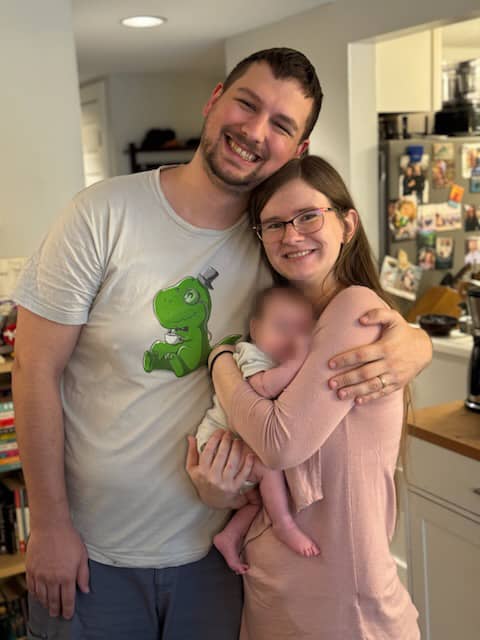
Last year, she and her husband welcomed their first child. The three of them currently live in a 900-square-foot apartment in Connecticut.
Brianna and Evan have a property in mind that they’d like to buy. In the meantime, while they wade through a lengthy buying process, Brianna has been learning more skills (thanks to STS), and thinking about what she would do with a couple-three acres.
Since Evan is an engineer, and Brianna a big picture thinker, they’ve analyzed their needs. So their plan is practical, aimed at directly meeting their most immediate needs.
The first livestock they’ll acquire are chickens, of course, but not layers.
“Meat birds first,” says Brianna.
Her reasoning:
With only 8-10 weeks from hatch to freezer, there’s a much faster turnaround than with egg layers, and a more reliable early return. Plus, clean chicken is prohibitively expensive at the grocery store right now, so this solves a pressing budget need.
“I really want good chicken,” she says.
Next will come the egg layers. Then, eventually, the rest of the full triumvirate: a dairy cow, and pigs.
“Beth and Shawn Dougherty's idea of raising a milk cow, pigs, and chickens together… it makes so much sense, and there's so much beauty in it,” she says, not without a little excitement. “It's gorgeous.”
In the meantime, she is doing what she has always done: learning the next skill, building the next habit, sending the next text to the next friend.
The Big Picture
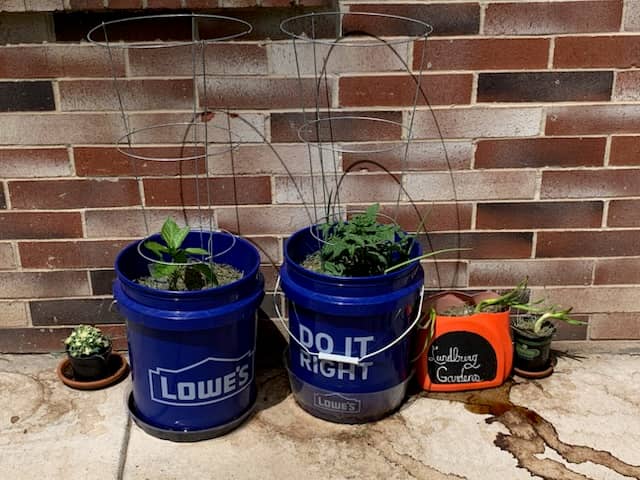
When Brianna thinks about what's driving all of this – the milling, the canning, the sauerkraut, the careful meat-buying strategy, the container tomatoes on a shaded balcony – she reaches for something bigger than frugality and health, though both are genuinely there.
“I think we're meant to steward the world,” she says. “But I'm not sure we're meant to meddle with it in a chemical way. Not past a certain point.
“We're really trying to cut out a lot of the industrial revolution middlemen.”
She wants to raise her kids inside that philosophy, “paired with the joy of learning and discovery inherent in homesteading,” she says. So does Evan, who grew up in the processed-food universe and came out the other side determined to live differently.
She had a blog for a while, before baby Zoey arrived. She called it Hearth and Acre — hearth and home, but with land in there too.
The blog is down now – babies have a way with time – but she thinks she might bring it back someday – even as a small email newsletter for friends who keep asking her about the fresh-milled flour.
The point is: as time goes by, she learns more and more. And she tells the people around her. And some of them start doing it too.
Someday, Brianna will be someone's Pressure Canning Friend. She already is, for a few people, the Freshly-Milled Friend.
The network grows. The skills spread.
And someday, she’ll be raising animals – and her family – on her very own little farm.
About Saturday Stories
Saturday Stories is a weekly series from the School of Traditional Skills, dedicated to the people in our community who are quietly building a more beautiful, intentional world.
Every Saturday, we highlight a different journey – from urban homesteaders and traditional craftsmen to neighborhood mentors – to show that a life of purpose and self-sufficiency isn't reserved for those with a hundred acres. It’s possible right where you are.