Famous (first) words
Eileen Ray remembers that the whole town called them the Soap People.
This was not a compliment.
Eileen grew up down the road from their store – in the version of Vermont where independence, love of land, and integrity isn’t a fad.
“Growing up in Vermont, you're just more in tune with the land and the seasons,” she says. “Self-reliance is big up there.”
She also grew up with a firm conviction:
I will not be a soap person.
These days, Eileen is, by any reasonable definition, a soap person.
And a deodorant person.
And a goat person.
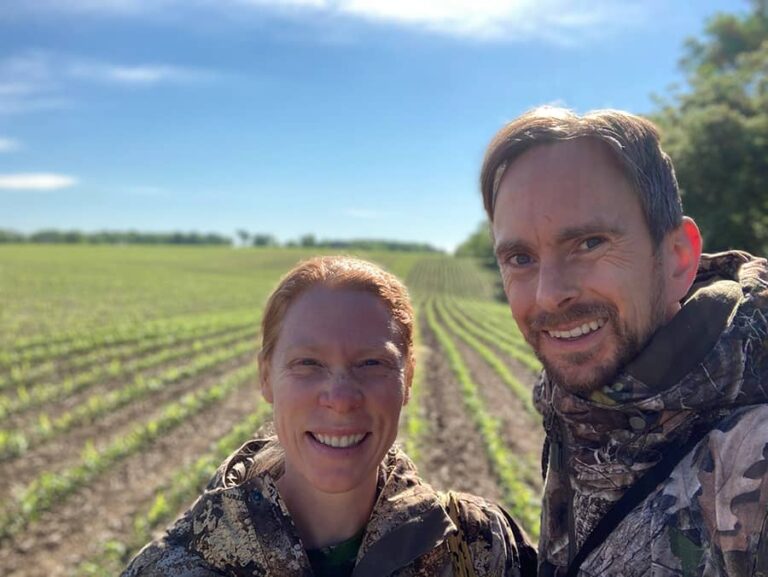
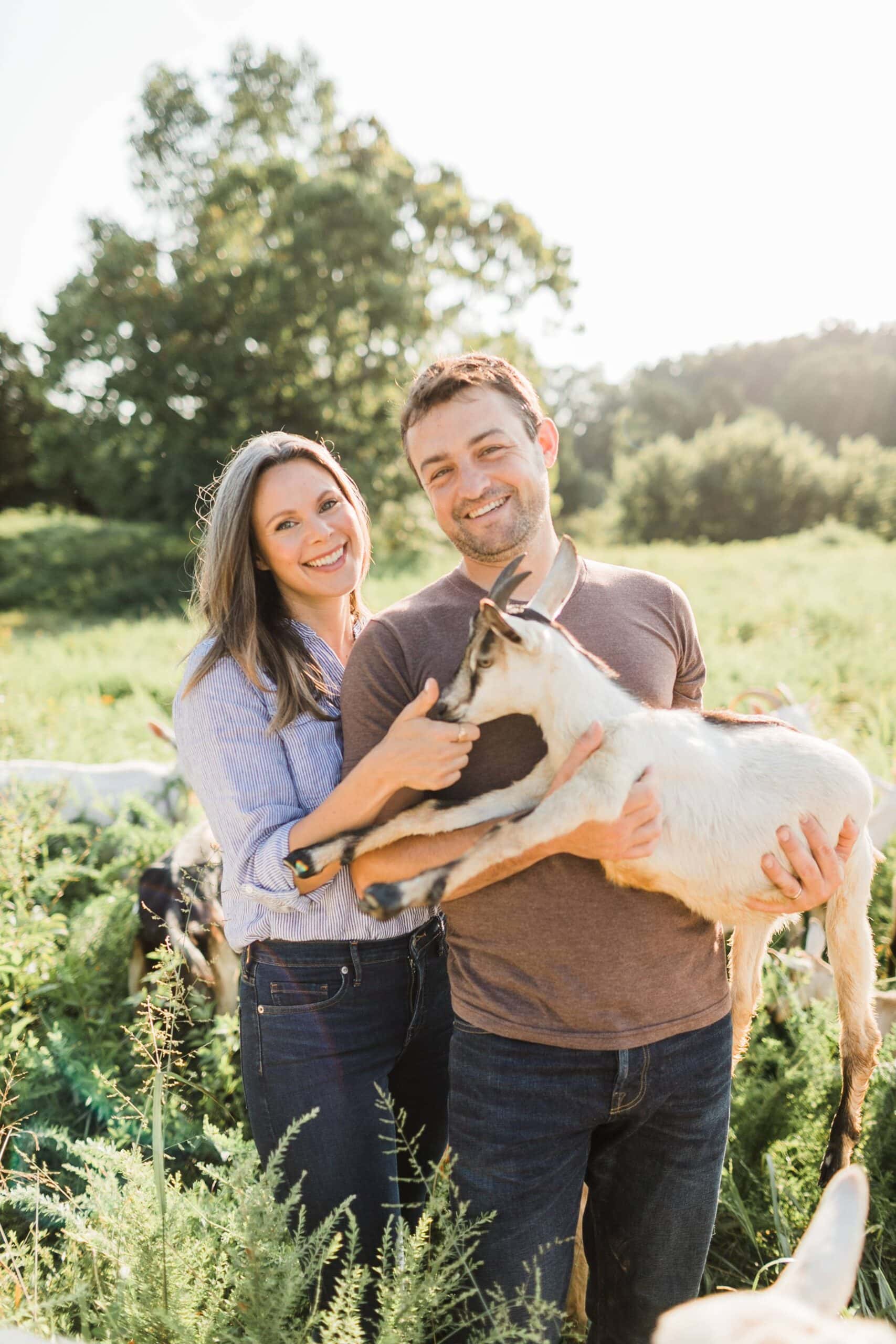
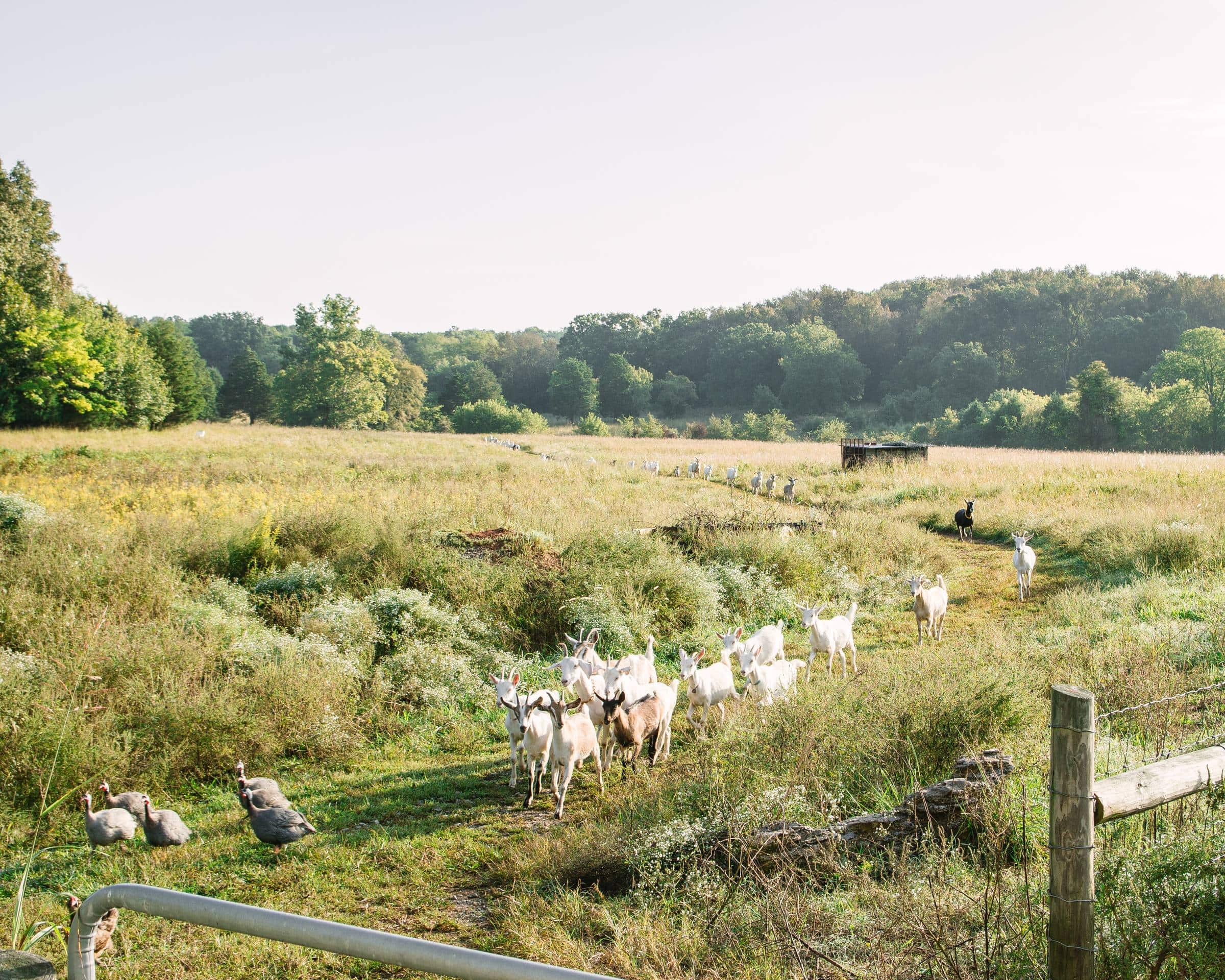
And the co-founder, with her husband James, of Little Seed Farm – an 84-acre operation in the hills of Tennessee, 40 minutes outside Nashville, where roughly 50 goats produce the milk that goes into every bar they sell.
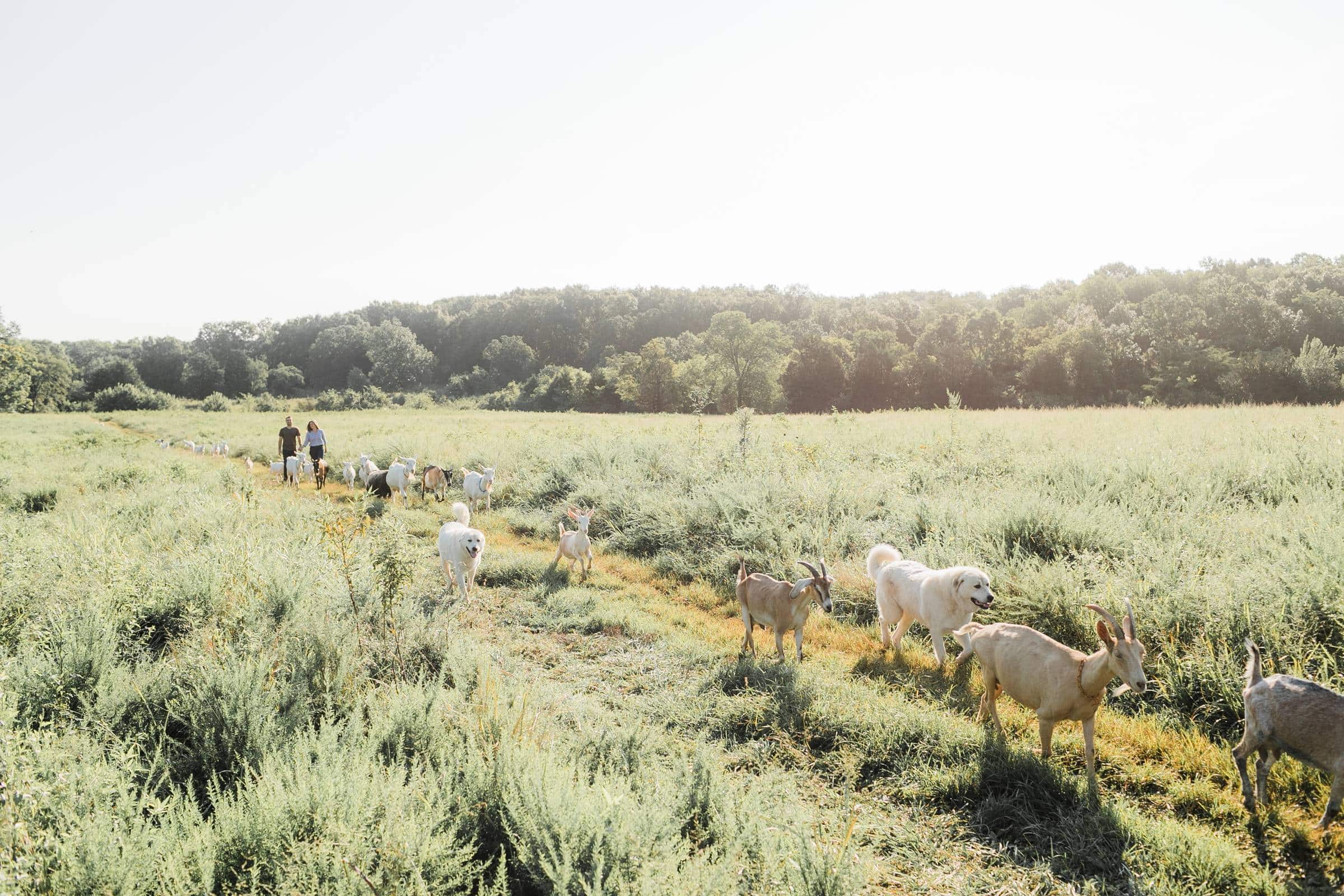
The business is fully vertically integrated: the goats are milked on the farm, the milk is processed on the farm, and the soap is made and cured and packaged and shipped from the farm.
It’s a formula that has worked well for them: 15 years in, Little Seed Farm is thriving, its products having been sold in 2,000 Target locations and 90 Kroger stores.
But that’s not the whole tale, which is even more interesting…
It starts, like most good stories, with a collision.
From Vermont to land of Versace
Eileen grew up in Vermont believing, more or less, that the whole world lived the way Vermonters lived: small farms, local food, seasons that actually meant something. She was in 4-H. She wrote her first research paper in middle school (no AI, actual research, with citations) on medicinal herbs.
She was the girl who identified chicory on a vacant lot and dug up the roots to bring home, her mother looking on with mild bewilderment. She grew catnip. She found field guides to how Native Americans used plants; she read them like novels.
“I just loved the idea that everything we need is already out there,” she says. “That the earth provides all of this already.”
This is all very Vermont. Famed herbalist Rosemary Gladstar lives out there. So, too, did Tasha Tudor, better known as a world-class illustrator but who was a stalwart herbalist in her own right. People in Vermont were chugging elderberry syrup well before Instagram made it famous.
She loved the life there. And then, at some point in her teens, Eileen yearned for something a little more glamorous.
As in – very not Vermont. Think Ungaro. Armani. Pucci. Prada. Ferré.
Eileen left a traditional American college to study fashion design in Milan.
She interned at Fendi, the luxury Italian fashion house, living la dolce vita, or probably more la very, very busy vita, then moved to New York City and worked as a designer, then as a design director.
Life was good.
–
Several time zones and climates away from Vermont, around the time Eileen was scribbling down notes on square stems and the mint family, a young man named James was growing up in Albuquerque.
He wasn’t very connected to the land, and certainly not to herbs, not in his daily life, but James had a beloved grandfather who, in the way grandparents often do, imparted silent, lifelong lessons and impressions.
Grandpa was a devoted fisherman with a worm farm in his backyard. He grew prolific tomatoes and peppers in whatever space remained. James loved watching him.
As he contemplated careers, James thought about farming for a fleeting moment, but when college debt arrived and someone told him that finance paid the most, he became an investment banker.
He headed to private equity, hedge funds, and New York City.
“I kind of went the money route for a long time,” he says.
The Collision Course
It was 2007, in Hell's Kitchen (which true New Yorkers still refuse to call by its sanitized name, Clinton), the teeming neighborhood around Times Square.
There was a Duane Reade, and Eileen was looking for “aspirin or something.”
James had spotted her there; after leaving the Duane Reade, they literally ran into each other outside of a nearby corner bodega.
He proceeded, in his words, to “make a fool of myself” asking for her number.
Her friends were wary. Who picks someone up after a collision?
A future Soap Person, it turns out.
But we’re getting ahead of ourselves…
The Turning Point
New York City is not exactly rife with farmers. Sure, NYC wouldn’t exist without farmers, but most of them work the land upstate, or in New Jersey. If you want to actually converse with one, you have to shop somewhere like the Union Square Greenmarket.
James and Eileen didn’t know farmers. They were focused on their careers, keeping up with the costs of living in hipster Brooklyn, and enjoying city life.
One day, one of them brought home The Omnivore's Dilemma, the now-classic book by Michael Pollan.
The book talked about the food system in a fresh, eye-opening way. It introduced the world to an entertaining, enterprising, witty farmer, a guy named Joel Salatin. It made clear the horrors of factory farms. Pollan would cement his fame in the food world with a line from his next book:
“Eat food. Not too much. Mostly plants.”
Omnivore’s Dilemma made a visceral impression on the couple. For Eileen, it called to mind the seminal muckraking novel, The Jungle, Upton Sinclair’s 1906 masterwork about the brutal conditions of the meatpacking district in Chicago.
For James, it confirmed something that had been pulling at him since his grandfather's backyard.
“Small sustainable ag is really a direction that needs to be pushed a lot more in the future,” Eileen says.
They wanted to be a part of it, somehow.
“But we were not farmers. We were a fashion designer and a finance guy,” she recalls thinking.
They didn't immediately say: let's go farm. They thought: let's support the people who do.
They joined a CSA at the Williamsburg farmer's market.
“We would volunteer on farms on the weekends and the farmers would have us for dinner and talk about their story,” Eileen says. “And after a year or so of this, we were like — what if we did just try it?”
James mapped it like a business problem.
They’d need a value-added product that could make the economics work: cheese. They’d open a grass-fed dairy and creamery.
They needed the right climate: not the frozen Northeast, not the swampy deep South. They’d need to be East of a certain longitude so the grass would be sustained by rainfall.
The target zone was a corridor: Virginia, Tennessee, North Carolina, Kentucky.
James had gone to college in Memphis, had friends in Nashville, and could see (this was right before Nashville exploded) that it was about to become something.
Land was affordable in the wake of the 2008 collapse; James and Eileen flew down on weekends, toured properties, and flew back.
“We wanted something that was diverse, that had a good mix of pasture and woods,” James says. “We wanted to be close enough to a city where we could sell product, but still rural enough to have real land.”
To help finance the adventure, James would continue working for the NYC hedge fund remotely (farming in his free time), and Eileen would run the dairy and be the cheesemaker. She had already quit design and was interning at the famed Murray's Cheese Caves, “padding bloomy rinds underground, coming home smelling of cheese.”
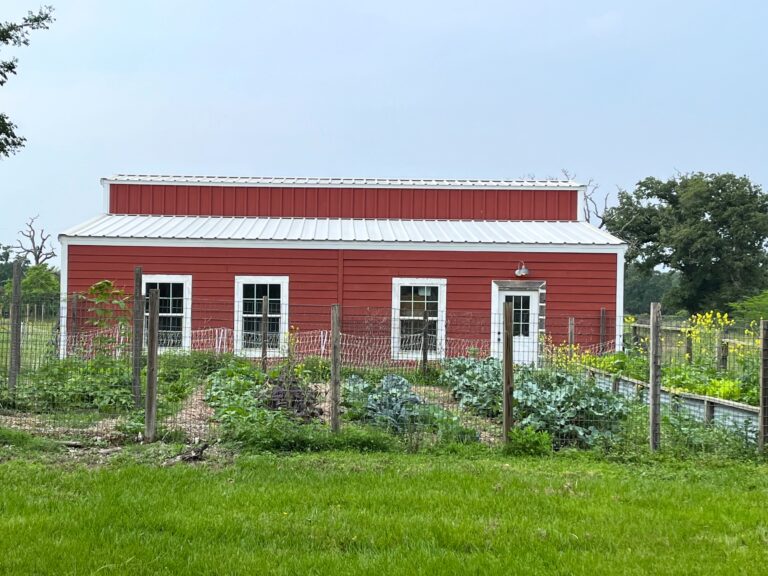
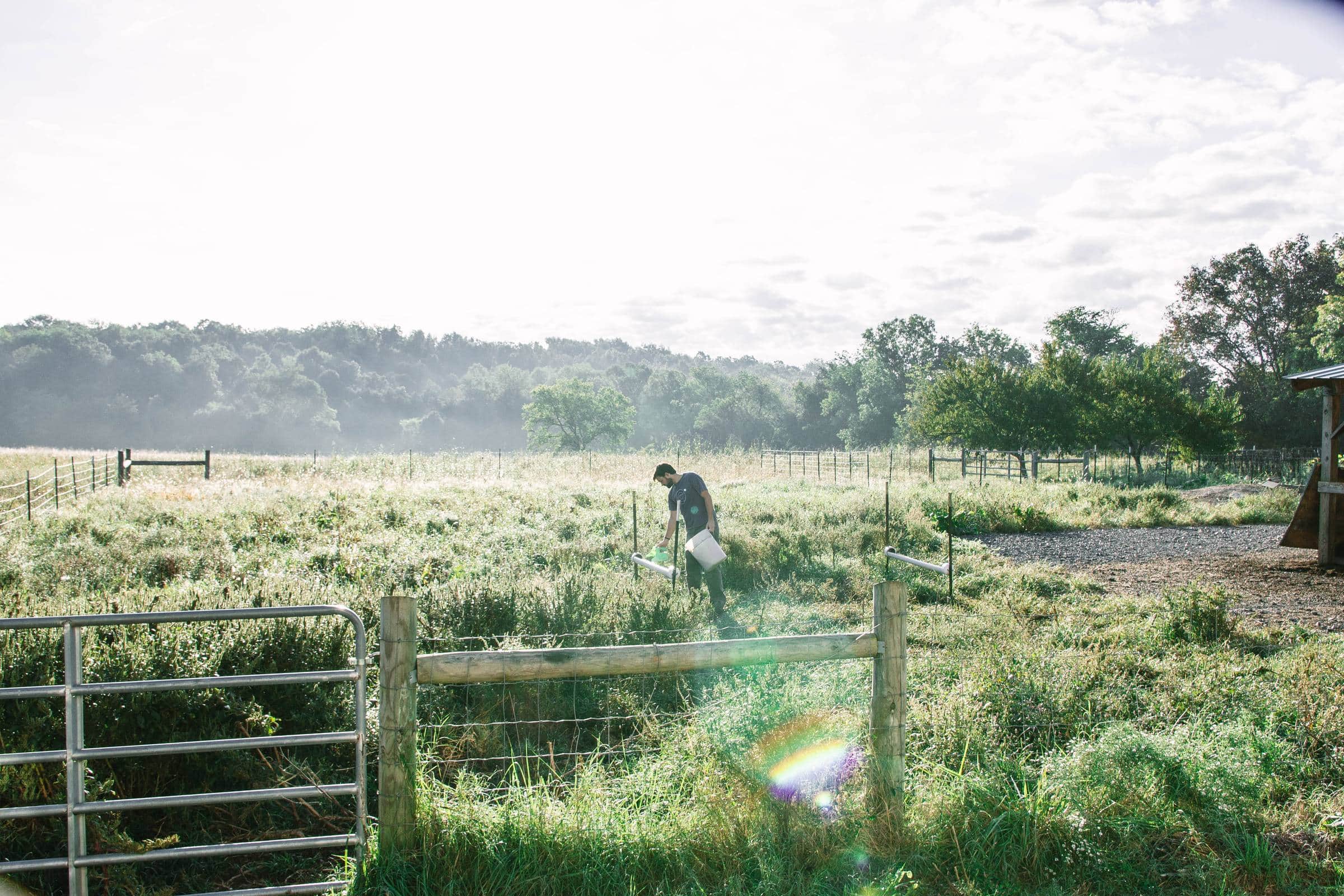
They landed on 84 acres in Wilson County, Tennessee: wild, naturally diverse, adjoining a state park on several sides. It was a great deal. It had a livable house, if small by most American standards.
“Hey, after a tiny New York City apartment, anything feels enormous,” Eileen quips.
There was one problem: it had, they discovered, exactly the wrong grass for dairy cows.
The grass is greener
“That's broom sedge. It's terrible. Burn it.”
That was the response James got when he posted a photo of their pasture to an online farming board, proud of all the grass.
He had bought, as it turned out, not dairy cow pasture, but instead, “perfect goat food.”
The farm had actually been a cow dairy back in the 1940s, but that was back before anyone thought much about grass-fed. The grass just wasn't right for it.
“It became very clear pretty quickly that dairy cows were not going to be it,” James says.
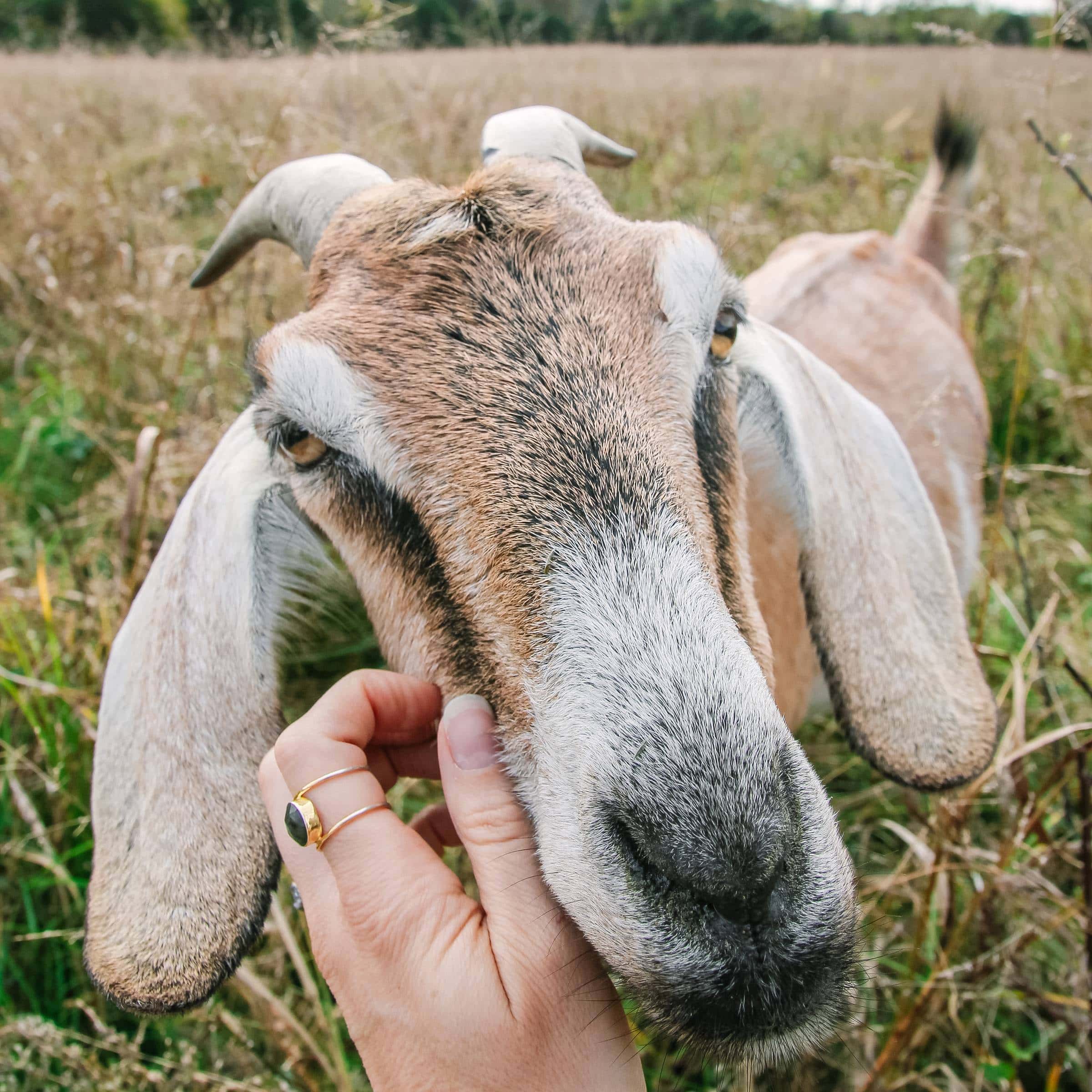
They quickly pivoted to goats. Their first was Bridget – a Nubian found on Craigslist, technically a “practice viewing” that Eileen took alone while James was elsewhere.
“I show up and the owner's on a business trip, the farm sitter doesn't milk, and this goat has a huge, hot, hard udder and her kid had just died,” Eileen says.
“I called the owner and she said, ‘The keys to my truck are in the garage.' I literally loaded this goat in the bed of a truck,” Eileen says. “With a dog leash tied to her.”
She drove Bridget to the vet. (“Mastitis.”) Eileen called a goat mentor in upstate New York and asked her to talk her through milking. Right now.
It was raining.
She was stressed.
“It was love at first sight with this goat,” Eileen says.
The owner was impressed. Just like that, the couple had a goat. And a direction.
Giving cheese a chance
They built a cheese program.
Eileen's grandfather and stepfather came down; James and his father-in-law spent six months ripping down an old barn and “building a dairy from the ground up: framing, electrical, roofing, tiling. Everything.”
They sourced a giant old steam kettle to use as a temperature-controlled cheese vat. Eileen ran a cheese share: 100 members, every other week a different cheese – bloomy rinds, chèvre, feta, tommes, bries. Whatever she made was what you got.
“Sometimes we'd have chèvre as a backup option if you didn't want a stinky cheese,” James says.
They had been at it maybe six months when the company James worked for went out of business.
Time to problem solve again.
Becoming Soap People
Cheese wasn’t something they could easily scale up. They needed something else to sell.
Eileen's grandmother had visited and they'd made a batch of goat's milk soap to soothe her irritated skin.
It was wonderful.
The conversation went something like this:
James: Let’s try selling it.
Eileen: Absolutely not. I grew up down the road from the Soap People. I will not be a soap person.
James: Okay, here's the deal. I'll make the soap. You do the branding and the packaging.
Eileen: Done.
A fashion designer who'd interned at Fendi doing the branding for a goat milk soap operation…
“It was a pretty good division of labor,” Eileen says.
They launched Black Friday 2012, online, at farmer's markets and craft fairs, with an Etsy shop and a Facebook page and a blog they'd been building for months.
(Savvy from the beginning, they had keyed into technology and into what became the Social Media Mammoth very early on, which “helped a lot,” Eileen says.)
It didn’t take long for a local shop in East Nashville picked them up. A brewery commissioned them to make beer soap; local news did a feature. A Kroger regional buyer saw it.
“Over the next five years, we expanded into over 90 stores,” James says. “Tennessee, Kentucky, Alabama, Mississippi. We did all our own distribution. We serviced the stores directly.”
At the beginning, Eileen was at the Krogers, “baby strapped to my back, building the display myself.”
Then Target called. They wanted soap, for all 2,000 locations.
Calling their own shots
Little Seed Farm was in the mass retail business for several years.
Then, around COVID, James and Eileen made the decision to walk away from all of it.
“When you're in Kroger and Target, you've got one or two buyers that control a huge portion of your revenue,” James says. “If that person leaves, or the category changes, you're done. It's just not a resilient business model for a small farm.”
The tailwind of the small-batch natural beauty movement that had lifted them was slowing. They didn't have the infrastructure to compete on mass retail shelves long-term. And it didn't fit who they were.
“We made a really hard transition,” James says. “But we grew exponentially faster afterward, and we're more profitable, happier, and a lot lower risk because we're not Kroger and Target in terms of customer concentration.”
Instead, they went direct: their own website, small independent shops, the relationships they actually wanted.
They stayed at the farm and kept the team together.
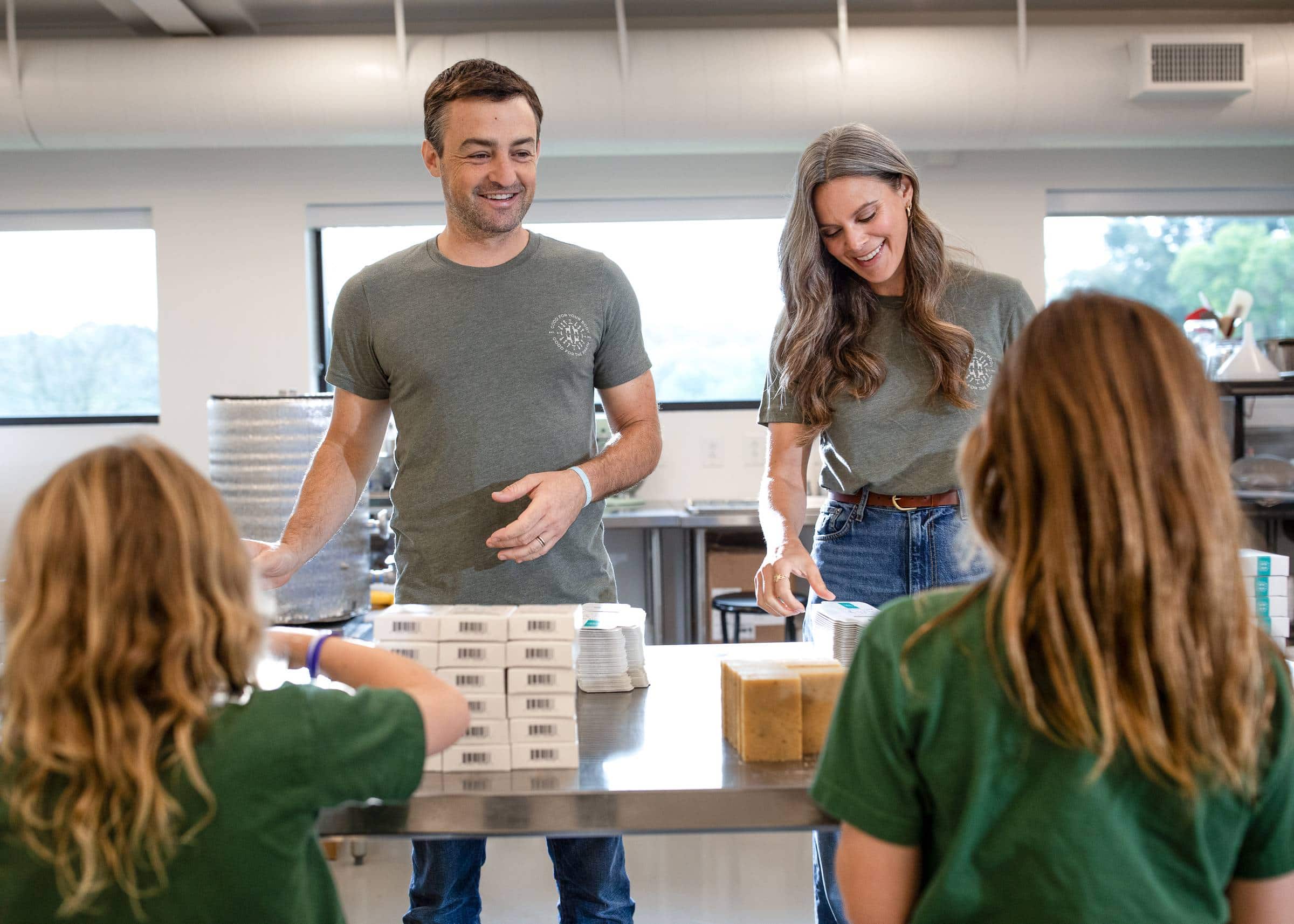
Today, every product on their website – a full skincare line with body oils, soaps, deodorant, and handcream – is made, cured, packaged, and shipped from the farm. No contract manufacturing. No middlemen.
Milk from their goats to your hands.
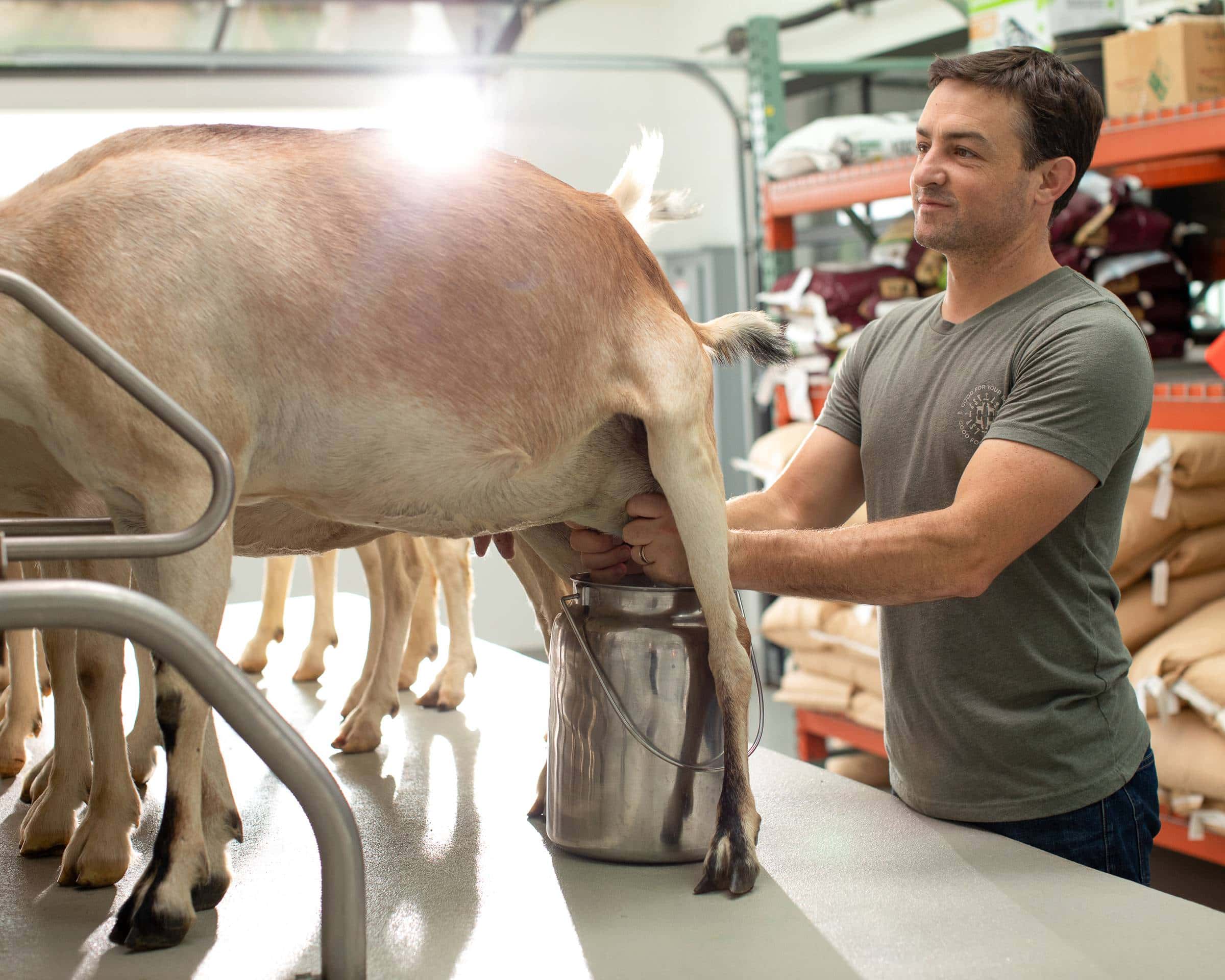
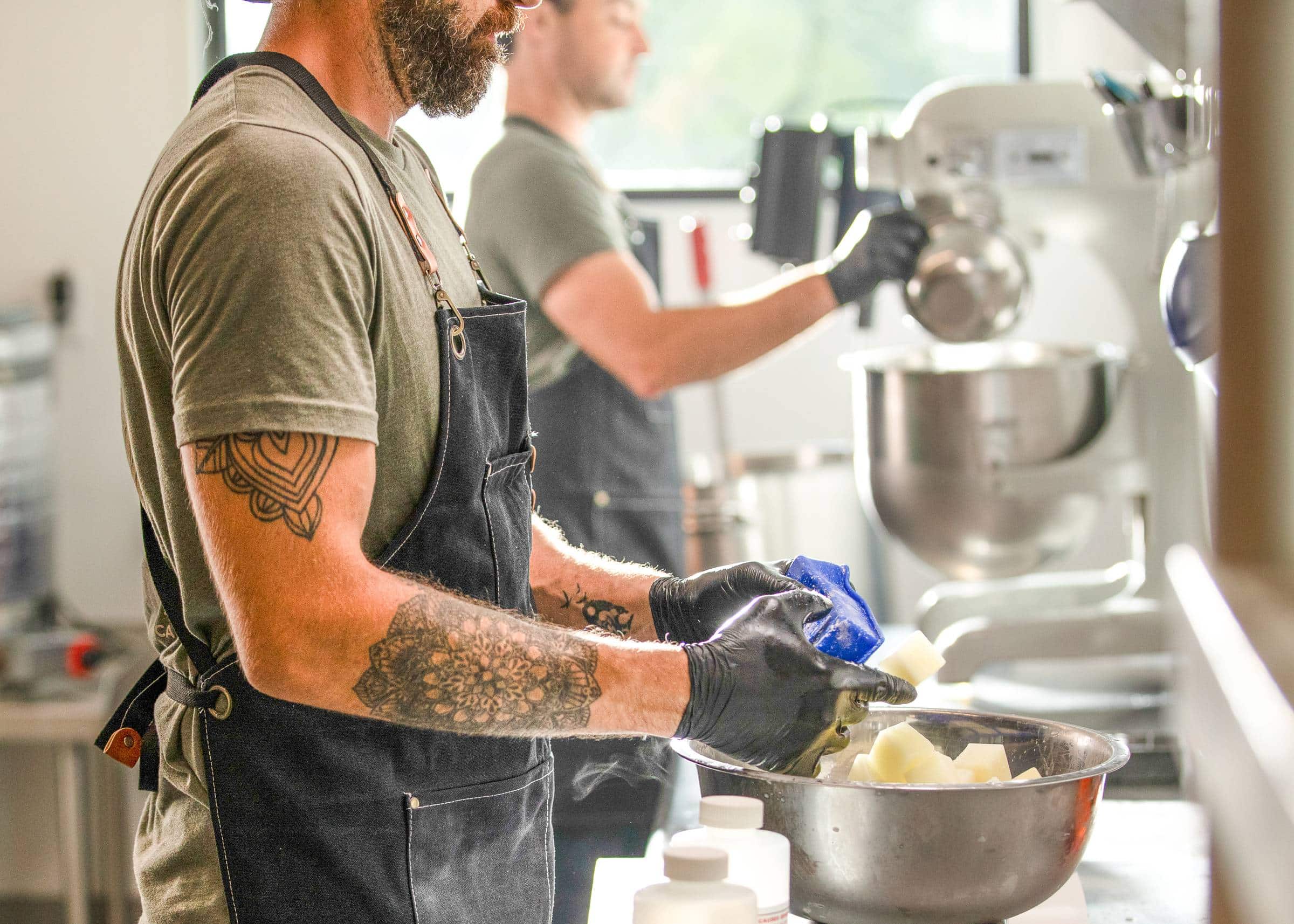
Eileen never went back to cheese. The milk all goes to soap now, processed and frozen into cubes for soapmaking. She makes cashew milk for the family.
“The day will come when I will have our milk back in my hands,” she says.
Advice
When people ask what advice they'd give someone considering a leap like theirs – city job, no farming experience, the whole improbable thing – Eileen doesn’t hesitate:
The not knowing helped.
“I think that going into it a little blind helped us to be flexible and try new things,” she says. “I think that having knowledge passed down would've been wonderful, but going in kind of blind also helped us to innovate and pivot.
“I learn by doing,” she continues. “The doing is where the learning happens. Even if it's just sticking a trowel in the dirt – that's what stirs the excitement that keeps you going even when you have a bad day. That's what starts honing your knowledge and helping you understand what your unique pathway through that interaction with the land is going to be.”
James, the finance guy who mapped the rainfall corridors of the mid-South before he owned a single goat, has his own version of this.
“We just didn't know what we didn't know,” he says. “We made mistakes that someone with experience probably wouldn't have made. But we also did things someone with experience probably wouldn't have tried.”
And that, just like the road to Italy, and the one to Upstate New York, and to a former cow dairy that was only suited for goats…
… has made all the difference.
Find Little Seed Farm at littleseedfarm.com and on Instagram.
About Saturday Stories
Saturday Stories is a weekly series from the School of Traditional Skills, dedicated to the people in our community who are quietly building a more beautiful, intentional world.
Every Saturday, we highlight a different journey – from urban homesteaders and traditional craftsmen to neighborhood mentors – to show that a life of purpose and self-sufficiency isn't reserved for those with a hundred acres. It’s possible right where you are.