The Jungle Sauna and the Round Garden
“I would come out of the bitter negative [temps] outside and walk into my jungle sauna,” Bethany recalls. “And it was just balm to my soul.”
Over time, that “jungle sauna” made Bethany realize, halfway across the world from the garden in which she was raised, that she couldn't live without things that grow.
Today, Bethany and her family make their home on a modest two-acre plot in South Carolina. She and her husband, Austin, raise four children amid their own large garden in a small, cozy home that Bethany calls “just perfect.” They don’t do this in isolation; Bethany has turned her kitchen into a hub for a thriving community of modern homesteaders. Her journey is a testament to the idea that you don't need a hundred-acre ranch to live a life that is deeply rooted, debt-free, and abundant.
From Mongolia to the Borrowed Garden
Bethany didn't always love the dirt.
Growing up in central Pennsylvania, gardening felt like a chore rather than a calling. Her mother possessed “the joy of gardening,” but her passion didn't quite translate to the kids who were woken up early to hoe the garden before the heat started baking little backs.
It took moving to Mongolia as an English teacher to realize that the need for nurturing plants was “just in me,” Bethany says, “a part of my DNA.”
After nearly two years of glorying in the vast, untouched horizons of the Mongolian countryside – the only place she’s ever been where she could “look in every direction and not see a single human-made thing!” – she returned home with a new resolve: to make a life that meant something, and that touched on nature.
“I came home from Mongolia,” she says. “I married my husband, and, come spring, determined, ‘I will have a garden'.”
Her first was a “borrowed garden,” tended to while Bethany and Austin, newly married, lived in a 29-foot camper parked in the backyard of their mentors’ home.
It was a season of simplicity that taught her that growth can be cultivated anywhere.
“It didn’t matter that it wasn’t my land or my seeds or that I didn’t get to make all the final decisions. It was enough to be stewarding land and growing plants.”
When the couple decided to search for their own land, they again went the unconventional route, embracing a renovated Home Depot shed on two acres with a well and a stream… for only $70,000.
“We bought it, renovated the shed home, and less than seven years later, we're debt-free,” Bethany shares. “The freedom that comes from that is astounding.”
The Round Garden: A Space for Life
Bethany is a maverick. An artist. An intuitive healer.
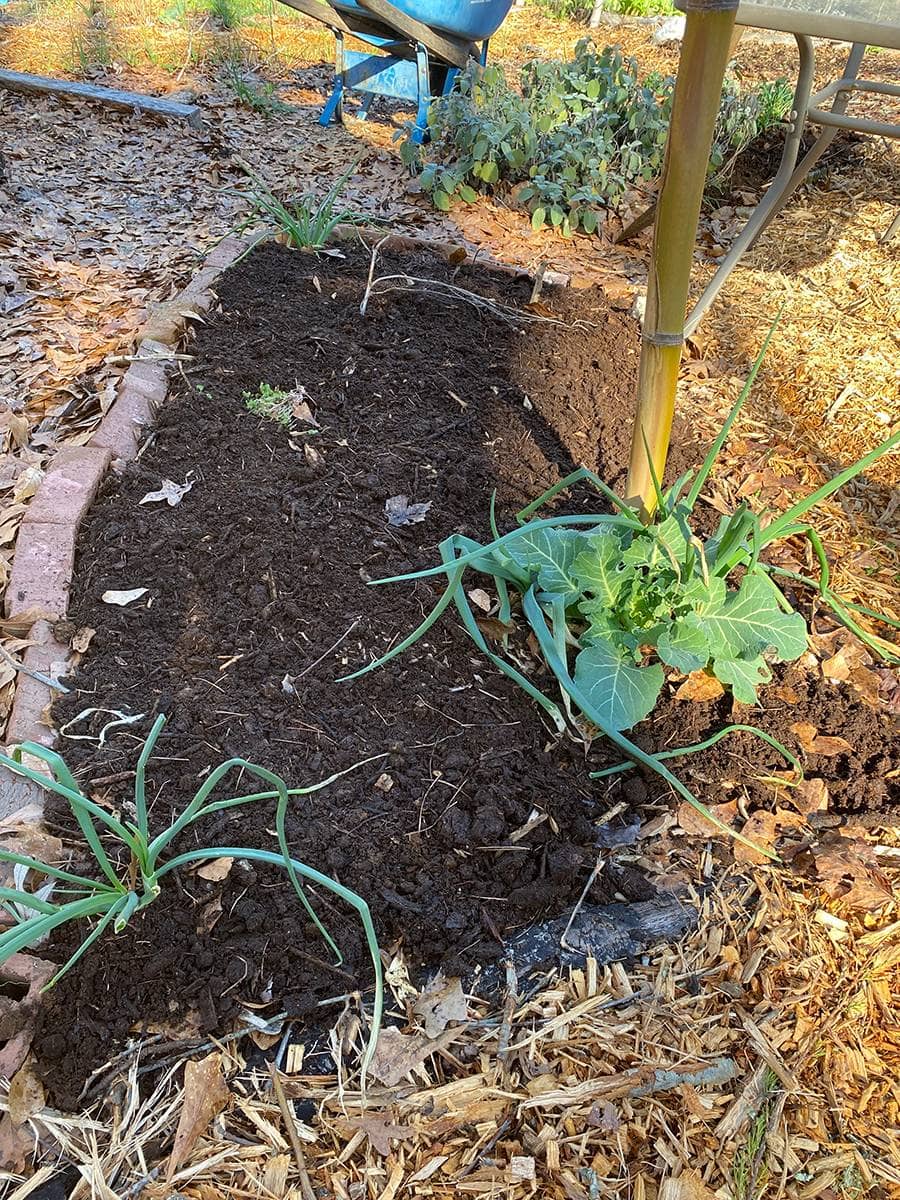
Straight lines are not for her. Neither is coloring within the lines. So when it came time to design her permanent garden, Bethany broke away from the traditional rows of her childhood.
No, that wouldn’t do. She wanted a “round garden.”
“I wanted the middle of the garden to be the place where we wanted to be when we were outside, a place to converge,” she explains.
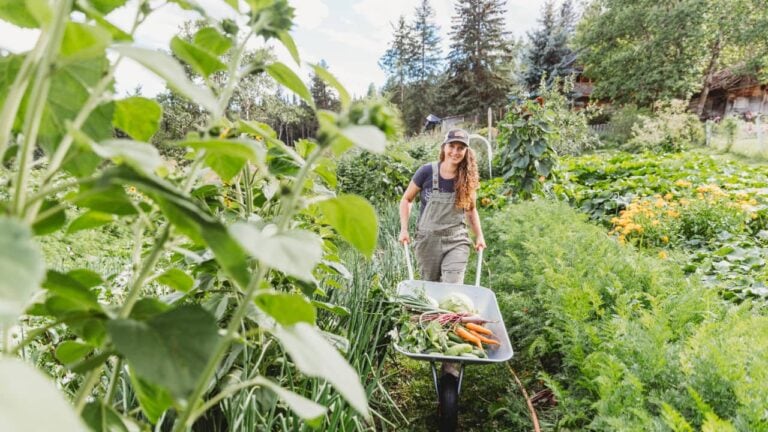
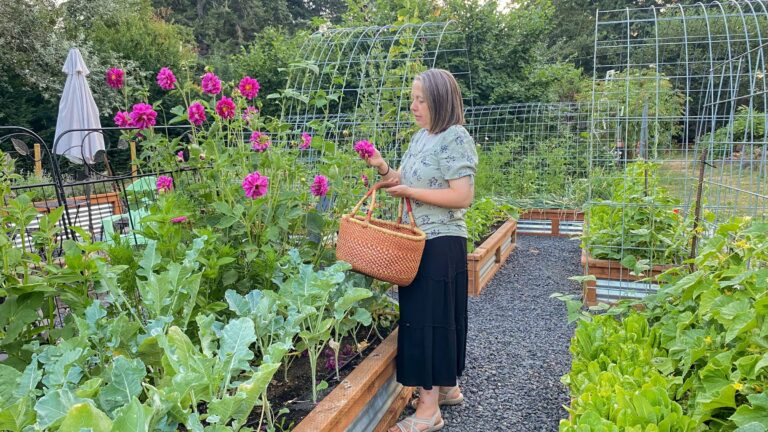
About 50 feet in diameter, that part of her overall garden is an open area, replete with a fire pit and seating, surrounded by offshoots of garden beds and paths. It’s a space designed for connection as much as for calories.
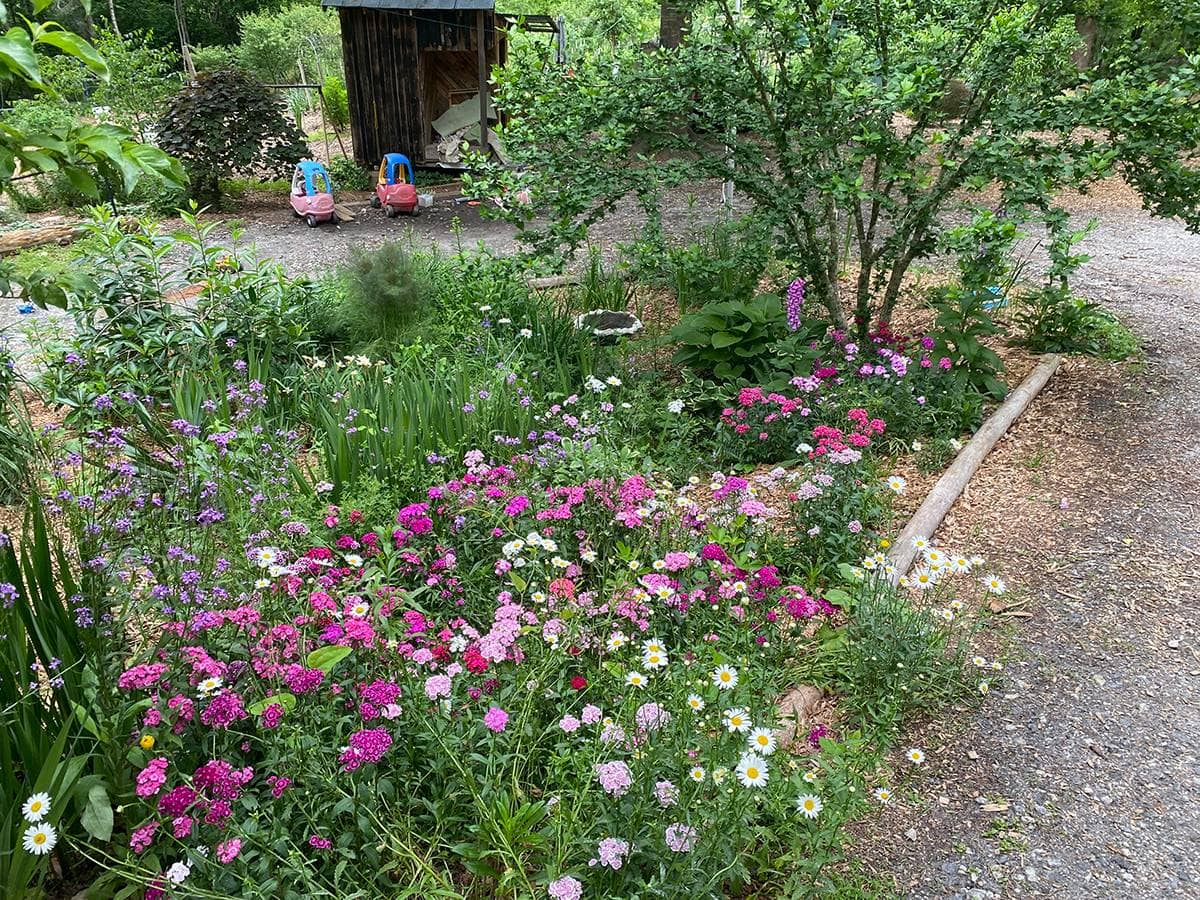
Bethany had grown up equating “gardening” with “traditional plowing and chemicals.” But now that she had her own garden, and was nurturing tender bodies, Bethany sought out something responsible and sustainable “that I could manage with a three-month-old baby.”
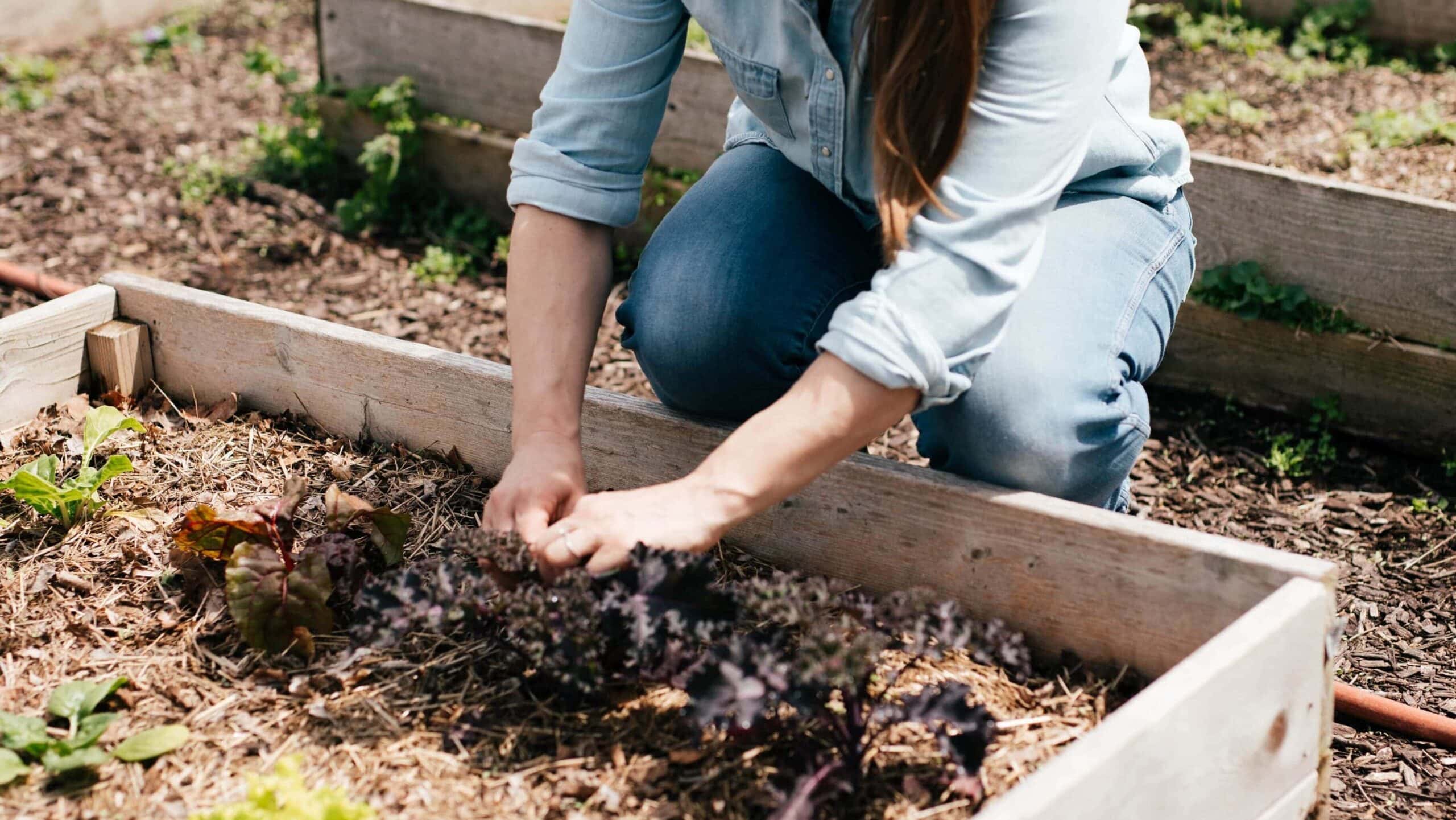
She discovered Paul Gautschi (who would later become a School of Traditional Skills Instructor) and his beautifully simple, effective “Back to Eden” style. Over time, she added more gardening space, and even branched out into orcharding.
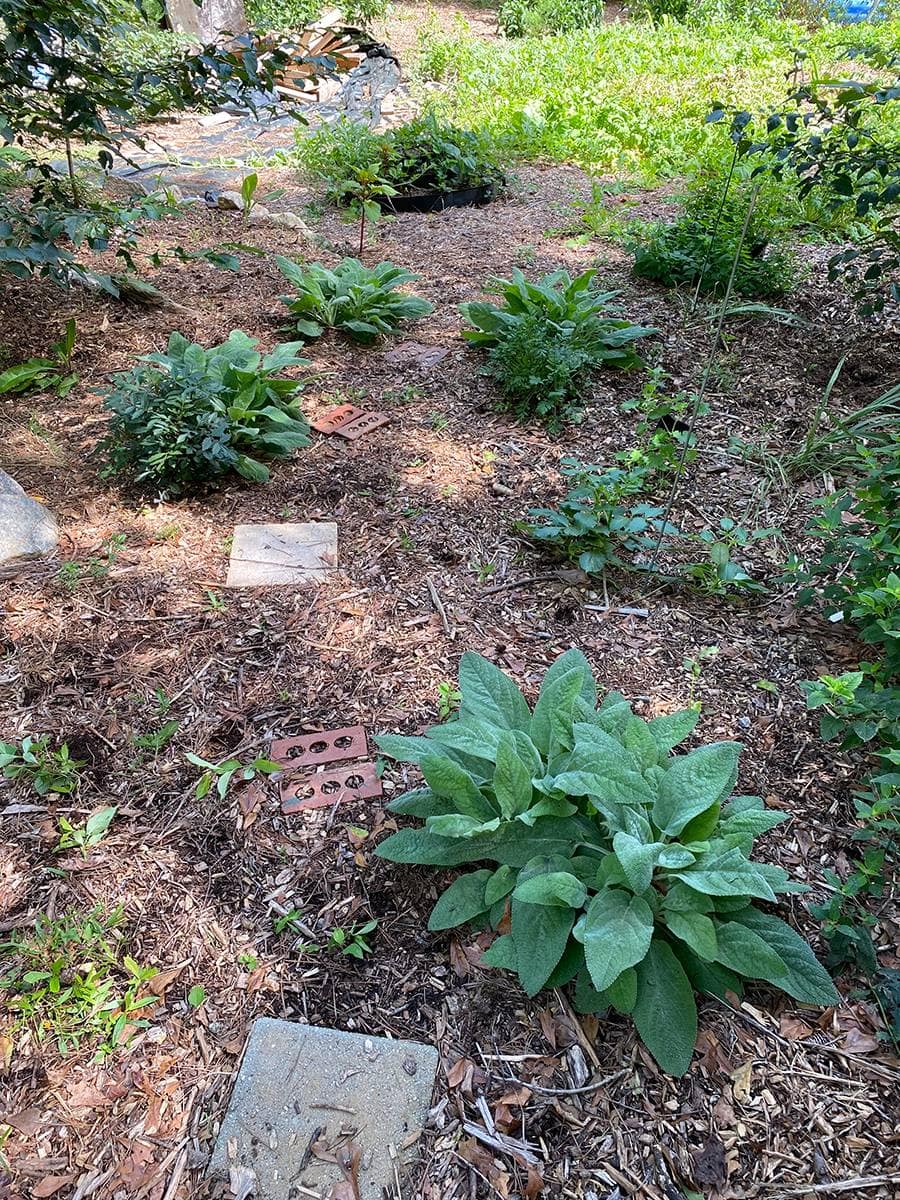
“I’ve got berries and a couple fruit trees and a watermelon patch now,” she notes. “Every year, I add more mushroom logs and utilize my shade better.”
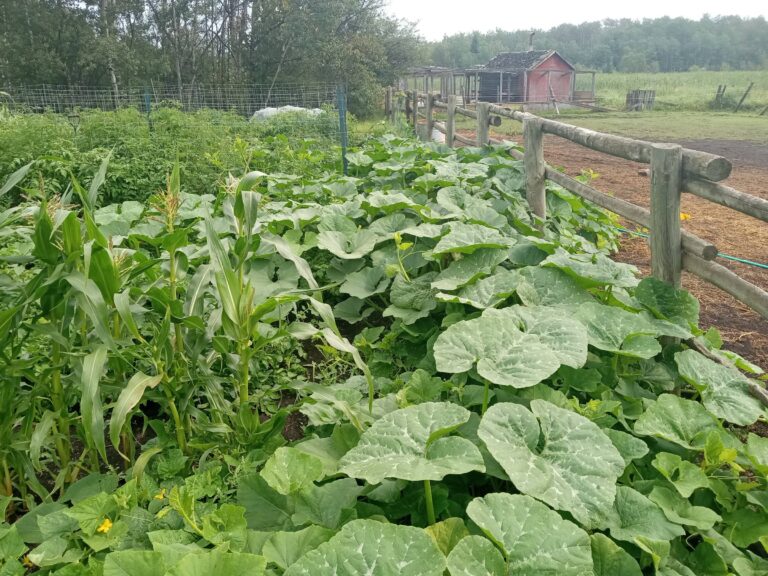
Today, on just two acres – only a fraction of which, about 3,000 square feet, is garden – Bethany grows enough to significantly reduce the family’s reliance on the grocery store… and by a staggering amount.
At one point, she and her husband were consistently going to the brick-and-mortar store only for milk, coffee beans, and, occasionally, avocados. Now that they have a dairy cow (more below on that), they’ve eliminated the milk purchase.
“I don't think of the grocery store as the place where I get food anymore,” she says, matter of factly.
Bethany grows a wide variety of vegetables and herbs, including garlic, onions, peppers, and greens. She does use Azure Standard to buy staples like chickpeas (in 25-pound bags) and other dry goods in bulk. Her family also forages for seasonal items, such as bluet mushrooms, medicinal plants, and spring “weed” salads.
But the grocery store itself?
“Where so much produce is culled because of tiny imperfections?”
That sort of waste she can largely do without.
“Why, for example, do they throw away or reject the little cauliflowers? Real food doesn't grow to be all the same exact size! It’s such a waste of good food.”
Bethany’s passion for real food and real nourishment has only grown over time, and she can’t help but evangelize about it from time to time to friends and family. For her, growing, foraging, and stocking up on food isn't about achieving “perfect” health or making an idol out of organic labels.
It’s about “this desire to remove the deception about what is not food.” She sees the fruits of it clearly in her own family’s bodies.
Bethany wants her children to know what real, nutritious food tastes and feels like, and thus far, they have no problem eating salads, kale, and other foods that others turn down. Even her seven-year-old son is part of the process, harvesting shiitakes in the backyard and frying a perfect egg for his mom’s breakfast. Tastes change over time, of course, but Bethany is pleased that her children at least “know what real nourishment feels like.”
The Hurricane that Changed Everything
Early in their marriage, Bethany and her husband Austin had an understanding.
“He agreed to chickens and ducks because I said I’d take care of them,” she says, “but Austin’s one hard line was that he never wanted to be a farmer.”
“No problem,” she agreed. “I don’t want to be a farmer, either.”
There wasn’t enough land for farming, anyway. On only two acres, with most of it wooded, there just wasn’t anything for cows or sheep to eat.
“Then I took Beth Dougherty’s class [online, at the School of Traditional Skills], and suddenly, it seemed possible that we could have a cow!”
She started looking for listings online, and the conversation with Austin shifted from skepticism to possibility.
“We were considering it an option at that time. We were making a lot of trips to the store just for milk,” she remembers. “I even asked a neighbor if I could borrow their pasture if I ever got a cow someday!”
The final shift happened when Hurricane Helene hit South Carolina.
The power was out for weeks. While neighbors were waiting in hours-long lines at McDonald’s because they had no food in the house, Bethany and Austin were in no state of emergency. They had gas for cooking, a well-stocked pantry, and filters for their collected rainwater.
More importantly, because they were prepared and had plenty of food on hand, they were free to help others.
“We were fine, so we could help people who weren't fine,” Bethany says. “We would put our chainsaws… in the back of the truck and drive down our road… and we would help clear the roads or just cut people out of hairy situations.”
That experience “pulled the trigger” on the decision to get a cow. Austin realized that “a cow will still make milk even when there's a hurricane.”
They started with two cows, which, as nature’s math might predict, grew to four, and now Bethany milks her Jersey cow, Josie, in the neighbor’s pasture up the road.
“We’re still not farmers, though!” she laughs.
The “Messy Kitchen Table” Community
Perhaps the most inspiring part of Bethany’s story is how she has used her two acres to foster a local community network.
What started as a simple invitation to her 300-person-strong Azure Standard drop site group has blossomed into a vibrant community of families sharing resources and knowledge.
Bethany began inviting people from the group to her home to see her “Back to Eden” garden, or to learn how to make staples.
“I just opened my yard and kitchen to anybody who wanted to come,” she says. “The invitation was something like, ‘I'll tell you all the mistakes I made so you can avoid them.’”
Now, she curates a list of skills – from herbal medicine to soap making – and finds mentors to teach them around her kitchen table. (Bethany is also an active member of the School of Traditional Skills online Community.)
Bethany admits she often feels like an “imposter” because she’s still learning some of these skills herself, but she has realized that people don't need an expert. They just need someone one step ahead of them.
“I can show you this next step,” she says. “I can get you started in a way that's not intimidating… because I don't know enough to be intimidating! But I know enough.”
Bethany’s life in South Carolina is a far cry from the “jungle sauna” windowsill in Mongolia, but the heart of it remains the same. Whether it’s a single room or two acres, she’s proven that when you cultivate the earth, you’re almost always cultivating a community, too.
About Saturday Stories
Saturday Stories is a weekly series from the School of Traditional Skills, dedicated to the people in our community who are quietly building a more beautiful, intentional world.
Every Saturday, we highlight a different journey – from urban homesteaders and traditional craftsmen to neighborhood mentors – to show that a life of purpose and self-sufficiency isn't reserved for those with a hundred acres. It’s possible right where you are.