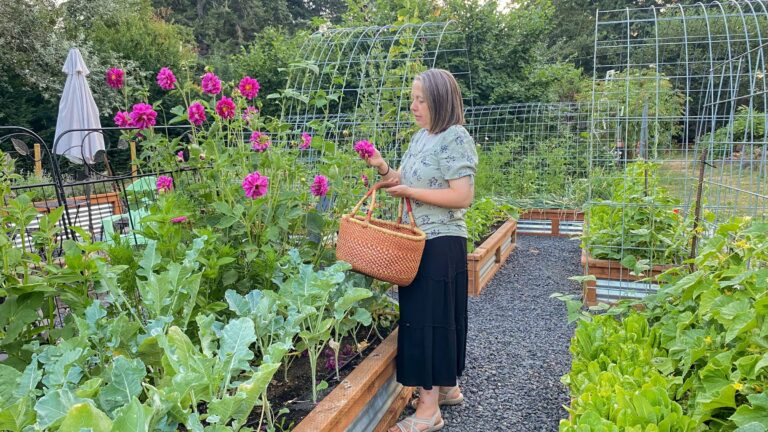
Chelsea took one look at it and did what any sensible 12-year-old would do.
She recruited her best friend. They dug up the plants. They found a hidden spot. They replanted everything. Chelsea made a sign – “The Secret Garden: Trespassers Will Be Shot” (“or something like that,” she remembers) – and she would wheel a garbage can full of water down a steep embankment, by herself, just to go hand-water her clandestine little plot.
This was all very much pre-iPhone and pre-Instagram. None of this was done for documentation purposes. Chelsea just wanted to create something beautiful, and to be utterly devoted to it.
“I was a weird kid,” she says, laughing. “I do wish I had that documented.”
These days, Chelsea does a lot of documenting on her popular channel, Little Mountain Ranch. A large, growing audience click for the gardening and canning tutorials but stay for Chelsea, who is cheerful, unpretentious, and clearly still committed to beauty.
She comes by her passion for gardening honestly. It might even be genetic: Chelsea’s grandfather was a devoted gardener. He had only a small city lot, but he and his brother farmed a couple of acres outside of town. They were out there every morning at 5:00 a.m., growing vegetables for the family.
When Chelsea would visit, the first thing she'd encounter was the gate, lined with marigolds on both sides. Her mom would make her stop and smell them.
“The smell of marigolds… it's a very distinct smell,” Chelsea says. “And my mom was very expressive. She'd say, Oh my gosh, Chelsea, just stand there for a minute and smell this. So that energy was infused into those experiences. It was just impactful on an emotional level.”
Her grandmother, her mom’s mother-in-law, taught her mom to cook. Her mom, who had come into marriage knowing nothing about food, became passionate about feeding her kids well, making yogurt and granola and homemade bread from the time Chelsea was two or three.
(There was “no white bread in the house. Ever.”)
All of this, naturally, meant that as soon as Chelsea got her allowance, she rode her bike to the store and bought a French loaf from the bakery.
“I know,” she says, grinning at the memory of white carbs. “Such a rebel.”
The passion takes hold
Chelsea had her first child at 19, and planted her first real garden at 22. She ranks both events as touchstones that set the course of her whole life.
“I was determined to be the best mom. And a lot of that had to do with food, because I’d [absorbed this idea that] good moms feed their kids good, healthy food. So I just started on that path and basically directed my life in that way.”
The values laid down in her grandfather's marigold-lined yard, in her mother's kitchen, in that scrappy secret garden… they didn't just survive.
They compounded.

Fast-forward several decades
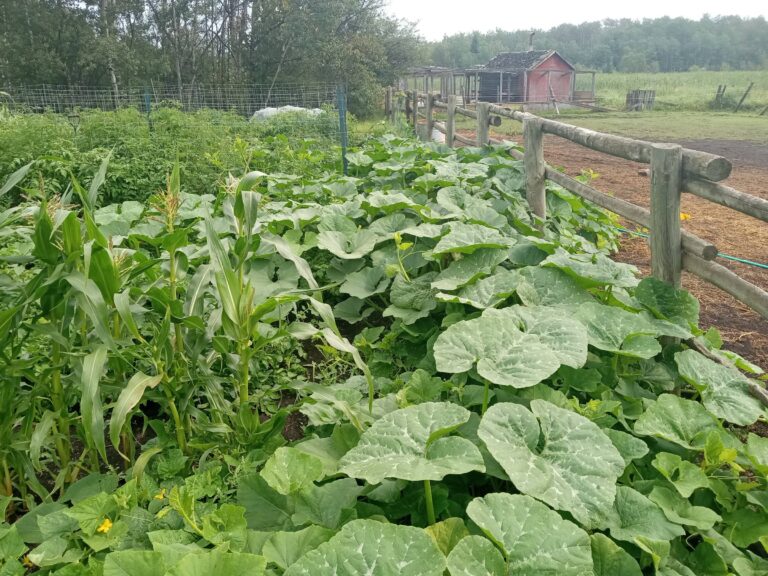
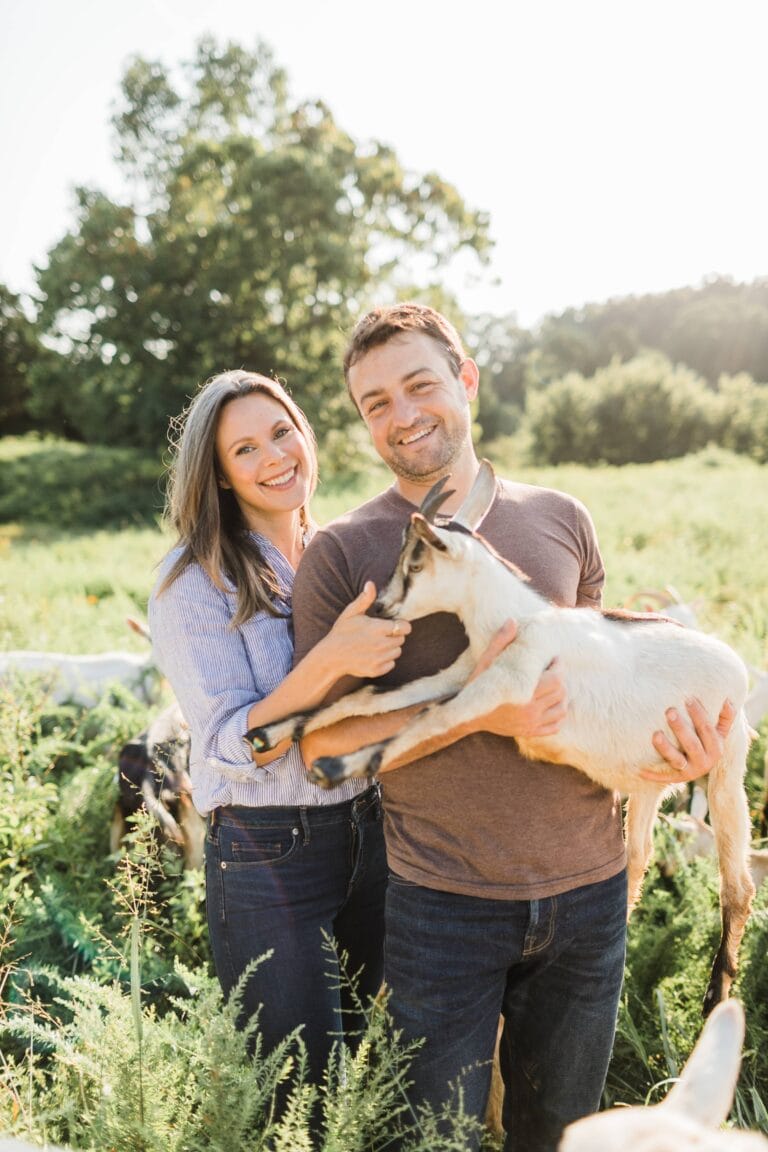
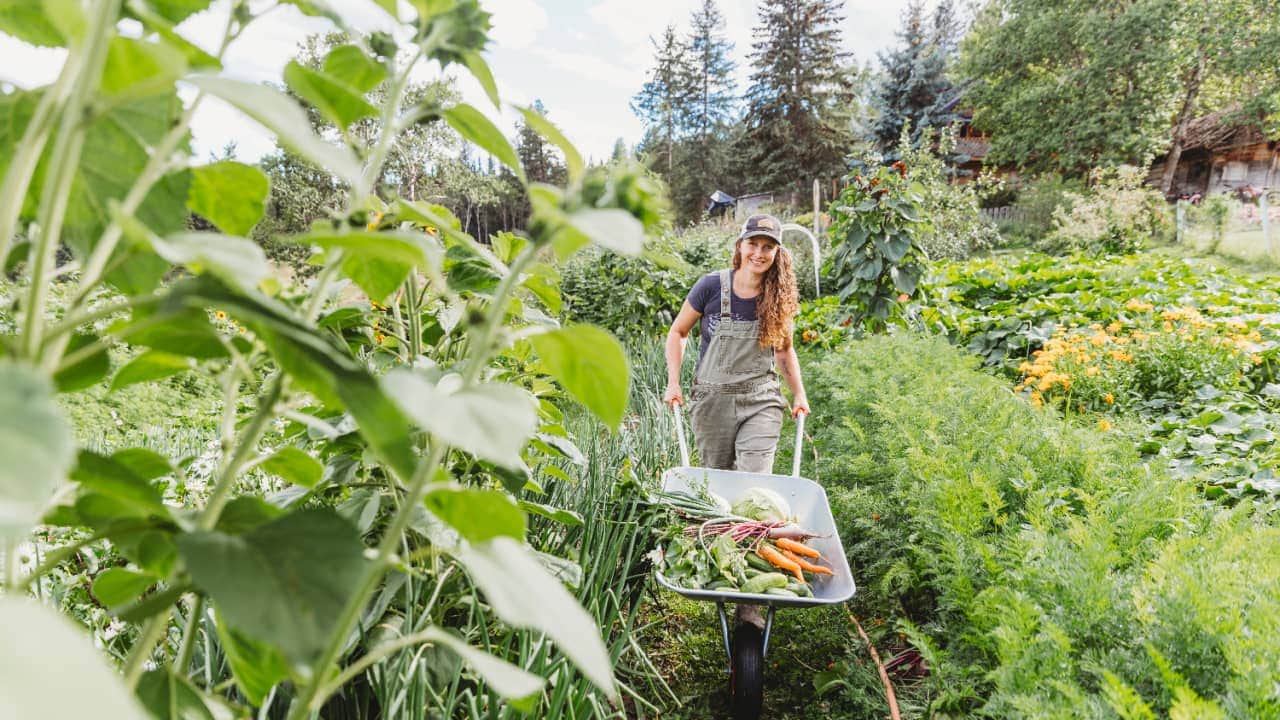
For years, Chelsea and her husband, Dan, have run a full-scale homestead in northern Canada: sheep and cattle, massive, lush, stunning gardens, a canning pantry stocked with roughly a thousand jars a year, and that YouTube channel where Chelsea teaches exactly what she's doing, as she does it.
She drops things on the floor. Her comment section has opinions about this. She does not care.
“Perfection is not the goal,” she says. “I could do a studio-style setup. We've talked about it. But there's enough of that. There is enough of that.”
(Again, Chelsea is utterly authentic; there’s no performance, “no prairie skirts,” which she says are fine for other people but “just isn’t [her].”)
What people actually get from her, she suspects, is relief.
“From the feedback I get, a lot of people who watch my stuff have no interest in ever being a homesteader or growing their own food,” she says. “They just find it very peaceful and relaxing.”
She’s thrilled about this; creating space for peace has “its own real value.”
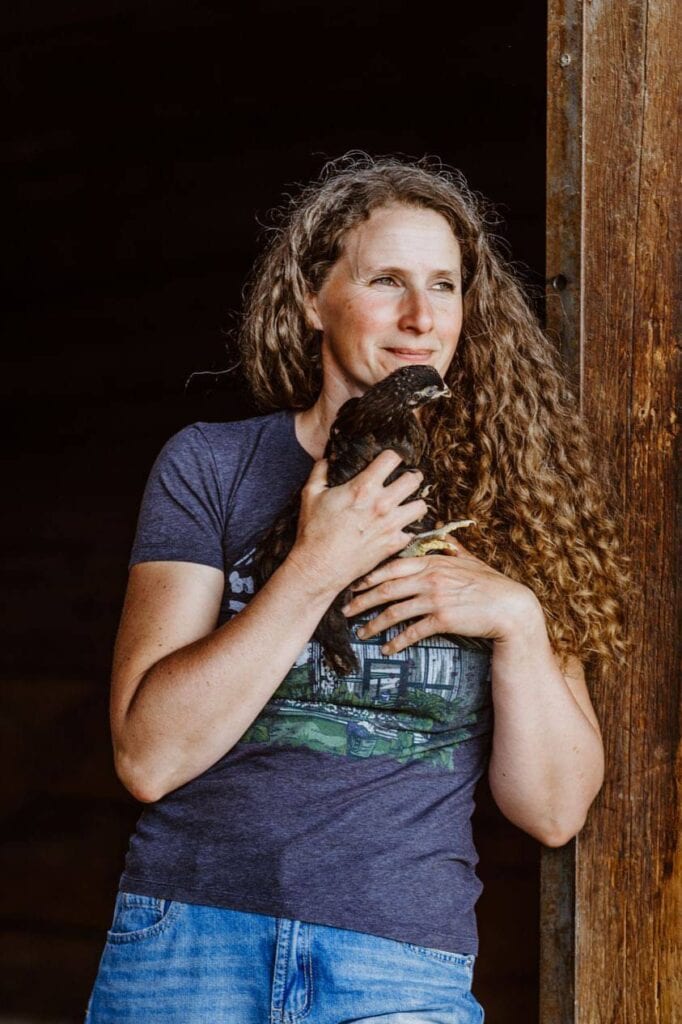
She does hope that the channel encourages her audience to get outside. She herself, she says, “love[s], love[s], love[s] gardening,” not just because of the food, but because of how the process of growing food makes her feel.
“After a few hours in front of the screen, my brain just buzzes,” she says. “It's an odd sensation. And as soon as I go outside and ground myself with my bare feet in the soil – even just wandering around, looking at things – it centers me in a different way. I vibrate very high, I have a lot of energy, and being outside just brings that energy down, which is so healthy.”
(There's science behind this — about the soil microbiome, cortisol, and the whole extraordinary conversation between human skin and living earth. Chelsea is familiar with the research. She also just… feels it. “I don't need the science,” she says. “I know it's true.”)
A Family Affair
Chelsea and Dan’s kids, whose ages span from tween to full adults, have all been part of this. They grow food. They preserve it. They cook dinner on a rotating roster. They all started grocery shopping, by themselves, starting around age 12 or 13. Chelsea would wait in the car and send them in the store, list in hand, having coached them to be strategic about prices. The training left them “genuinely competent about basic things.”
Her oldest daughter, now 23, has thanked Chelsea for the training.
“She has told me so many times what a benefit it is to know how to shop, and how to cook, because she saves a massive amount of money compared to her friends,” Chelsea says. “And [my kids] always find it shocking how the people around them don't know really basic things about food or about work.”
The skill Chelsea seems most proud of is harder to put on a résumé.
Her kids have been outside at -30℃ (-22℉) to milk the cow. They've scrambled to cover the garden ahead of a hailstorm that would have destroyed months of food. There's an internal toughness that comes from that, Chelsea observes: a knowledge, bone-deep, that hard things can be done, that you are the kind of person who does them, that the cold or hardship is not a reason to stop.
“They have just a different level of internal toughness to make it through difficult, challenging things,” Chelsea says. “Wherever they go in the world, whoever they work for, employers notice this. It's a gift.”
Not “the answer”
Chelsea is also, refreshingly, the first person to tell you that none of this is a magic pill.
Social media can create the false idea that if only you did certain things in a certain way, your kitchen would be pristine, your house beautifully decorated, your health perfect, your meals gourmet 3X/day.
Chelsea bought into this idea herself at one point. She believed that if she just did everything right – the food, the land, the nature, the no-fluoride toothpaste – the outcome would be X. A certain kind of life. A certain level of health (perfect!). A certain kind of family.
“I'll be perfectly honest about that,” she says. “I did think that if I did everything right, the outcome for my kids would be somehow different. But the reality is, those things can help your mental health and your physical health. But they're not a magic once-a-day pill.”
She has met incredible parents raising extraordinary kids who've never seen a garden in their lives. People who educate their children differently than she did, whose kids are amazing. People who enjoy phenomenal health who have never met a stick of broccoli.
“I'm not of the belief that there's a right way to do things, or that if you go change your external circumstances, somehow everything else changes with it.”
It’s not a math equation.
She cannot stress this enough.
“I just don't think there's a magic pill for having a good outcome for your kids or your family. There just isn't.”
The New Beginning
The homestead in the far north is real: 45 minutes from town, 18 kilometers of dirt road, winters that drop to -30 and stay there for months. The country there is beautiful and brutal in equal measure. It asks everything of you.
As more of the children have left the home, Chelsea and Dan have looked around and started to reassess. They don’t need to grow as much food, or put up as much hay, or can as much as they do (although Chelsea loves canning almost as much as she loves gardening.)
Homesteading on the scale they’ve reached takes a lot of time, and time… is worth something.
“It’s also expensive,” she says plainly. “You're raising your own food, and the equivalent bought organically out in the world would cost a fortune. But then there's the house insurance living this far out, the fuel bill, the equipment. Dan and I do almost everything ourselves. We're very scrappy, very skilled, we just figure out how to do things. But that is also exhausting. It takes your time. And kids grow fast.”
The older her children have gotten, the louder certain questions have become. What does it mean to be an hour's bus ride from school? To have friends over only if they're willing to stay the night? To be 45 minutes from town when you're a teenager who needs – actually needs – a world beyond your own family?
“When your kids are young, their social needs can be met within the family quite a bit, especially when you have a large family,” Chelsea says. “But when they get older, they need more. And we live in a world that isn't this.”
It all comes down to community. She has built one, but it is still far away.
“My kids need [more community],” she says simply. “I'm good; I don't need that kind of social interaction in the same way. But my kids would thrive.“
So now… that dream has a hard moving date.
Chelsea and Dan have sold the property. They’re moving much closer into town, in a different region that – to Chelsea’s utter delight – enjoys a much longer, warmer growing season.
The kids get the community. Chelsea gets more sun, more months in the soil, more of the thing she has loved since she was 12, when she was hauling water down a hill for a garden nobody else knew existed.
“Would we ever completely detach from this lifestyle? No,” she says. “That's not in me, at least not at this stage. But downsize? A hundred percent yes.”
She will, of course, be sharing all of this with her audience, without filters.
How to Homestead from Anywhere
In the meantime, as the family works through their canned goods so that they have less to move, Chelsea will be filling her kitchen with wonderful smells and tastes.
It turns out that this is THE universal homesteading skill.
“Just cook,” she says. “Even in an apartment, you can shop at a farmers' market and make real food. Cut out the dyes, the processed junk, the excess sugar. It doesn't have to be complicated. And you don't need to be extreme about it; anyone who watches my channel knows I'm not scared of using sugar. But use something high-quality, and use things in moderation. Little steps really do build up.”
She pauses.
“Cook a little more. Plant some herbs on a windowsill. Learn one new skill. There's no perfect path. But creating with your own hands is universally empowering.
“It will feed you in more ways than one.”
Which could be her life’s motto…
Find more Chelsea at Little Mountain Ranch on YouTube and Instagram.
About Saturday Stories
Saturday Stories is a weekly series from the School of Traditional Skills, dedicated to the people in our community who are quietly building a more beautiful, intentional world.
Every Saturday, we highlight a different journey – from urban homesteaders and traditional craftsmen to neighborhood mentors – to show that a life of purpose and self-sufficiency isn't reserved for those with a hundred acres. It’s possible right where you are.