When planted alongside well-chosen companions, tomatoes thrive in unexpected ways. Healthier plants. Bigger harvests. Fewer bugs. Better flavor. These are some of the many benefits of practicing companion planting.
Whether your garden is in a raised bed or sprawling across a larger plot, this article will guide you in choosing great companion plants for your tomatoes while identifying which to avoid.
The Basics of Companion Planting for Tomatoes
At its core, companion planting means growing at least two different types of plants together for the benefit of one or both. Some plants attract pollinators. Some repel crop-devouring insects. Others improve the soil or offer shade and ground cover. When you find that winning combination, there’s a fantastic synergy that results.
Tomatoes are no exception.
These heavy feeders are susceptible to pests like aphids and tomato hornworms, and they can be prone to soil-borne diseases. But a thoughtful mix of companion crops beside your tomatoes can:
- Keep unwanted insects at bay (without reaching for a chemical spray or even neem oil)
- Invites helpful insects like pollinators and predators
- Boost flavor, fruit production, and overall plant health
- Improve soil conditions over time
- Maximize space through smart layering and interplanting
It almost seems too good to be true, yet these practices are rooted in centuries-old agricultural traditions and observations of plants working harmoniously together – all long before synthetic fertilizers and sprays ever existed.
There isn’t one right way to do this, and there’s no need to copy complex planting diagrams. Our aim is to build a diverse, living ecosystem that helps your tomatoes (and your entire garden) thrive.
Let’s dive in.
Best Companion Plants for Tomatoes
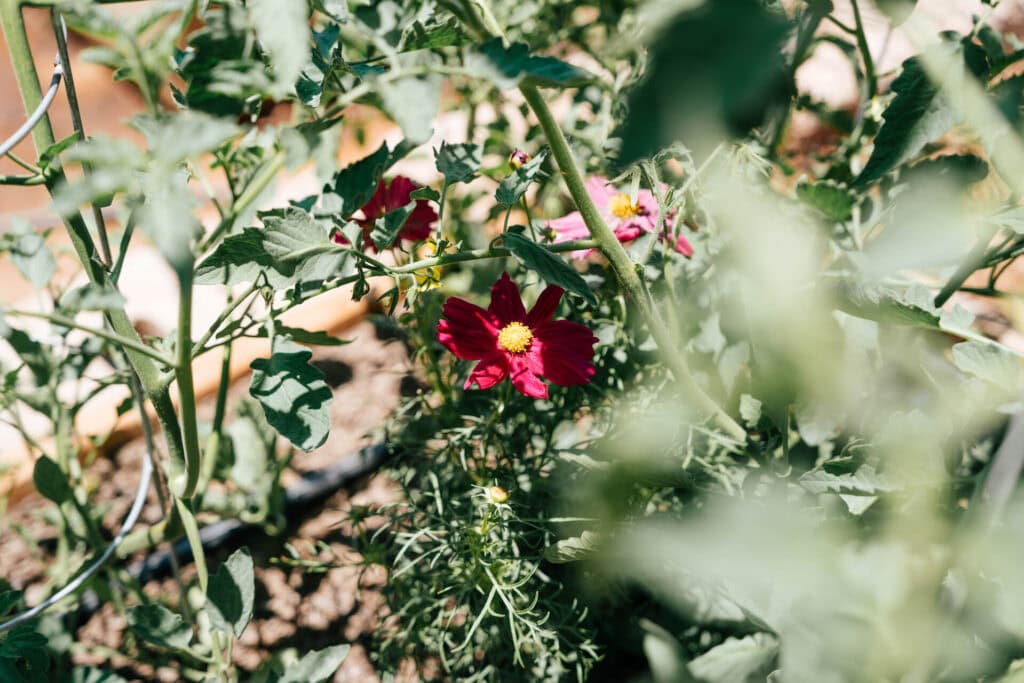
Not all garden neighbors are created equal. When it comes to tomatoes, a few key companions can make a world of difference. Here are the top performers, broken down by what they bring to the table:
Deterrents for Undesirable Insects
- Basil: Anecdotally credited with boosting tomato’s flavor, this fragrant herb masks tomato scent and repels hornworms and aphids.
- Marigolds: This garden classic deters nematodes, whiteflies, and beetles.
- Garlic & Chives: These strong-smelling culinary heroes repel spider mites and aphids.
Pollinator & Predator Magnets
- Borage: This tough, star-shaped herb attracts bees and deters hornworms.
- Sweet alyssum: This mat-like flowering plant lures in parasitic wasps and hoverflies while serving as a great living mulch.
- Dill: Let a few of these leafy herbs go to flower to entice lacewings and ladybugs.
Soil Builders & Space Savers
- Bush beans: These legumes fix nitrogen in the soil, but don’t plant them too close because they can compete with tomatoes for space and airflow.
- Carrots: This root vegetable breaks up the soil and grows well in the shade of tomato plants.
- Leafy greens: Interplanting greens like spinach and lettuce is a fabulous way to use the space under tall tomato plants and keep the soil cool.
Bonus: Trap Crops
Trap cropping is a strategy gardeners use to protect certain plants from unwanted insects by planting a sacrificial crop.
- Blue Hubbard squash: If vine borers or squash bugs are your issue, this plant draws them away from other crops and keeps beneficials nearby.
- Nasturtiums: This flower attracts and pulls aphids away from tomatoes.
These companions don’t just aid your tomatoes – they support your entire garden ecosystem. And they’re relatively easy to plant and tend, making them practical for beginners and old hands alike. See Planting and Layout Strategies for how far to plant them from the tomatoes.
Plants to Avoid Near Tomatoes
Just as some plants are friends, others are foes. Keep the following far from your tomatoes:
- Cabbage & the Brassica family (broccoli, cauliflower, kale): This family of plants compete for nutrients and slow tomato growth.
- Corn: This tasty staple attracts tomato fruit worms and earworms – same pests, more trouble.
- Potatoes: Because these share certain diseases with tomatoes, they increase the chance of spreading infections like blight.
- Fennel: This garden loner inhibits the growth of tomatoes and many other plants due to its allelopathic compounds.
Grow these plants in another part of the garden, and your tomatoes will thank you.
Planting and Layout Strategies for Companion Planting Success
To make companion planting work, a little planning goes a long way. These strategies can help you get the most from your tomato companions:
Interplanting
Mix companions into your tomato rows or beds. Plant low-growers like lettuce or alyssum at the base, place herbs like basil nearby, and fill in with pollinator-friendly flowers around the edges.
Vertical Growing
Stake or trellis your tomatoes to free up space below. This lets you grow spinach, carrots, or chives in the shade of the tomato plants – perfect for small spaces or raised beds.
Trap Cropping
Where insect pressure runs high, plant sacrificial crops away from your tomatoes. Plants that attract small pests, like aphids, such as nasturtiums should be planted in and among your tomatoes. Plants that attract larger pests, like vine borers, such as Blue Hubbard squash should be planted10–20 feet (3–6 meters) from your tomatoes. These lure hungry insects away and entice beneficial insects.
Spacing
Be mindful of spacing, especially if you live in a hot, humid climate. Give tomatoes room to breathe – about 18–24 inches (46–61 cm) apart, depending on the variety – and make sure companions don’t block airflow or sunlight.
Companion planting is most effective when plants have the space and sunlight they need. Keep it simple, observe what works, and adjust as needed.
Companion Planting in Raised Beds and Containers
Raised beds and containers are ideal for companion planting. Why? Because everything is close, which makes management easy.
Raised Beds
- Layer vertically: Train tomatoes upward with cages or stakes, and plant basil, lettuce, or carrots below.
- Edge the bed: Attract pollinators and create a natural barrier to bothersome bugs by lining your perimeters with marigolds, sweet alyssum, or nasturtiums.
Are you just getting started with raised beds or looking to improve on last year’s successes? Check out our in-depth Raised Bed Gardening Class here.
Containers
- Sizing: For maximum production, go with 15-20 gallon containers that can hold a tomato plant and one or two small companions. But a 5 gallon container can definitely suffice for smaller, determinate varieties.
- Top choices: Basil, chives, or compact marigolds stay small and won’t compete much for nutrients or water.
- Watch the watering: Containers dry out fast, so group plants with similar moisture needs and ensure your pot has has proper drainage.
Whether you’ve got one pot or a dozen beds, companion planting can work in any space and often performs better in this type of tight-knit arrangement. The key is to use high-quality soil (and we will walk you through how to fill your raised beds here).
One More Thing…
Companion planting doesn’t need to be complicated, but it does require a double dose of patience and perseverance. Over time, work towards establishing the kinds of partnerships that will allow your garden ecosystem to flourish. And if you give your tomatoes plenty of good neighbors, you’ll be rewarded with stronger plants, fewer problems, and better harvests.
Looking for more guidance? Check out our full class on Companion Planting inside the School of Traditional Skills. It’s packed with real-life examples and hands-on advice to help you build a productive, resilient garden from the ground up.
Companion Planting
Discover how to use companion planting to create an ecosystem in your garden that will allow you as the gardener to take a back seat!