Introduction
If this is your first foray into keeping chickens of any kind, bear in mind that chickens are raised for different purposes. Some breeds are known for their egg production and are kept year-round (for recommended layer breeds, see our article on Backyard Chicken Breeds for Beginners). Others are dual-purpose and can reliably provide both eggs and meat.
Then there are true meat birds, also known as broilers, which are raised for fast, efficient growth during the warmer months of the year. We’ll explore the most popular options in this category, laying out the pros and cons of each to help you choose the bird that best fits your goals.
Understanding What Makes for a Good Meat Bird
Even within meat chickens, there are two general categories.
Hybrid broilers are bred for production and reach butcher weight quickly. You’ll have them for the shortest amount of time, and they will reliably grow quickly. Slower-growing breeds take a little longer to reach butchering weight, but the trade-off is greater hardiness and better flavor, with some breeds also being excellent foragers.
All good meat bird breeds typically have a few key traits in common:
- Fast, efficient growth
- Strong feed-to-meat conversion
- Succulent meat
- A broad breast and solid frame with a higher dressed, or carcass, weight compared with traditional layer breeds
Popular Meat Chicken Breeds for Beginners
Cornish Cross
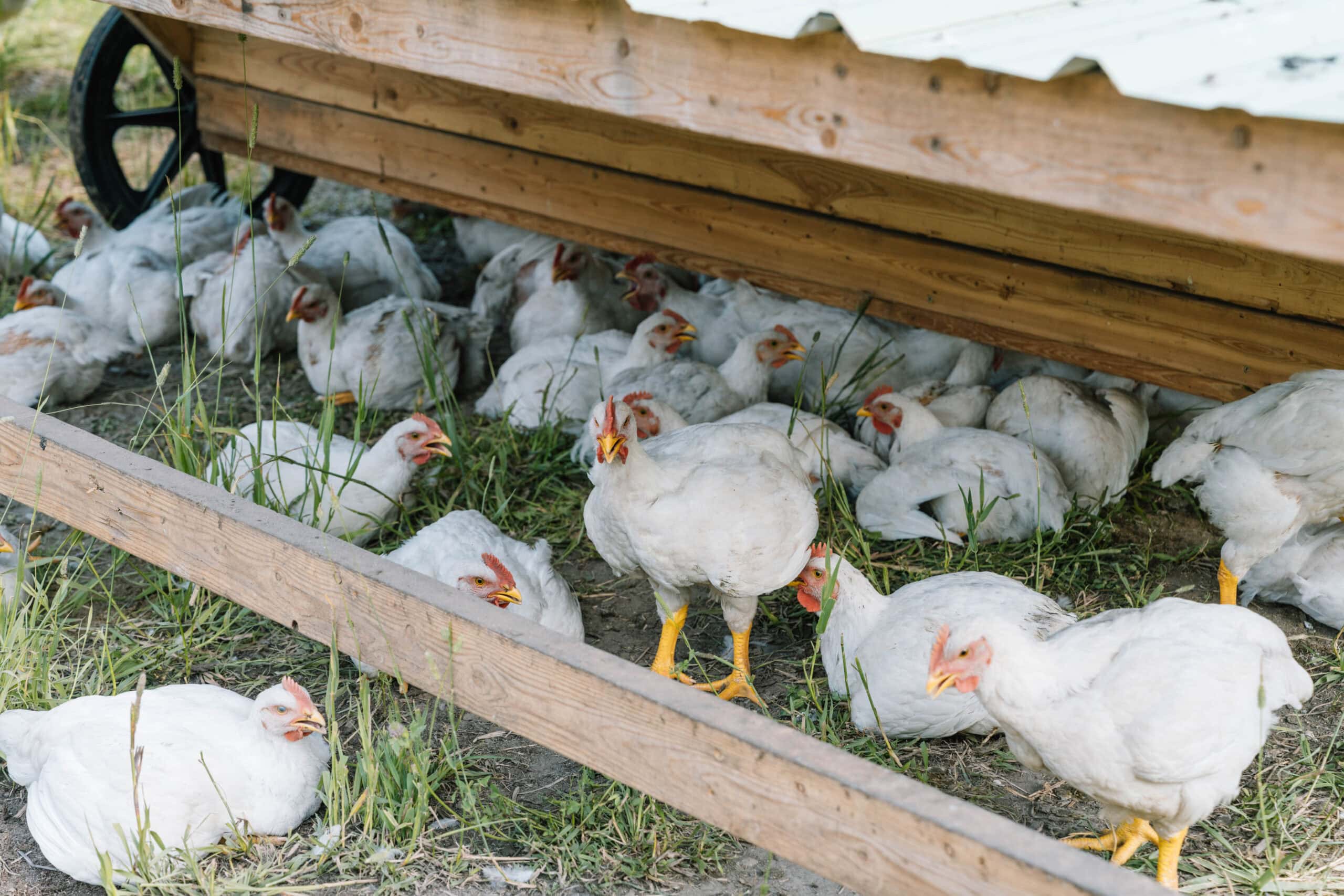
The Cornish Cross is one of the most commonly chosen meat birds, especially for those who want an extremely fast turnaround. It grows large quickly and efficiently, often reaching butcher weight in just 6 to 8 weeks. For a family looking to fill their freezer with high-quality chicken in a short window, this breed is a good option.
Advantages:
- Tender meat
- Sizable breasts
- Excellent feed conversion
- This is the ubiquitous grocery store chicken, so their familiarity with most households may make them more suitable for a small commercial venture compared with other lesser-known meat breeds
- Depending on your climate, you may be able to raise more than one batch of Cornish Cross chickens in the year, selling the extras to cover the costs of your own family’s meat birds
Disadvantages:
- Requires more intensive management because these birds – uncharacteristic of most chicken breeds – tend to be more delicate, tiring easily and refusing to walk even short distances either for food or water, especially in hot weather
- The rapid growth which has popularized the breed can also lead to significant health and structural issues if not cared for closely or processed by about 12 weeks
- Flavor is often milder than that of slower-growing birds
- Owing to its hybrid status and the fact that it cannot produce offspring, chicks need to be purchased every year, which may pose access issues when demand outpaces supply
This breed can work for a novice chicken owner, especially for those interested in a short growing period and prepared for more day-to-day oversight.
Red Rangers or Freedom Rangers
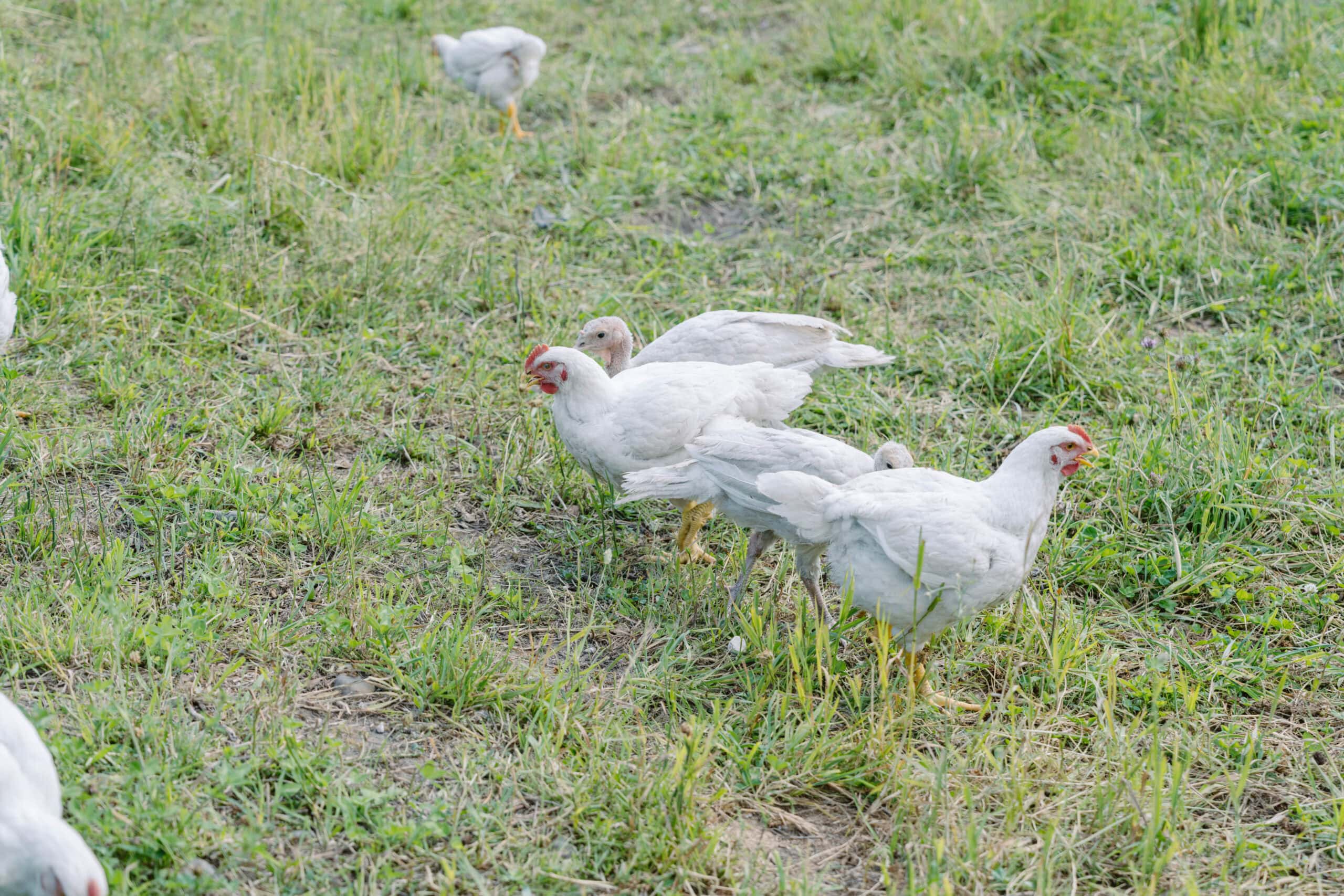
Red Rangers are often chosen by homesteaders looking for something in between the Cornish Cross and dual-purpose heritage breeds. They provide a combination of solid growth with ease of management.
They usually reach butcher weight in about 10 to 13 weeks, but because they act more like a natural chicken (in striking contrast to the Cornish Cross), caring for them is simpler.
Advantages:
- Hardier and more adaptable, making them less management-intensive
- Excellent foragers, this active breed is better suited for pasture-based systems and can reduce the need for purchased feed because they source a large portion of their own food
- Compared with Cornish Cross, Red Rangers provide richer, more developed flavor – and, arguably, more nutrient-dense meat thanks to their more natural diet
Disadvantages:
- Longer time to harvest, which raises overall costs both in terms of feed and labor (tip: don’t forget to count your valuable time when making these calculations!)
- Chicks need to be bought in every year because attempts to breed them will not produce true Red Ranger offspring, making them potentially unavailable in years when demand outpaces supply
- Some consider this breed more difficult to process than the Cornish Cross
These are a favorite among many homesteaders, especially people who have tried raising Cornish Cross and found them unappealing. This hybrid breed offers moderately fast growth rates in a more resilient package, making it a true competitor to the Cornish Cross and worth a try.
Dual-Purpose Breeds
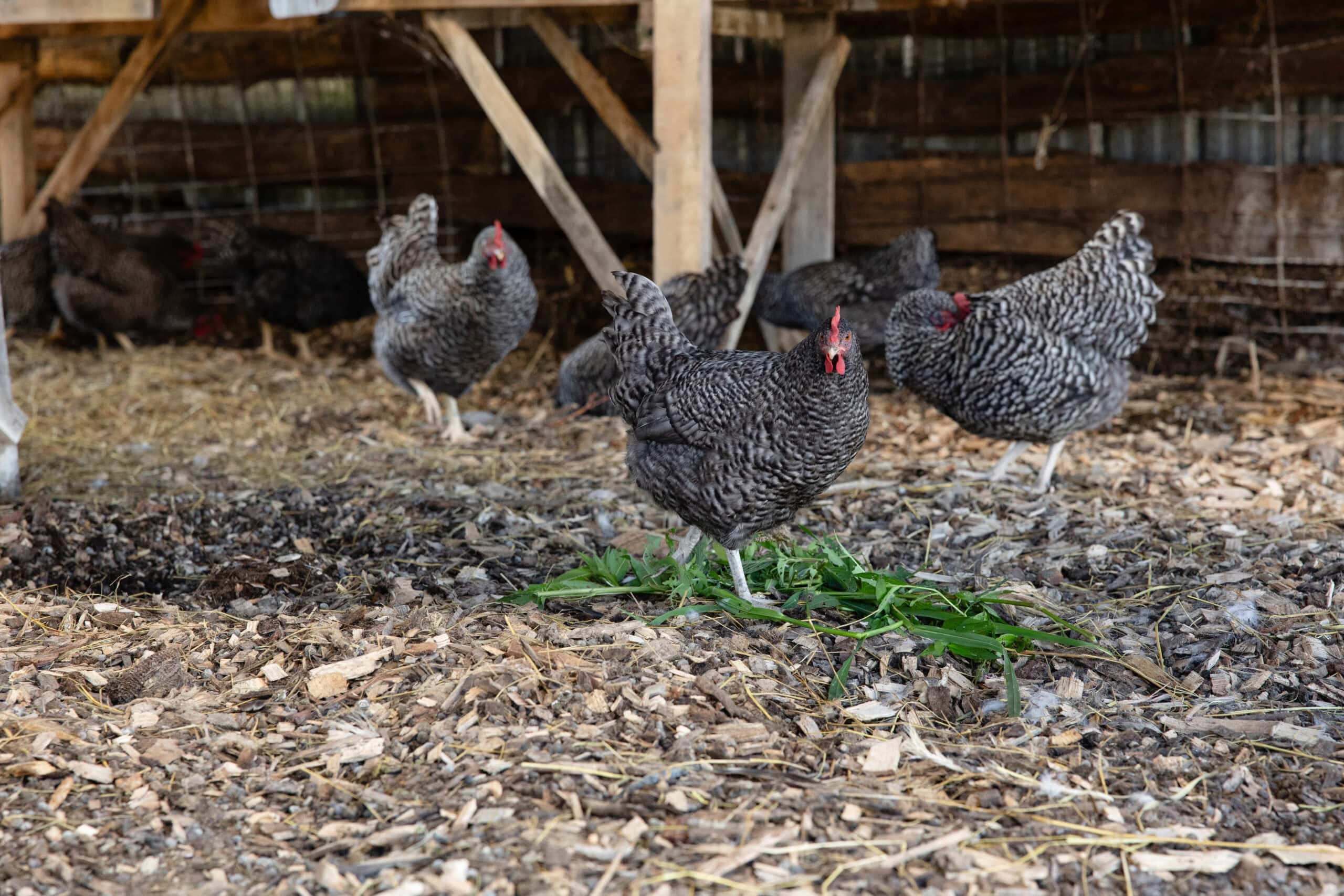
For homesteads that want both eggs and meat from the same flock, dual-purpose breeds like Australorp or Orpington are another route to consider.
Advantages:
- Offer more flexibility when building a mixed flock as they can be raised for either eggs or meat
- Tend to be more gentle than the typical broiler breeds, which may make them better for families with children
- Provide a sustainable option since homesteaders with a rooster can hatch out eggs on site instead of buying in chicks annually from a hatchery
- Many breeds are available from a wide range of hatcheries, making them easier to buy for those getting started
Disadvantages:
- These birds grow much more slowly than the hybrid breeds, increasing overall costs substantially
- The finished carcass weight is significantly smaller, making them far less efficient for meat production
One More Thing…
Raising meat chickens is a wonderful way to nourish your household and get started raising your own meat on a small scale. With so many options to choose from, there is likely a breed to match your priorities and the kind of system and rhythms you want to build.
Some homesteaders value the speed of fast-growing broilers, while others prefer slower-growing birds that offer more flexibility. Regardless, start with a few chickens, consider trying out just one new breed per year, and observe closely. Over time, you’ll get a clearer sense of what works best for your land and your goals.
If you’re interested in taking a more active role in how your household is fed and getting more connected with the land you’re stewarding, give meat chickens a try this spring and dive deeper with our Raising Pastured Meat Chickens Class. It has all the information you need to get started, providing guidance on feeding, housing, and even processing your birds at home.
Raising Pastured Meat Chickens
Join Justin Rhodes from Abundant Permaculture to learn how to raise a freezer full of healthy, pastured, meat-chickens in your backyard, in only 58 days.