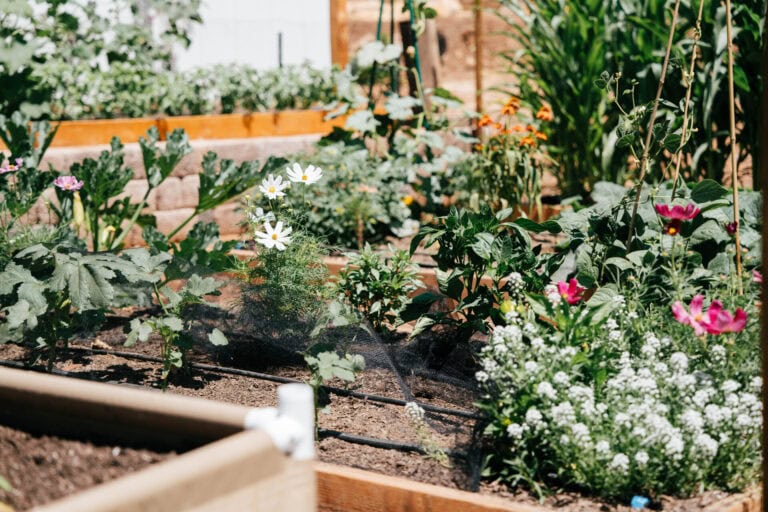
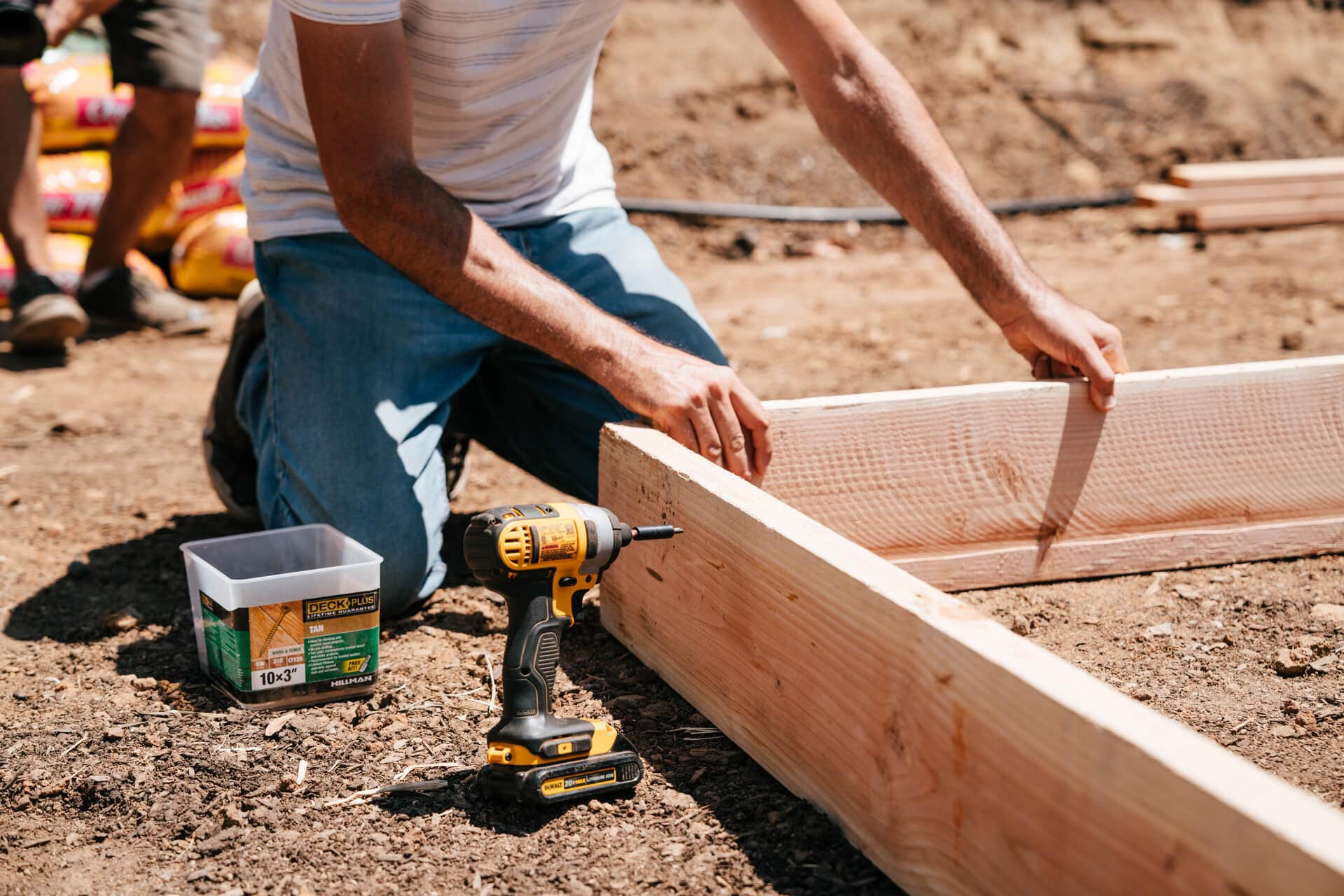
How deep should a raised garden bed be? Well, it depends.
Let’s dig into what actually determines the best depth for your raised beds and how you can make the right choice for your plants, your garden, and your back. (If you’re ready to go all in on raised bed gardening, you can check out our class on Raised Bed Gardening with Brian Lowell.)
The Goldilocks Principle: Not Too Shallow, Not Too Deep
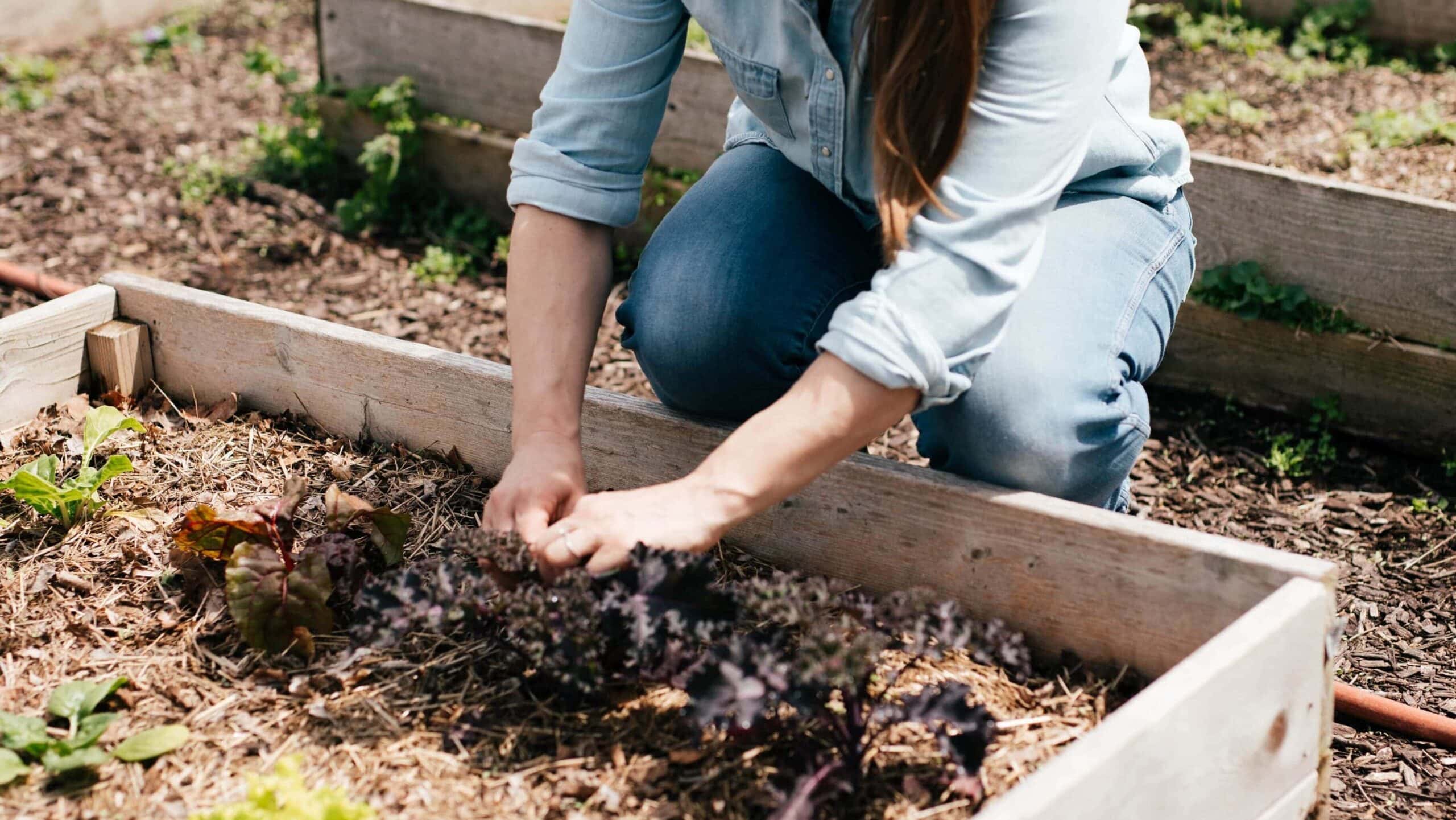
The depth of your bed affects everything, from water drainage and root development to soil quality and ease of maintenance. It can also impact whether your back aches after the end of a long day in the garden.
Most vegetables have root systems concentrated in the top 6–8 inches of soil, so a bed that’s 8 inches deep on top of native soil is enough to get started.
But if you’re building on top of concrete, rocky ground, or contaminated soil–or you simply need more space for deep-rooted crops like potatoes and squashes–you should aim for 12-15 inches to give those roots room to stretch.
Let’s look at how to decide what’s best for your space.
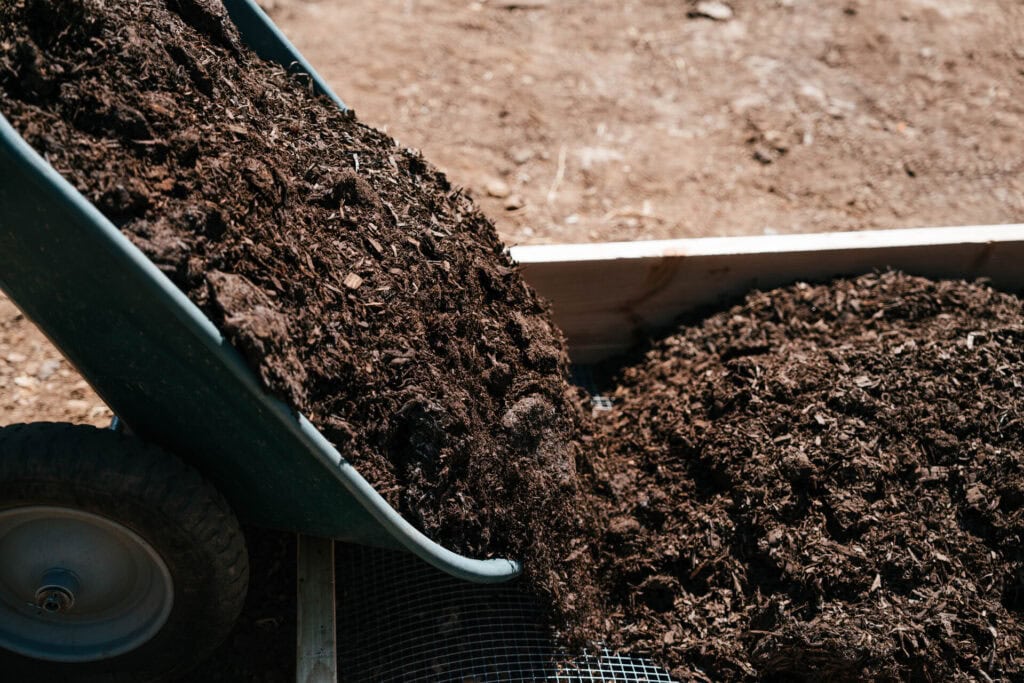
Matching Raised Bed Depth to Your Soil Type
You can’t change what you’re building on, but you can build your raised bed to work with it. Here’s a guide based on the type of soil—or lack thereof—beneath your bed:
- Loamy Soil: 4–6 inches is workable, though deeper is better for root crops
- Sandy Soil: 6–8 inches helps retain water and nutrients
- Clay Soil: 12 inches is ideal to improve drainage and reduce compaction
- No Soil (Concrete or Contaminated Ground): 12–15 inches minimum, plus a liner and drainage holes
How Deep for Different Plants?
If you already have a planting plan in mind, match your bed depth to your crops.
| Plant Type | Ideal Depth |
| Leafy greens & herbs | 6-8 inches |
| Peppers, beans | 10-12 inches |
| Tomatoes, carrots | 12-18 inches |
| Potatoes, deep-rooted crops | 15+ inches |
If you plan to plant a mix of these, aim for at least 12 inches. Not only does this depth keep your options open, but it also allows more soil to retain moisture, helping your beds not dry out too quickly.
Raise It Higher (If You Need To)
Let’s talk ergonomics.
If you’re gardening with back issues, in a wheelchair, or just want to reduce daily strain, a raised bed can be as high as you want it to be. Just remember that you’ll need to fill it with a full 12–15 inches of good soil, so plan your budget accordingly.
On that note, consider the “hugelkultur” method. Simply place logs, sticks, or straw at the bottom to fill some space if your raised bed is over 15 inches tall. Not only can it significantly reduce startup costs, but it also promotes long-term soil health as the material slowly decomposes, releasing nutrients into your bed.
Building on Hard or Contaminated Surfaces
If your garden space is a patio or paved area, you can still make it work. But your raised bed should be:
- 12–15 inches deep
- Lined with a plastic barrier (look for #2 or #4 plastics)
- Poked with drainage holes (every foot if over soil, more often if over concrete)
- Filled with gravel at the bottom to keep roots elevated and healthy, and to provide a buffer between potential contaminants and your soil
The Bottom Line
So how deep should a raised bed be?
- At least 8 inches over soil (12 is better)
- 12–15 inches over hard or contaminated surfaces
- More than 15 inches if building for accessibility or deep-rooted crops
When in doubt, go deeper.
It’s an upfront investment, but it pays off in stronger plants, better drainage, and fewer frustrations down the line.
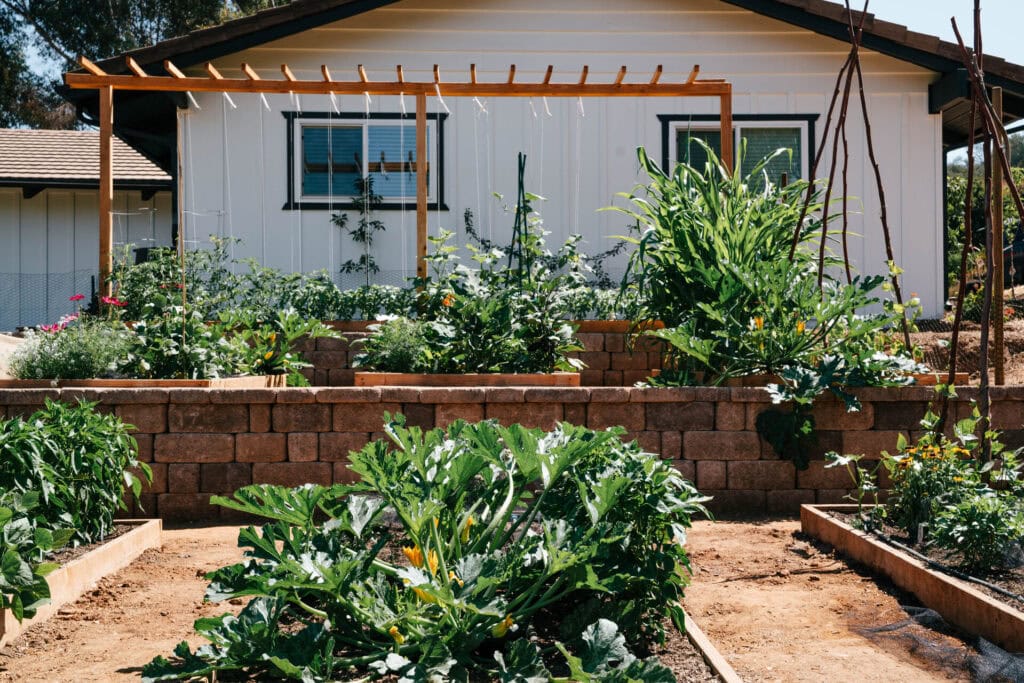
One More Thing
If you’re just getting started, remember that you don’t need to get it perfect to get it growing.
Start where you are with what you have. And if your first bed is only 6 inches tall and made from salvaged wood, that’s fantastic. You can always add more soil or build another bed next season.
Every harvest starts with a first step, and you’re already on the right path.
At the School of Traditional Skills, we offer the classes (and workshops!) you need from the instructors you trust. No more searching through blogs or endless videos with ads. Get an uninterrupted, in-depth learning experience. Check out our available classes here!
Raised Bed Gardening
Join Brian Lowell to learn the simple steps to growing abundant and healthy vegetables in simple raised beds, no matter where you live.