There is another way to approach beekeeping, one that works with the bees rather than trying to control every element of their lives.
Of course, this low maintenance method does not mean doing nothing. It entails reducing unnecessary interference while still paying attention to the health and needs of the colony. Simply put, a natural approach shifts the focus. Instead of trying to direct every detail, you set up the conditions conducive to letting bees follow their own rhythms.
What a Low-Maintenance Approach Looks Like
Low-maintenance beekeeping requires a thoughtful beekeeper who knows when to step in and when to step back. With this more natural approach, you will still be observing the hive and learning about healthy bee behavior. But you will be mindful not to interrupt the colony more than necessary.
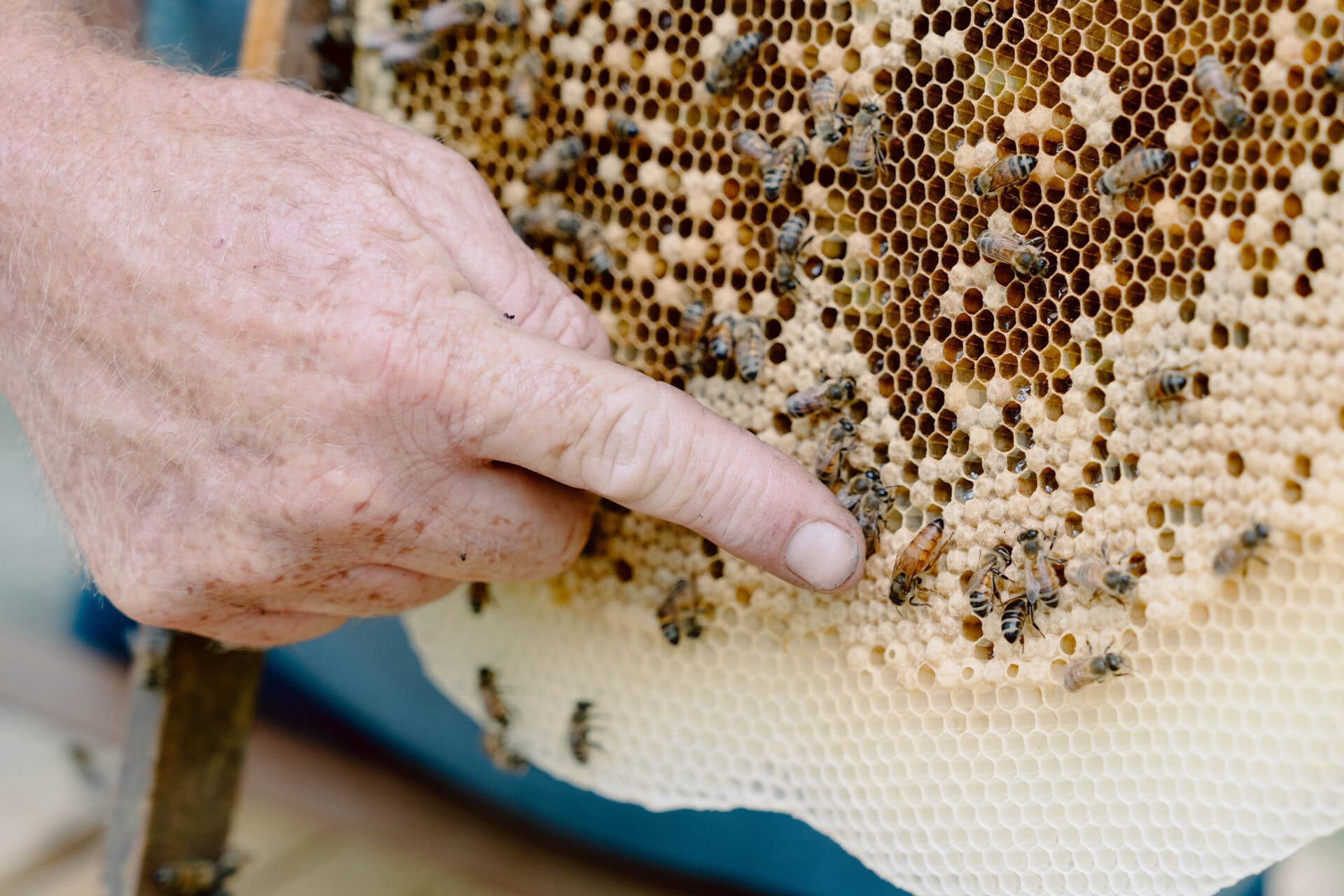
This approach works best when the physical setup supports how bees live in the wild. In this way, you can avoid many of the problems generally associated with the conventional method. For instance, commercial beekeepers frequently recommend a plastic foundation for comb building, but research suggests that bees born on this are larger than those born on natural honeycomb, making them more susceptible to the parasitic varroa mite.
The Principles Behind Natural Beekeeping
At its core, this method acknowledges that bees are feral creatures, not small livestock.
In stewarding our bees, we want to imitate as much as possible their own natural patterns and behaviors. That includes giving them room to build their own comb, limiting unnecessary disruption, and allowing them to feed themselves with nectar — not sugar water.
When bees can respond to their environment this way, the colony often stays calmer, healthier, and more resilient.
Catching a Swarm: A Simpler Way to Start
One easy way to begin beekeeping is by catching a local swarm.
A swarm is a group of bees, usually with a queen, looking for a new place to live. Instead of buying bees, you are inviting a local colony to take up residence in your hive.
This can be a simple, low-cost way to begin. Swarms are free, they are already adapted to local conditions, and they are often more resilient than bees brought in from somewhere else. Catching local swarms also supports a more self-sustaining apiary with fewer problems down the road.
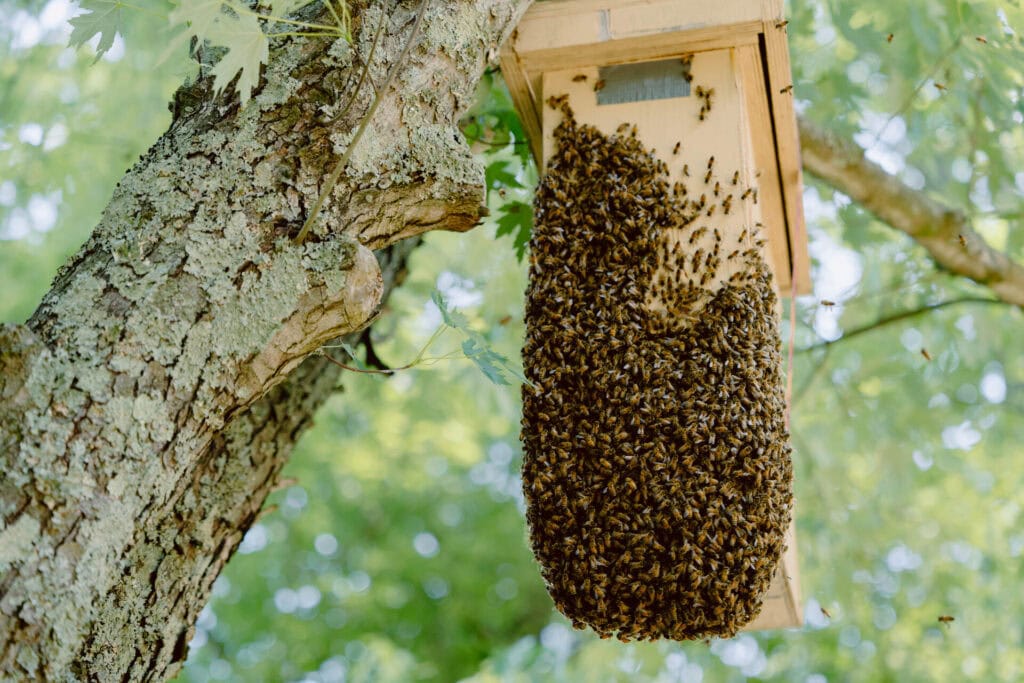
How to Build and Place a Swarm Trap
A swarm trap is a box meant to attract scout bees that are searching for a new home for the colony. (To learn what other equipment is necessary for beekeeping, check out our article on Beekeeping for Beginners.)
The trap should have an internal volume of approximately 7.9 to 10.6 gallons (30 to 40 liters). This size tends to be attractive to scout bees. Inside the trap, include frames or guides to give the bees a place to begin building. The front should have a single entrance hole. The trap also needs a secure top to protect from the elements and a sturdy handle so it can be hung and retrieved easily.
Placement matters; higher spots often yield better results. Set the trap 6 to 15 feet (1.8 to 4.6 m) off the ground. Place traps near tree lines or other areas where bees are already active. A few drops of lemongrass oil inside and around the trap can help attract scout bees, and the scent can be refreshed every few weeks if no swarm has moved in yet.
Once bees start using the trap, watch their activity. If bees are returning with pollen, that is a good sign the queen is present and the swarm has settled. After a swarm moves in, leave it undisturbed for about 10 days so the colony has time to commit to the location before you move it.
Building and Placing a Hive
Once you have a swarm, the next step is moving it into a hive.
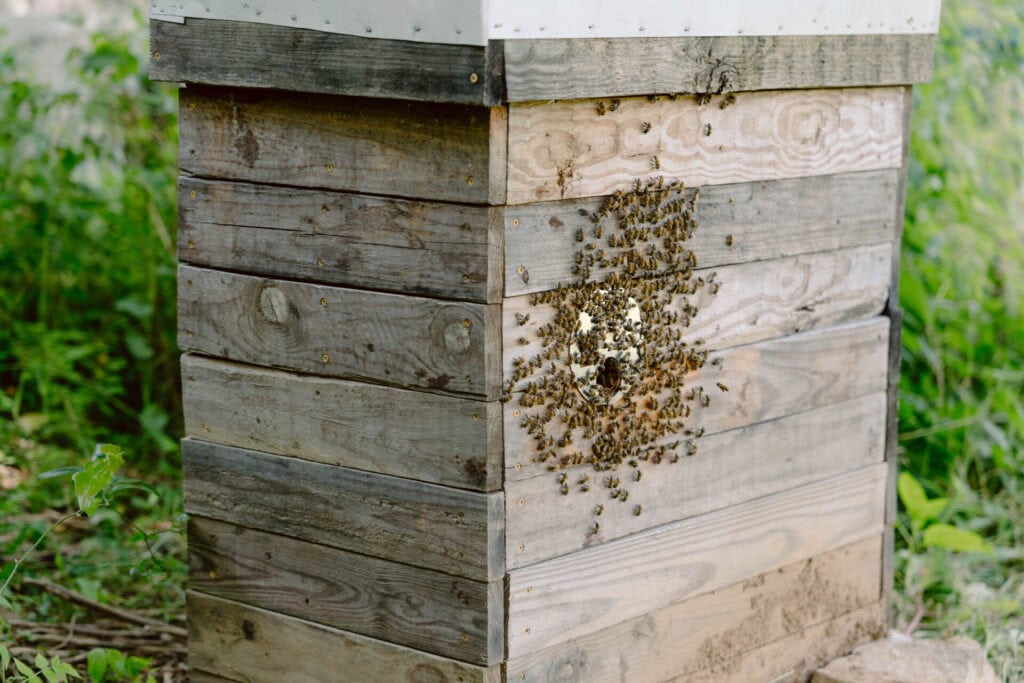
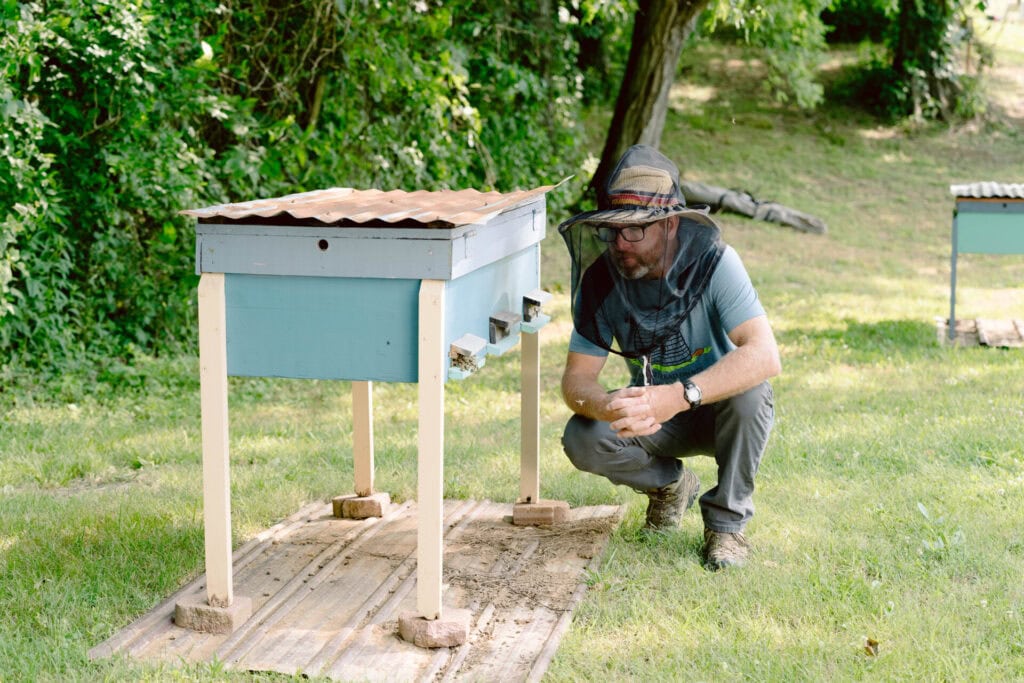
As you may have guessed, a good hive setup should reflect what bees would look for in the wild. Choose a sheltered location that stays fairly stable and dry. Place the hive on a flat surface. It can help to put wood or metal underneath so you don’t have to mow right around it later on. Keep the entrance pointed toward an area with little foot traffic, and allow about 10 feet (3 m) of open space in front of the entrance for the bees' flight path.
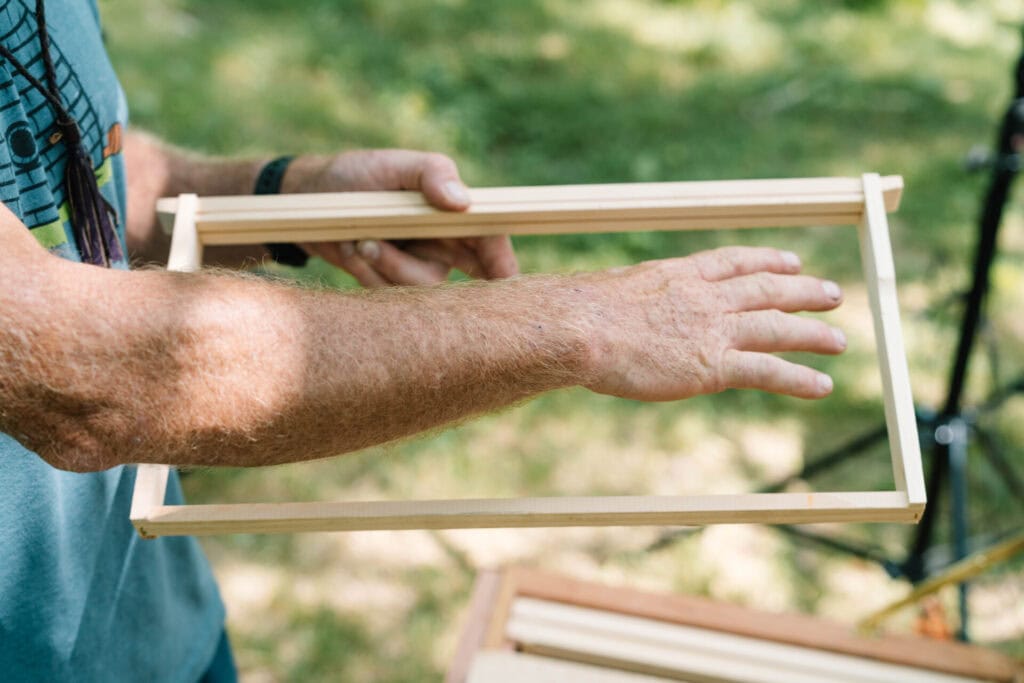
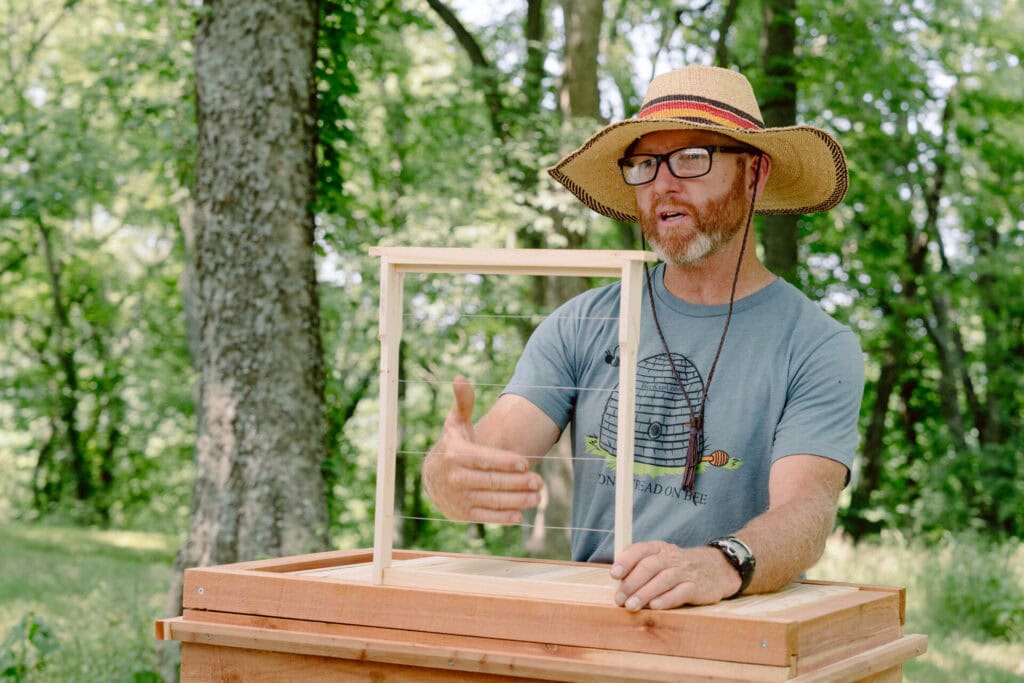
Simple wooden hive designs work well for this kind of system. Follower or divider boards can help the colony expand at their typical pace. Starter strips and stainless steel wire can guide the bees to build straight comb while still permitting them to build naturally instead of relying on a pre-fabricated hive foundation. (And once you’re ready to start building, our online Natural Beekeeping class with Adam Martin includes swarm trap and bee hive plans with detailed dimensions and supply lists.)
Routine Care Without Overdoing It
Low-maintenance beekeeping still requires care. The difference is that the care is quieter and based more on observation of normal bee patterns of behavior than on intervention.
Instead of opening the hive often, begin by watching from the outside. Look at flight activity. Notice whether bees are bringing in pollen. Pay attention to whether the colony seems healthy, active, and stable. These outside observations can tell you a great deal without disrupting the hive.
When you do approach the hive, stay calm and move slowly. Come from behind when possible to avoid the entrance and reduce defensive behavior. Protective gear is helpful at these moments, especially while you are still learning to read the colony with confidence.
One More Thing…
Beekeeping does not need to be difficult. The natural, low-maintenance approach outlined above practically sets beginners up for success from the start.
The key is to watch closely. Observation builds knowledge over time, and that is what helps a beginner find their footing. Focus on catching healthy local swarms, setting up a good hive, and allowing the bees to live in a way consistent with their nature.
Before long, you’ll be enjoying the sweet rewards of your patient labors.
Natural Beekeeping
Join Adam Martin from the Bee Kept as he shows you the natural sustainable way to keep bees!