But the goal of companion planting is to understand how plants support each other in a shared space, rather than memorizing planting charts. What are the basic principles behind companion planting, and what can it accomplish in your garden? That’s what we’ll cover in this article.
What Is Companion Planting, and What Can It Do in the Garden?
Companion planting is the practice of growing different plants near each other so one or both benefit. At its core, companion planting focuses on how plants work together to create a healthy system, rather than treating each crop as if it grew alone.
The advantages of companion planting are many:
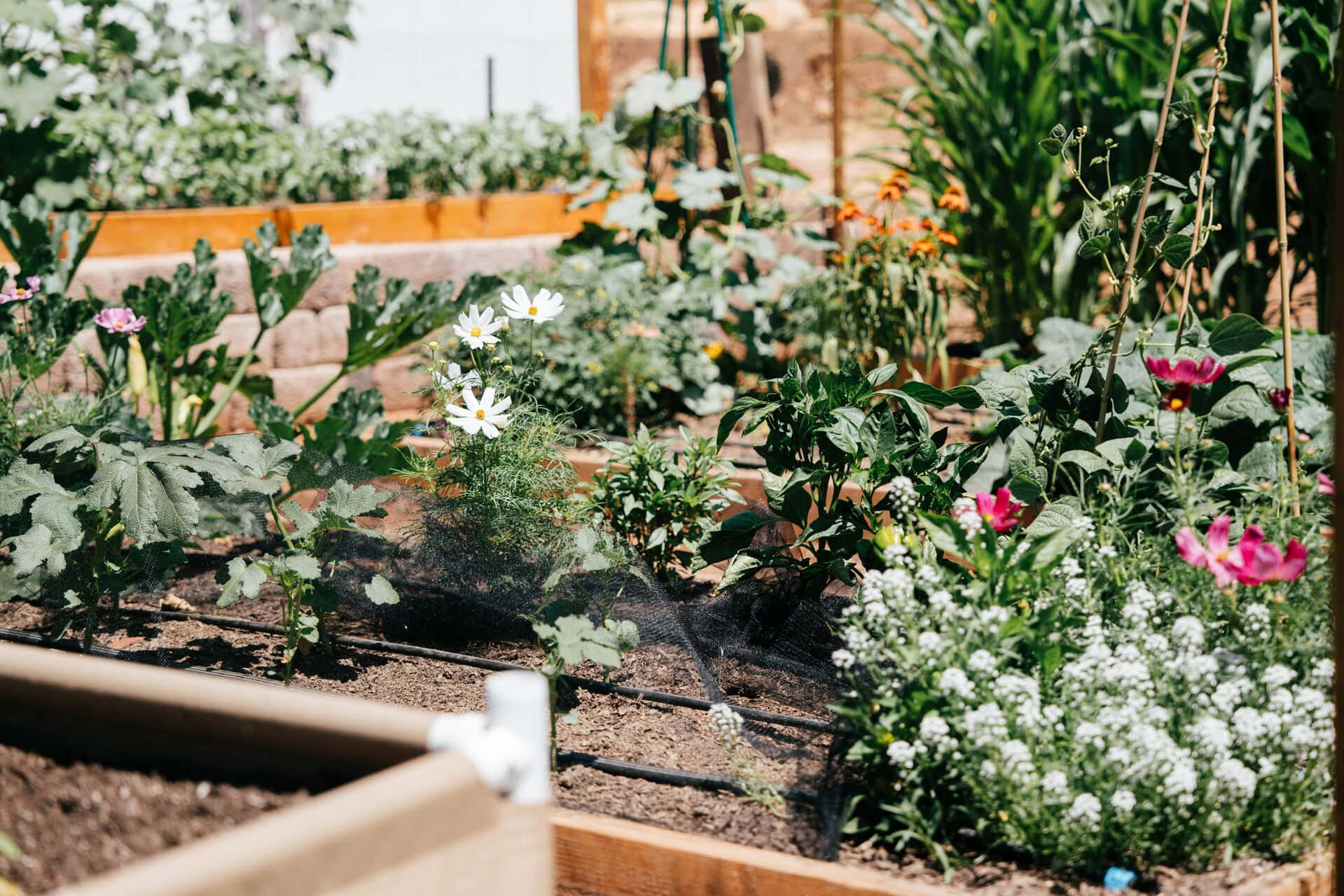
- It can help draw pollinators to flowering and fruiting crops and invite beneficial insects that help reduce harmful insect pressure.
- It can encourage biodiversity above and below ground, improving nutrient and water cycling.
- Intentionally placing tall crops, flowering plants, and low-growing plants together helps maximize your garden space.
- In many cases, this improves soil coverage and enhances overall garden health.
That does not mean every planting needs to be complicated. A little thought about who grows near whom can make the garden work better as a whole.
Why Diversity Matters
Companion planting works best in a diverse garden rather than a monoculture, or single-crop block.
A diverse garden functions more like a balanced growing system. Planting multiple species together follows the pattern found in nature, where different plants grow in relationship with one another rather than in isolation.
Mixed plantings also make it harder for insects and diseases to spread quickly through the garden, while a monoculture of one crop can easily transmit problems from plant to plant. A wider range of plants can help slow that pattern down and encourage resilience over time.
Common Types of Companion Plants
Not every companion plant does the same job. Each one tends to fill a specific role, though some can perform multiple.
Flowers
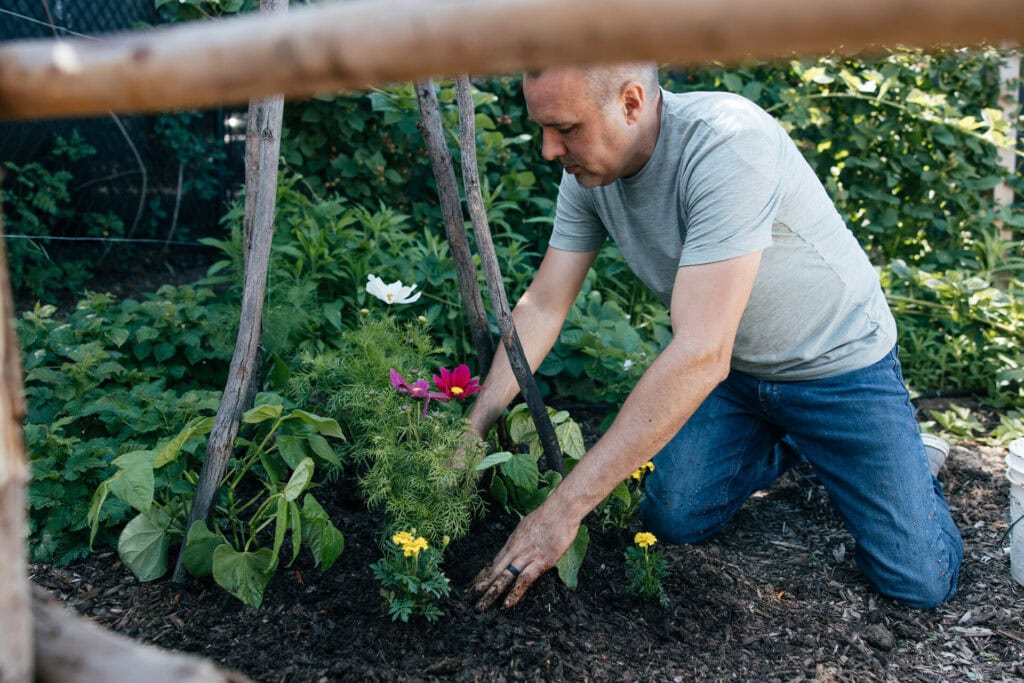
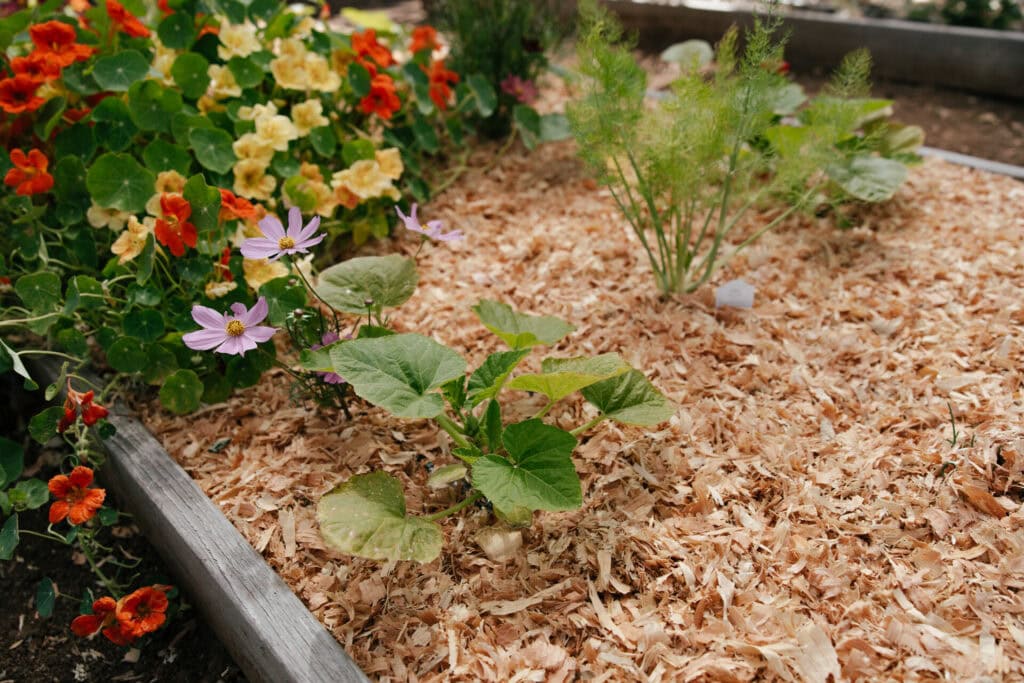
Flowers draw pollinators and beneficial insects. Adding them near vegetables increases garden activity and supports fruiting crops throughout the season. Even a small number of flowering plants can help bring more activity and balance to the garden.
Herbs
Herbs are one of the easiest ways to start experimenting with companion planting. They fit easily between vegetables without taking up much space, promote insect diversity, and provide medicinal and culinary benefits to boot. Letting some herbs go to flower is an excellent way to get two jobs done with one plant species.
Low-Growing Plants
Low-growing plants cover the soil and act as a living mulch. They can help suppress the growth of unwanted plants, hold moisture, and reduce the amount of bare ground exposed to sun and wind.
Legumes
Legumes enhance soil fertility through nitrogen fixation. In this way, they can play a useful role in the garden by building soil and increasing productivity. Legumes are also a popular choice among gardeners because they function as a cover crop or “green manure.”
Trap Crops
Trap crops are sacrificial plants that draw garden intruders away from the main crop. They can offer an added defense for certain crops against insect pressure.
Why Good Plant Pairings Help
Good plant pairings achieve more together than the individual plants do in isolation.
They can improve pollination for fruiting vegetables, increase beneficial insect activity, and reduce bare ground, which helps regulate soil temperature and suppresses the growth of unwanted plants.
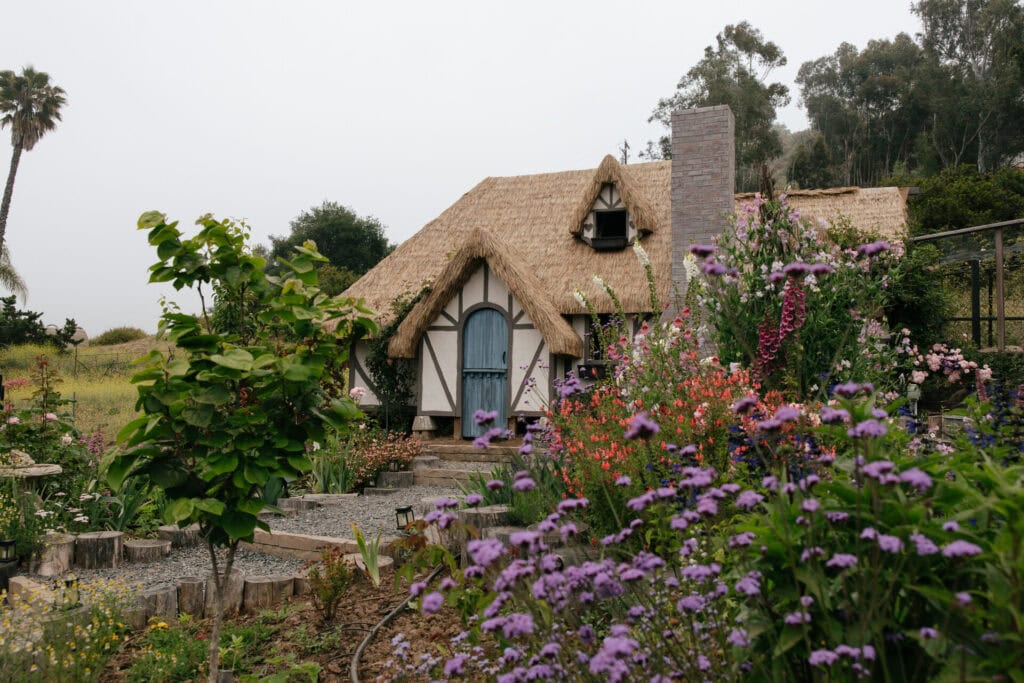
When plants with different growth habits are paired well, the growing space can be used more effectively without becoming harder to manage. In fact, these relationships help the garden function more like a healthy ecosystem, which, over time, requires less oversight and intervention.
Factors to Consider Before Planting
Companion planting is helpful, but it does not replace good garden planning. Before choosing your plants, consider the following:
- Some plants compete for the same light, water, and nutrients.
- Crops in the same family can share disease and predation from the same harmful insects, which can make them poor neighbors in certain situations.
- Be mindful not to overcrowd the garden. When plants are packed too tightly, airflow decreases, disease pressure rises, and harvesting becomes harder than it needs to be.
- Climate, soil, and layout matter too. A pairing that works well in one garden may need to be adjusted in another.
Companion planting works best when combined with good spacing, healthy soil, and careful observation.
A Simple Way to Choose Companion Plants
Starting with the main crop, ask yourself what it needs most. Does it need more pollinators nearby? Would it benefit from more beneficial insect activity? Does the soil around it need better coverage? Could the plant use shade, support, or some combination of the above?
From there, choose companion plants that serve at least one clear purpose. Fewer plants that each do multiple jobs can simplify the plan and the work entailed.
You may be eager to apply this new knowledge right away, but there’s no need to redesign the whole garden at once! Start small with one crop or one bed, considering what combinations can work well for those few plants. Keep notes on what worked and what didn’t. Those observations can help you make better decisions season by season and scale up your companion planting in the future.
One More Thing…
Companion planting is a practical and easy way to take your garden to the next level. Once you get the hang of how various plants can work together, you’ll be able to make thoughtful pairing choices in your own space. And you will be well on your way to building a healthier, more bountiful garden.
For a closer look at specific pairings, see our cucumber companion planting guide and our tomato companion planting guide. If you want to go deeper on the topic, the natural next step is our Companion Planting class with Brian Lowell.
Companion Planting
Discover how to use companion planting to create an ecosystem in your garden that will allow you as the gardener to take a back seat!