Finding the Right Fit for Your Life and Your Homestead
Goat milk is nutrient-dense and useful. It’s easy to digest and can be used for drinking, cheesemaking, soap, and more. Some breeds give a lot of milk. Others give less, but it’s richer. What matters most is how that milk fits into your routine.
You don’t need to have everything figured out before you start. Goats, like most homestead animals, are generous teachers. This guide will help you choose a breed that matches the time you have and the life you’re building.
What Makes a Great Dairy Goat
Milk production matters, but it’s not the only thing to consider. A good dairy goat is one that is docile enough to be handled daily, stays healthy in your environment, and fits your goals for both yield and use.
Temperament and Handling
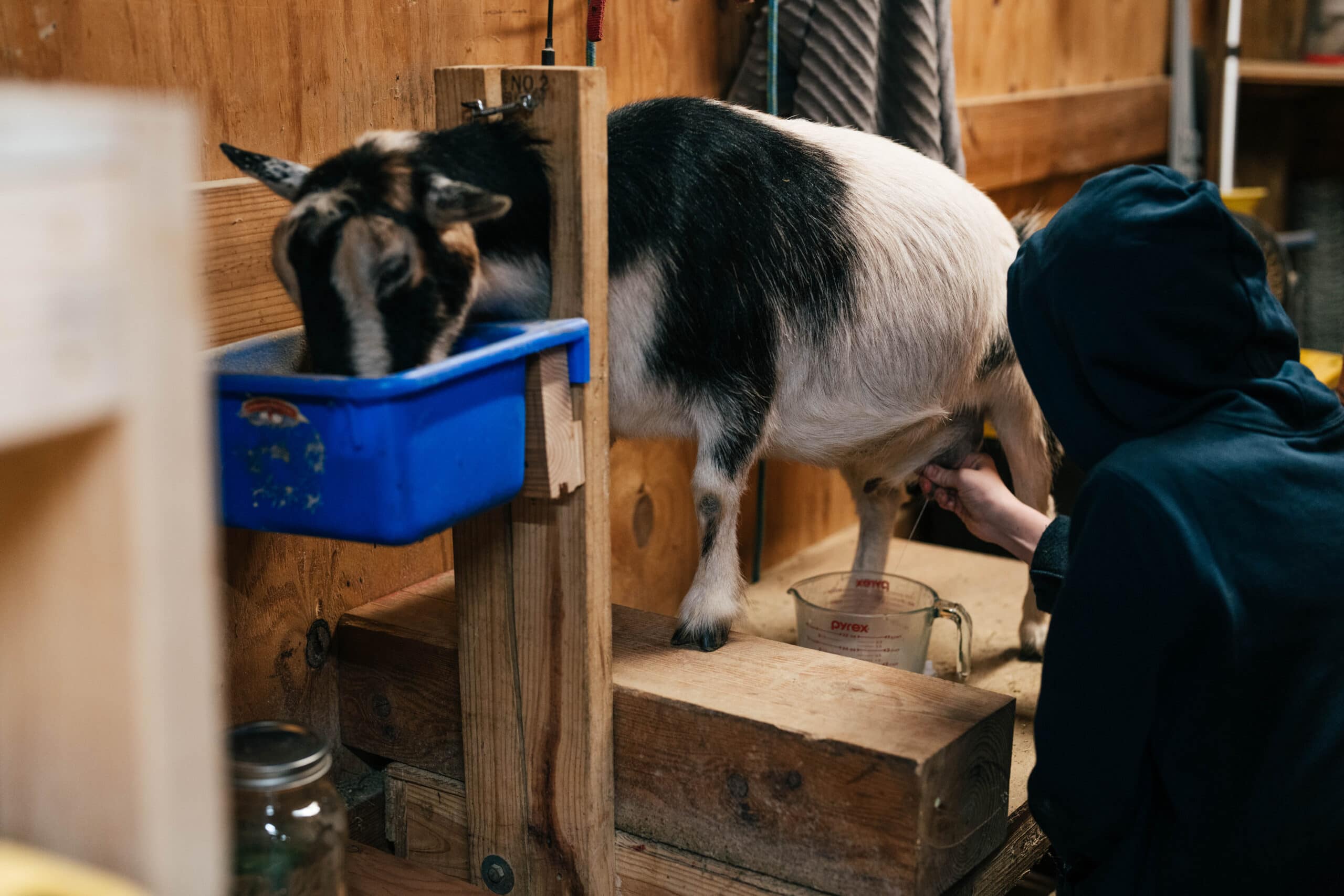
Choose goats that are calm on the stanchion and easy to handle. Nervous or aggressive goats can turn milking into a fight and pass those traits to their kids.
Milk Quantity and Fat Content
Some breeds produce over a gallon a day. Others give less, but with higher butterfat. Think about what kind of milk you want and what you plan to do with it (e.g., lower butterfat content of 2-3% for drinking or higher butterfat content of 5% or above for cheesemaking).
Udder Shape and Milking Ease
Look for larger udders that are high and wide, with teats that are easy to grip. Small teats and sagging udders make hand-milking harder and can lead to long-term problems like mastitis.
Hardiness and Parasite Resistance
You will want to know how a goat will perform in your climate and what kind of management it needs. Well-bred goats from pasture-based systems tend to handle parasites and stress more effectively.
Breeds vs. Individuals
Breed reputation is a starting point, but every goat is different. A well-raised goat of questionable pedigree could outperform a poorly handled goat belonging to one of the traditional dairy goat breeds. Look at the goat in front of you, not just the breed label.
Matchmaking: Choosing the Right Goat for Your Schedule
Goats are adaptable, but your time and routines still shape what works. Matching the breed and milking schedule to your life makes the difference between a chore you resent and a system that lasts.
Milking Once or Twice a Day
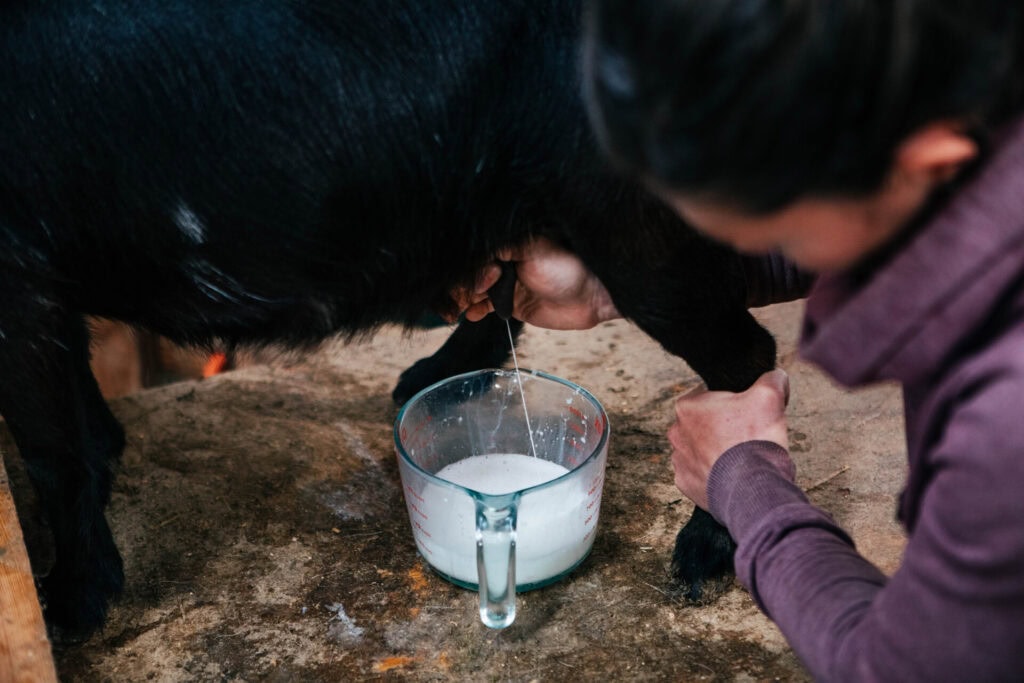
Some goats can handle once-a-day milking with little drop in production. Others need to be milked morning and evening to stay healthy. If your mornings are full, look for goats—and breeders—used to flexible schedules.
Seasonal Breeding and Milk Cycles
Most goats breed in the fall and kid in spring. Milk flows for 9–10 months after, then tapers off. If you want milk year-round, you’ll need to stagger breeding or preserve milk during the dry months.
Freshening and Drying Off
Freshening—when milk production begins—happens after kidding. Drying off—typically scheduled two months before the next birth—lets the doe rest and prepare for her next cycle. It’s part of a healthy, seasonal rhythm.
Overview of the Most Reliable Dairy Goat Breeds
Each breed offers a different balance of volume, butterfat, temperament, and care needs. Focus on what works for your goals and environment, not just popularity.
Here’s a look at several commonly raised dairy breeds and the kinds of homesteads they tend to work well with.
Nigerian Dwarf
Good fit for: Small homesteads and rich milk in small volumes
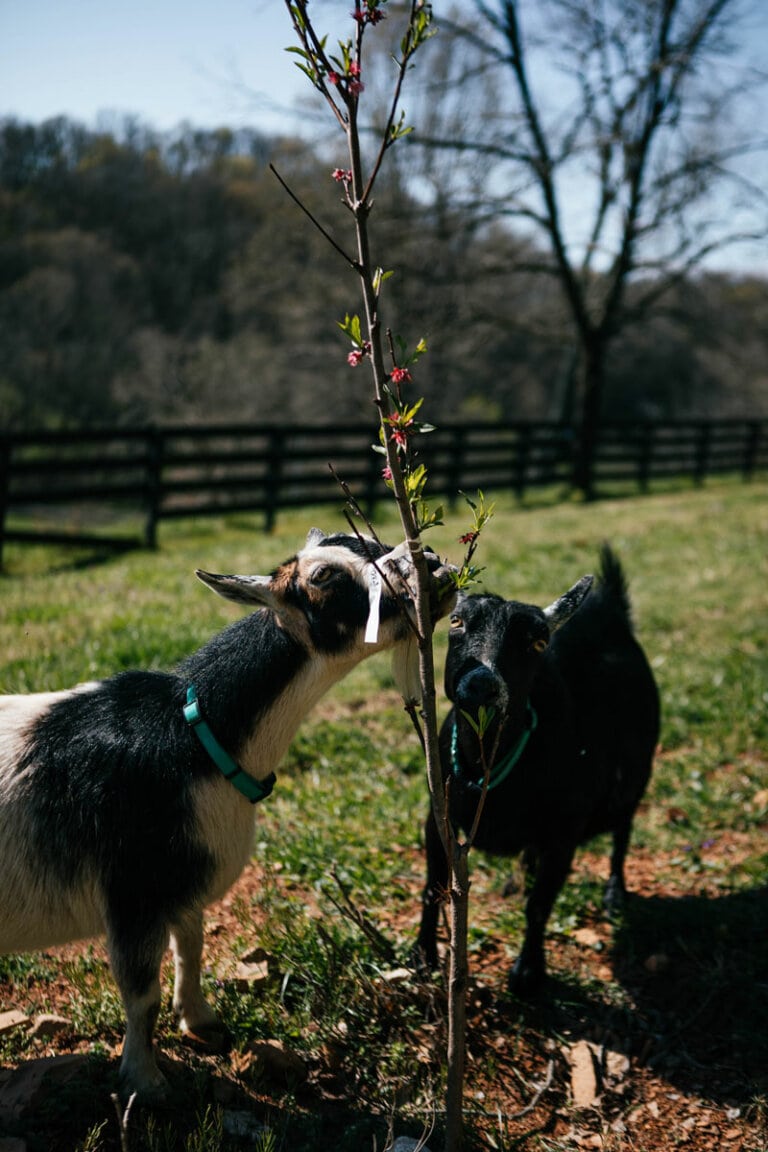
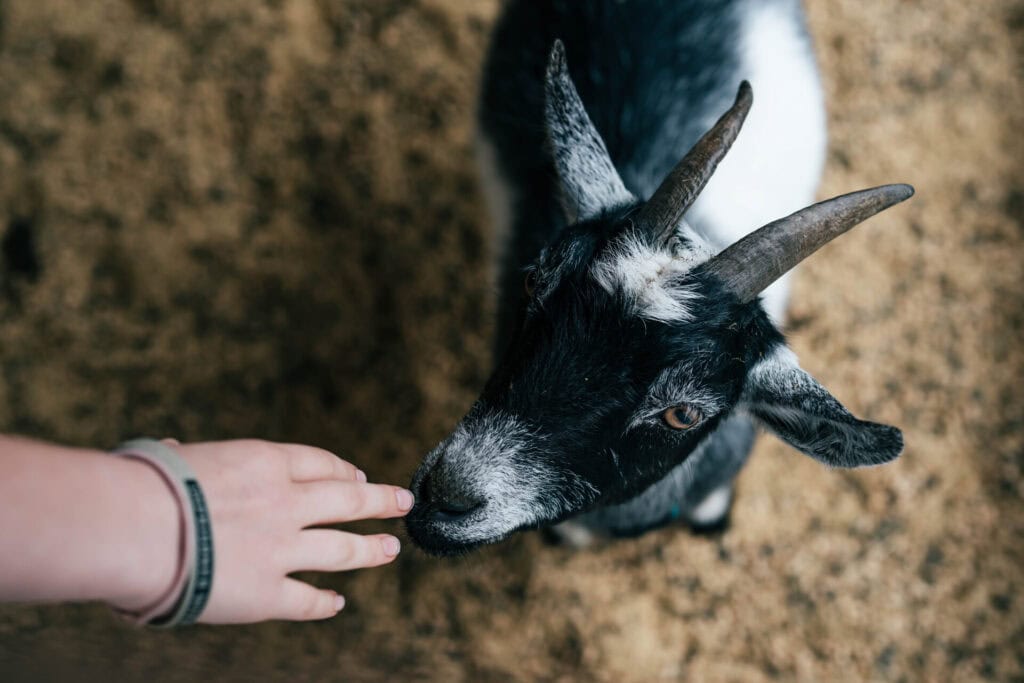
These compact goats produce sweet, high-butterfat milk (6-9%). They're ideal for cheesemaking and small-batch use. This breed is easy to handle, adaptable to once-a-day milking, and great for beginners, small spaces, or families with young children. They are hardy and do well in most climates.
Nubian
Good fit for: Warmer climates and richer milk
Nubians are a very popular, all-purpose breed that are vocal, social, and expressive. Compared with the Swiss breeds, their milk is usually high in butterfat (4-5%) and flavor. While not a heavy milk producer, this is the best dairy goat choice for a hot climate. If you’re looking to invest more time in bonding with your goat, this relatively large breed with a big personality and adorable floppy ears may be a good match.
Alpine
Good fit for: Cold climates and steady milk production
Alpines offer high volume with moderate butterfat (3-4%). Hardy and dependable, they do well in any climate and are known for reliability. Their milk is great for drinking, and they are easy to manage with a regular routine.
LaMancha
Good fit for: Households wanting gentle goats and moderately high production
LaManchas are typically calm, cooperative, and quiet. Their unique short ears stand out, but it's their dairy temperament that makes them favorites. They produce well and give milk with good fat content (3-5%). This is a sturdy breed that can adapt well to various climates and routines.
Saanen & Toggenburg
Good fit for: Cooler climates and large milk needs
Saanens are heavy milkers with lower butterfat (2-3%). They’re large, gentle, and highly productive in cooler weather. Toggenburgs—the oldest known dairy goat breed—are similar in both size and output. If you want volume over richness, these breeds are reliable options—just expect twice-daily milking.
Tips for Starting Out
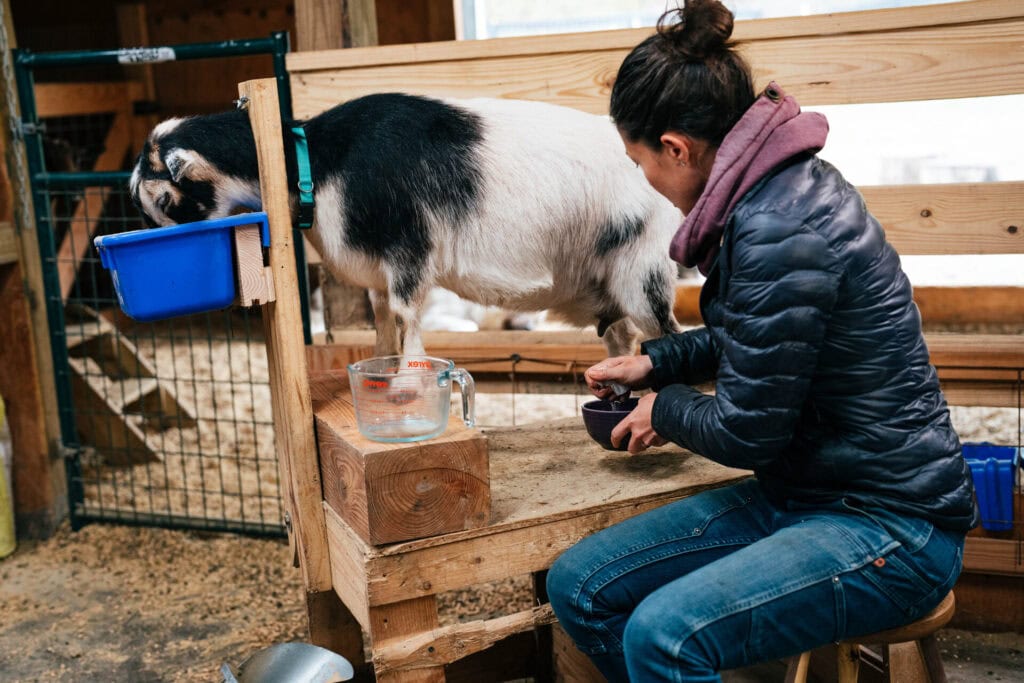
You don’t need a full herd or fancy setup to begin. Check out our class on “Keeping Milk Goats” to see specific supply recommendations for hoof care, milking, and kidding. The key is to start small, stay observant, and build your routine around what you can manage.
Start with a Trained Doe
Buying a trained adult doe means you get milk right away—and a goat that already knows the routine. You'll learn faster from her than from raising kids your first year.
Keep it Manageable
Start small with two goats. They're herd animals, so one lone goat would likely feel isolated, but more than two could get overwhelming until you've gotten the hang of it and built milking and processing goat milk into your schedule.
Fit Milking Into Your Life
If twice-a-day milking is too much, shared milking with goat kids or seasonal freshening can ease the pressure. Keeping the goat kids with the doe part of the day is a simple way to ease into goatkeeping while still getting milk. And remember, if you (and your goat) need a break, there’s no need to milk year-round unless that serves your purpose.
You Can Do This
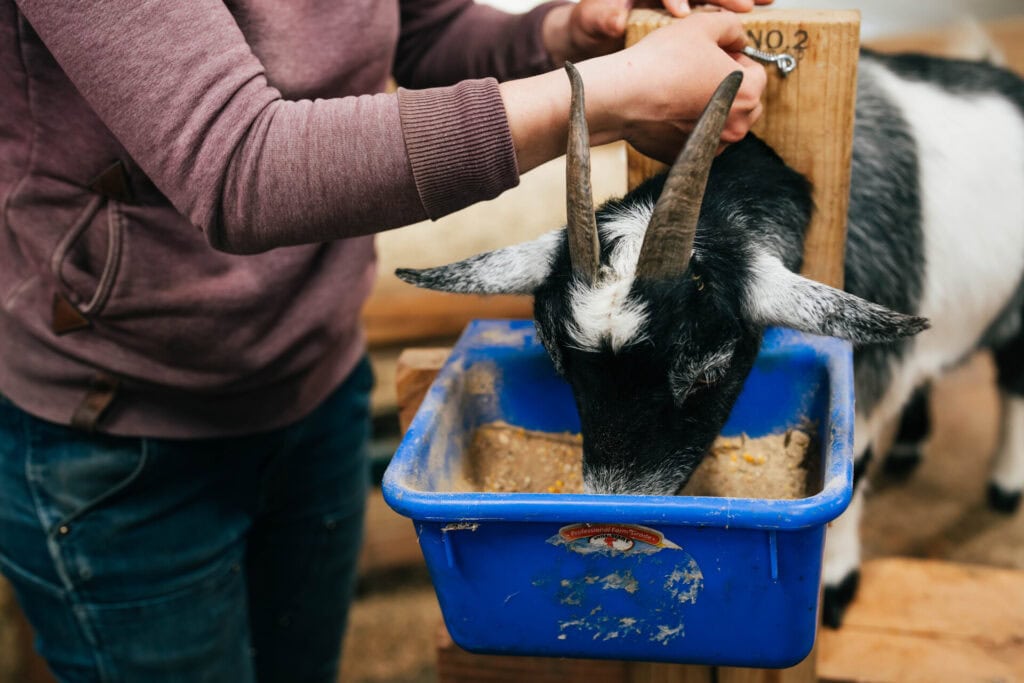
You don’t need to be an expert to raise goats. Like most homesteading skills, this one’s learned by doing. Your first goat will teach you more than any book can about observation, patience, and stewardship.
Caring for your animals, milking, and milk processing will eventually become part of your daily rhythm. Over time, those small tasks will anchor you more deeply in your land and your food system.
Start simple. Choose a breed that suits your lifestyle and schedule, and build from there. A well-cared-for goat will meet you halfway—and often give more than you expect.
Keeping Milk Goats
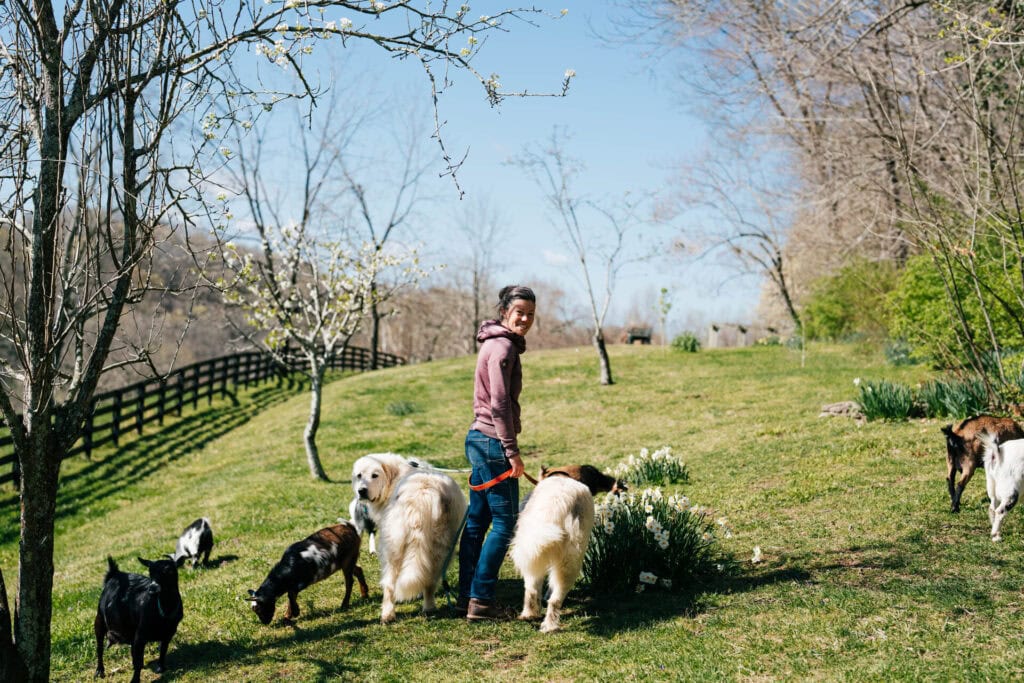
Join Anne of All Trades’ Anne Briggs to learn how to purchase, care for and milk healthy and happy dairy goats!