Thankfully, picking your first flock of chickens need not be complicated. Many breeds can do well in a backyard setting. The question that ultimately matters is which birds best fit your climate, your space, your family, and your goals.
Chickens also offer helpful services beyond providing eggs. They help keep pesky bug populations in check, clean-up a garden for planting, and turn kitchen scraps into nutrient-rich compost. With a little thought and planning upfront, your backyard flock can become an integral part of the homestead, helping it to function more as a cohesive whole rather than a hodgepodge of separate inputs and outputs.
What Makes a Chicken a Good Fit for Beginners
As any seasoned chicken owner will vouch, there’s a wide range of possible behaviors within and across breeds. Some chickens are calm and steady. Others are more active or independent. Some lay consistently through the seasons while others slow down noticeably in winter. Prioritizing the key traits that matter to you before selecting which breeds to bring home will save you a lot of second-guessing later.
Laying Reliability
A dependable layer provides a steady supply of eggs year-round. Most breeds slow down in winter, but some maintain consistently higher levels of production than others. Know what your household needs before you decide.
Climate Suitability
Many people are surprised to learn that chickens can handle the cold quite well, so long as they’re kept dry and protected from wind. Damp, poorly ventilated conditions are far harder on a flock than merely cold temperatures. Whatever the climate in your area, you will want to choose birds that are suited to that place. It would be wise to talk with some chicken-keeping neighbors and learn what breeds they’ve had success with on their own properties.
Docile Temperament
Calm birds are easier to manage, especially when you are still learning. This is especially important if children will be involved in their care. A steady temperament makes feeding, handling, and collecting eggs more manageable and pleasant.
Dual purpose
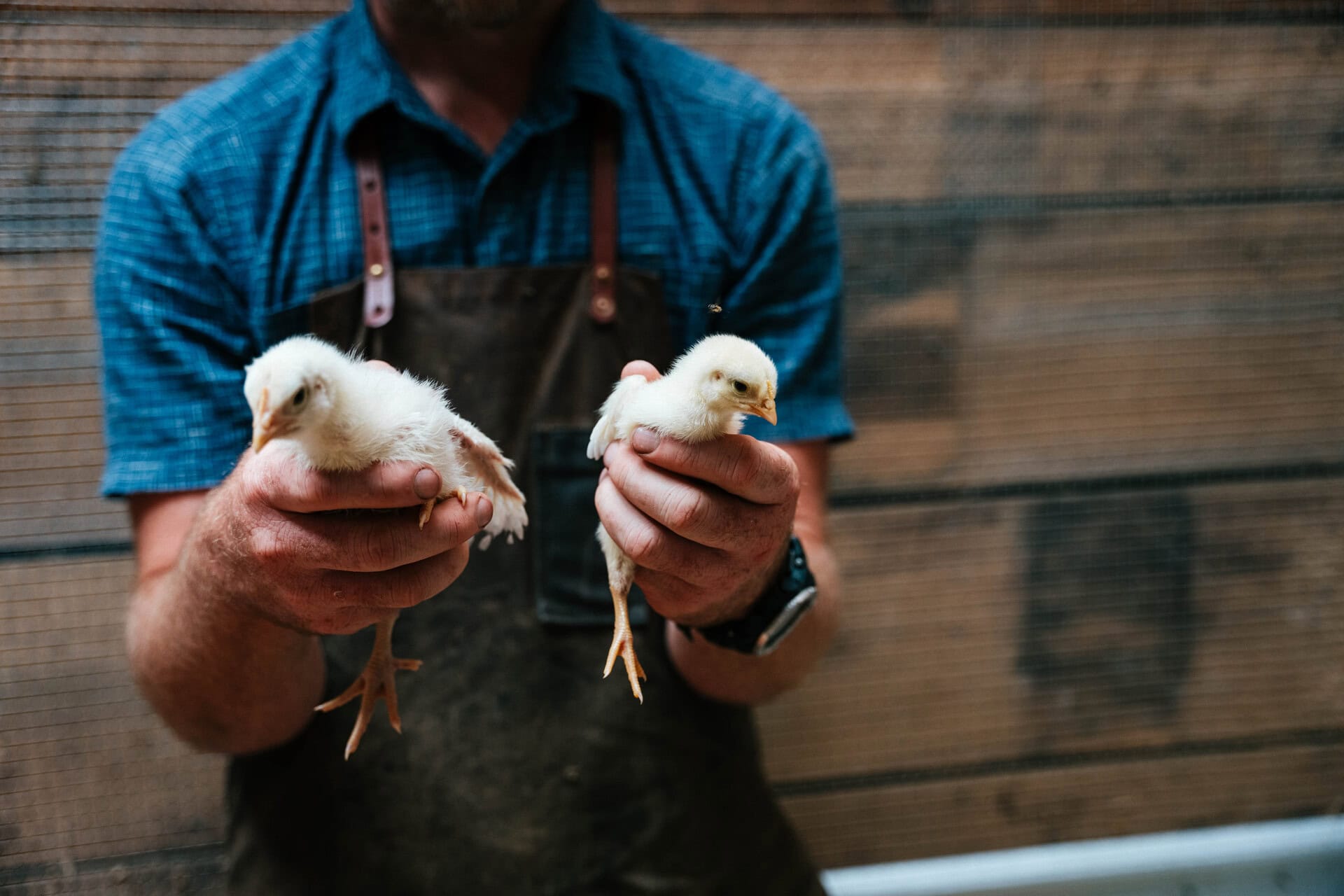
Most hens are highly productive in their first couple of years. After that, once egg production slows, a conscientious steward may reasonably opt to cull a bird instead of keeping her around as a pet. In the case of dual-purpose breeds, those chickens will typically give more meat of higher quality than a primarily egg laying breed. This is also a useful trait to consider if you think you’d rather order your chicks as a straight run (a mix of males and females) with a plan to eventually fill your freezer with the roosters.
Bonus: Appearance and Egg Color
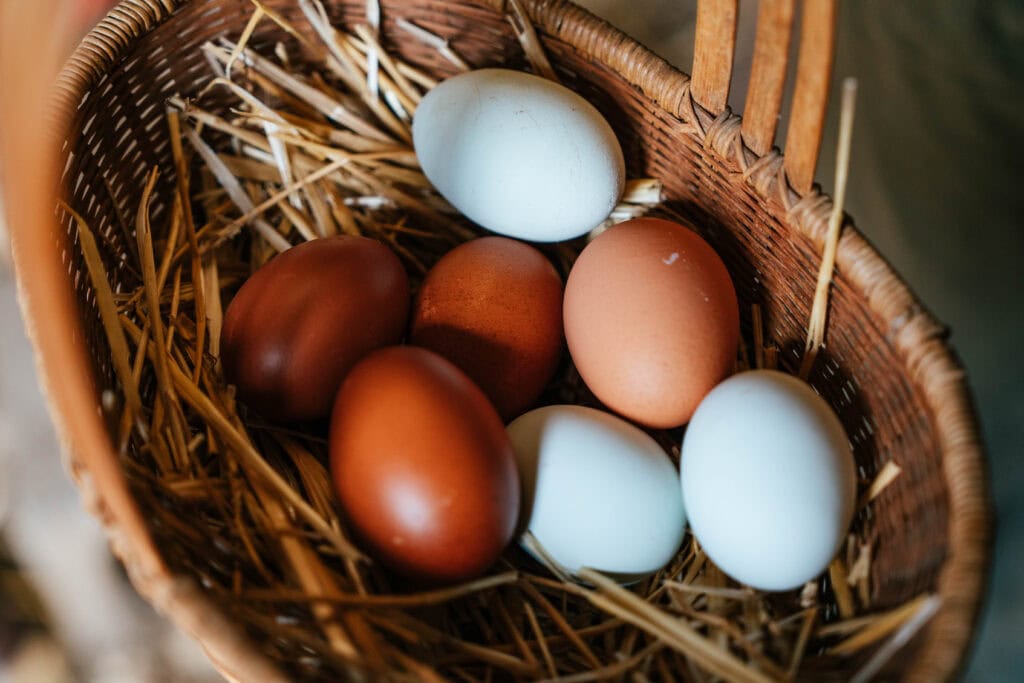
Chickens come in a charming array of color and marking combinations — feathered or clean legged, tufted or tuftless, spotted or striped, crested or crestless, and so on — and lay eggs in a rainbow of colors, too. A mixed flock laying multiple colors of eggs can add variety and delight to the job, and many homesteads include several breeds for this reason. That said, a greater desire for layer productivity or reduced costs may dictate that appearance and egg color take a back seat to the other traits listed.
Things to Consider Before Choosing Your Breeds
Beyond weighing specific breed traits, you’ll want to think through how caring for a flock will actually fit into your daily life.
Goals
Starting small makes it easier to get systems in place and figure out what works before expanding. Some people raise hens for eggs only. Others want birds that can also serve as a meat source periodically. Getting clarity on the goals for your flock can narrow the breed search and save you time in the process.
Flock Size
To understand the demand, first estimate how many eggs your household uses on a daily and weekly basis. Throughout the year, three hens will provide on average two eggs per day. If you are looking to keep feed costs manageable, the most economical approach is to estimate how much natural feed you have available in the form of kitchen scraps and household food waste, and let that steer your decisions around flock size.
Setup
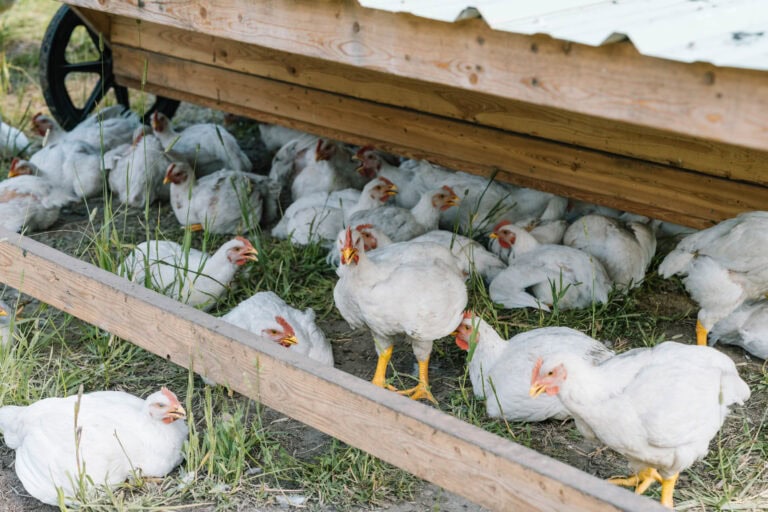
Your setup matters as much as your breed choice. Think through whether your birds will live in mobile or permanent housing, how much space they will have in the coop, and whether they will have regular access to the outdoors. Outdoor access improves flock health and allows the chickens to practice natural behaviors such as foraging, which can further lower the feed bill.
Climate
Some breeds handle cold better while others tolerate heat more easily (with a few robust specimens actually managing both ends of the spectrum fairly well), so pairing your flock to your environment simplifies care through every season.
Local Ordinances
Remember to check your county or town regulations before bringing any new animal onto your property. Some municipalities limit flock size while others may require a special permit for backyard flocks or roosters. But if you can’t have a rooster, don’t worry: a flock of hens alone will still provide a reliable egg supply.
Common Backyard Chicken Breeds for Beginners
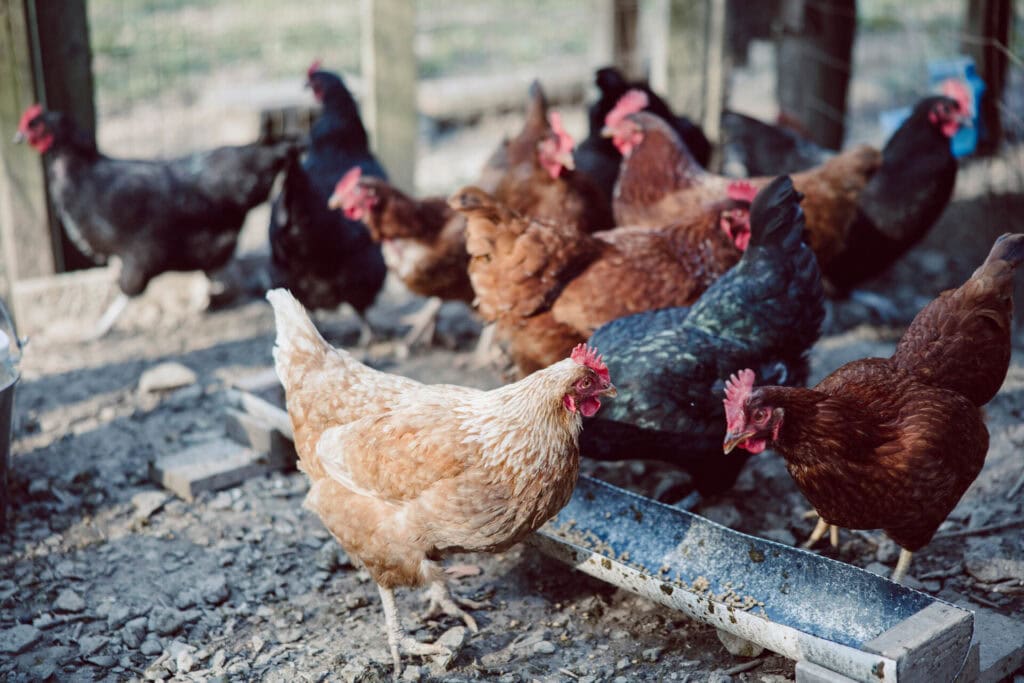
There is no single breed that works for every homestead, but many chickens can thrive in a backyard flock when they are matched to the right conditions. The following breeds are a sampling of what tends to be popular with beginners, but the best choice is always the one that fits your specific situation.
Rhode Island Red
Rhode Island Reds are known for strong egg production and adaptability. They lay large brown eggs and produce a fairly large table bird, qualifying them as a dual-purpose breed. They are vigorous across a range of climates and tend to be confident but manageable.
Plymouth Rock (Barred Rock)
Plymouth Rocks are docile and easy to handle. Historically one of the most popular homestead birds, they are a true dual-purpose bird that offers great value in terms of both good egg and meat production. Their distinctive black-and-white barred feathers make them easy to spot in a mixed flock.
Orpington (Buff Orpington)
Exceptionally gentle, this bird is a classic pick for families with young children and has distinguished itself among backyard breeds as being a solid dual-purpose option. Their fluffy plumage makes them quite cold-hardy, so not only are they a practical choice for cooler climates, but they also lay consistently even through the winter.
Australorp
Australorps are known for strong egg production, a quiet disposition, and a calm temperament that adapts well to different environments. Very resilient and cold-tolerant, they are also considered a dual-purpose breed, though they’re slightly smaller than their close cousin the Orpington. Their dark feathers show a distinctive green sheen in the light.
Easter Egger
Though not an officially recognized breed of the American Poultry Association, Easter Eggers are one of the most popular chickens in backyard flocks today. They lay colorful eggs in shades of blue, green, and pink, and their mixed ancestry makes them hardy and adaptable. Friendly and curious, they tend to do well with families.
Sussex Chickens
Sussex chickens are excellent egg layers, even in winter months. Curious and active foragers with a sweet personality, they come in various color patterns, including a speckled variety well-suited to free-ranging situations.
One More Thing…
If you start with a small flock, keep your setup manageable, and spend time observing your birds closely, you will be surprised by how much you can learn about keeping chickens in just a season. You may even be inspired to expand your operation the following year! In fact, our advice is to design the infrastructure such that you can easily increase your flock size in the future.
Choosing chicken breeds is a rewarding first step towards establishing a flock that fits your homestead. With only a few hens, you can begin building food independence from day one and, perhaps more importantly, craft a more connected, purposeful homesteading life.
Want to jump-start your learning on how to keep chickens even before a single hen has set foot on your land? Explore our Backyard, Egg-Laying Chickens class with Harvey Ussery and discover the skills you need for feeding, housing, and caring for your flock long-term — all at your own pace and from the comfort of your own home.
Backyard, Egg-Laying Chickens
Join Harvey Ussery from The Modern Homestead to learn to keep a healthy and sustainable flock of backyard egg laying chickens.