An Inside Job You Won't See Coming
A squash plant can look completely healthy on Tuesday and be wilted and collapsing by Friday, and there was rarely anything you could have done in between. The damage happens inside the stem, invisible until the plant simply can't hold itself up anymore. It's the kind of pest that makes gardeners want to give up on squash entirely.
Brian Lowell, instructor of our Companion Planting class, has a different answer, and it has nothing to do with catching the problem early. It has to do with never letting the vine borer choose your squash plant in the first place.
This is Article 3 in a 3-part series on pest control through companion planting. See Article 1, How to Attract Ladybugs to Your Garden, and Article 2, How to Prevent Tomato Hornworms with Companion Planting. For the full companion planting system, see Brian Lowell's Companion Planting class at the School of Traditional Skills.
You Don’t See It Until It’s Too Late
Squash vine borers are the larvae of a moth that lays its eggs at the base of squash and melon plants. Once those eggs hatch, the larvae tunnel straight into the stem and start feeding from the inside, where nothing you spray or pick off the leaves can reach them.
The first visible sign is often frass, a sawdust-like waste, sitting at the base of the stem. By the time you see it, the borer is usually already inside. Not long after, the plant that looked fine last week starts wilting for no obvious reason, and once it's collapsed, there's little left to do.
Reactive control, once the larva is inside the stem, is very difficult. That's the reason Brian builds his squash strategy around prevention instead, and prevention starts with a trap crop planted well before the main squash goes anywhere near the ground.
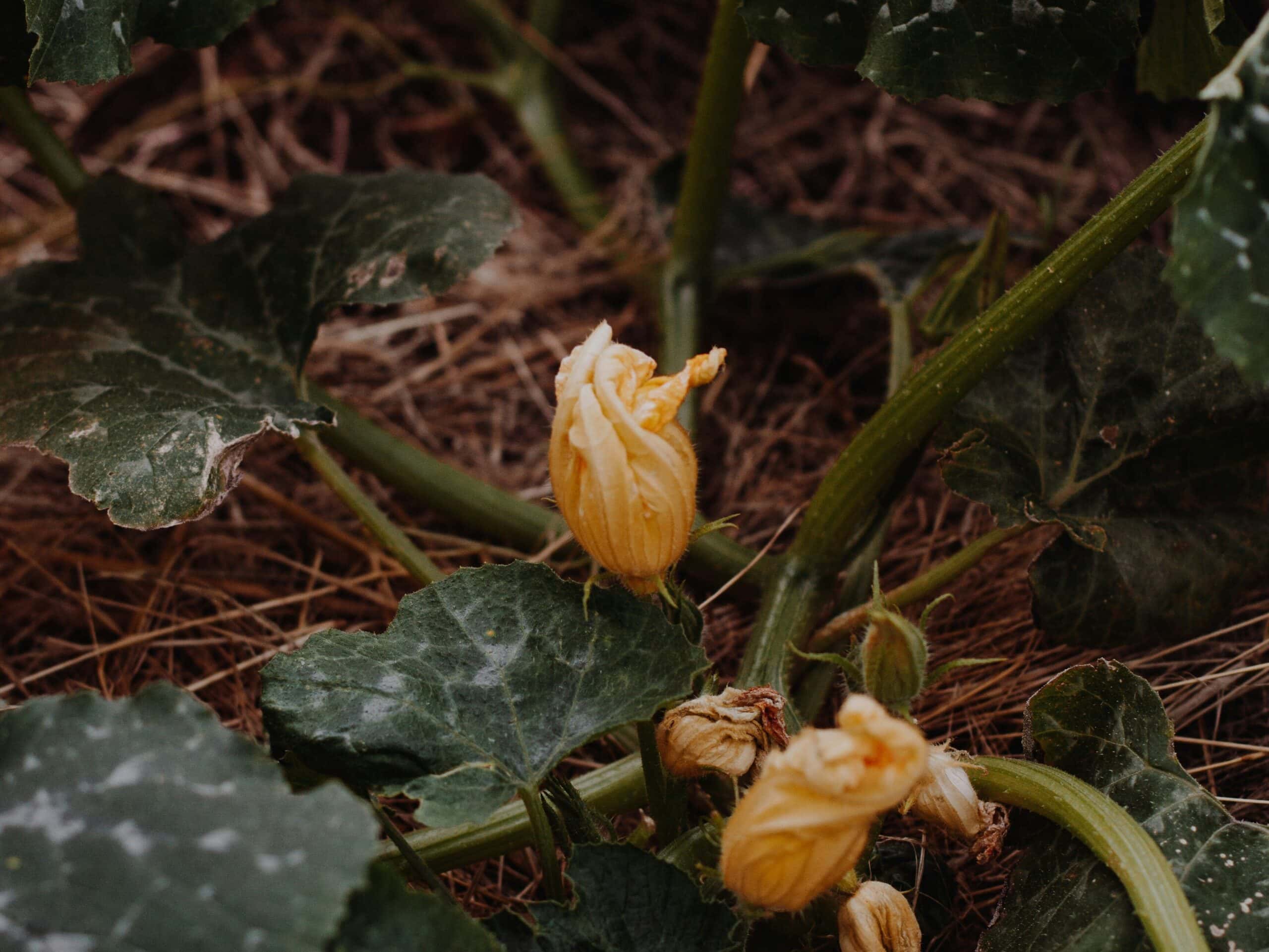
Blue Hubbard Squash: Your Most Powerful Trap Crop
Squash vine borers have a clear favorite, and it isn't the squash you're actually trying to protect!
Blue Hubbard squash draws vine borers away from your main crop more reliably than any other variety, which makes it an ideal sacrificial planting. Brian's numbers on how to use it are specific and worth following: plant it 10 to 15 feet from your main squash crop, three to four weeks ahead of your main planting, so it's already established and attractive by the time vine borers become active. One Blue Hubbard plant can protect five or six main squash plants.
It does more than just distract the pest, too. The concentration of activity around it also becomes a gathering point for the predators that feed on vine borers and squash bugs.
Companion Planting
Discover how to use companion planting to create an ecosystem in your garden that will allow you as the gardener to take a back seat!
Companion Plants That Support the Trap Crop Strategy
A trap crop pulls the pest to one spot in the garden. Companion plants near that trap crop pull in the predators that clean up the pest population once it's there.
Brian pairs the Blue Hubbard trap crop with dill, carrots, parsley, and radish. These attract parasitic wasps and other predators that prey on the vine borers and squash bugs the Blue Hubbard has concentrated in one place. The trap crop draws the pest, the companions draw the predators, and your main squash planting stays largely out of the crossfire.
Squash also needs pollinators. Vine borer prevention solves one problem, but squash still needs help getting pollinated, since it produces separate male and female flowers. Underplant with open-faced, free-flowering companions like marigolds, cosmos, and zinnias to draw bees down to where squash flowers actually grow, tucked under the plant's big leaves.
Diversify the Garden to Reduce Pest Pressure Overall
This strategy handles vine borers specifically, but the same principle applies to the rest of the garden: pests have an easier time when their preferred host is planted in a single block or row.
Mixing herbs, flowers, and multiple vegetable types through the same bed makes it harder for a pest to find its host in the first place, and it invites parasitic wasps, robber flies, and other predators to take up residence throughout the garden, not just around the trap crop. The more varied the planting, the more balanced the ecosystem, and the less damage any one pest can do.
Keep Watch: Monitoring and Early Action
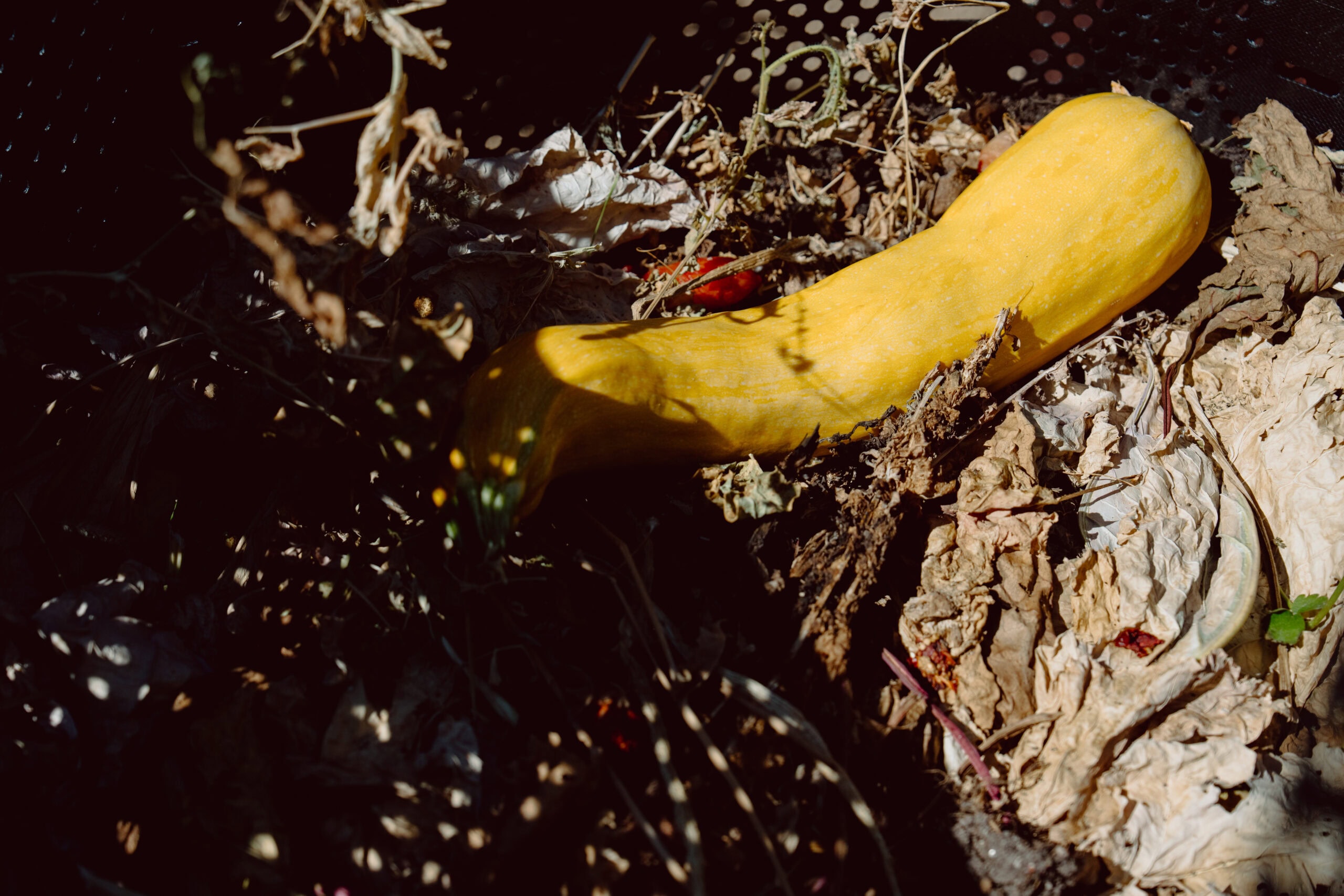
Prevention does most of the work, but a little monitoring closes the gap. Early in the season, check the base of your squash stems for frass. That sawdust-like material is often the first sign a borer has gotten in.
Look too for small, reddish-brown eggs laid on stems and the undersides of leaves near the base of the plant. Removing them by hand before they hatch is one of the few reactive steps that actually helps. In some regions, planting squash a bit earlier in the season can help you beat the vine borer's peak egg-laying window entirely.
Keep a note of when you first spot damage or eggs each year. That record is what lets you fine-tune your Blue Hubbard planting date season over season, rather than guessing at it every spring.
Frequently Asked Questions About Squash Vine Borers (unchanged, already quote-free)
Blue Hubbard squash is the most effective trap crop for vine borers. They prefer it over every other squash variety and will go to it first. Plant it 10 to 15 feet from your main squash crop, three to four weeks before the main planting. One Blue Hubbard can protect five to six main squash plants.
Look for sudden wilting of squash plants that appeared healthy days earlier, especially in midsummer. Check the base of the stem for frass, a sawdust-like material that signals a borer has already entered. You may also find small, flat, reddish-brown eggs on the stems and leaf undersides near the base of the plant before they hatch.
Yes. A combination of trap cropping with Blue Hubbard squash and companion plants that attract natural predators can significantly reduce vine borer pressure. The key is acting before the season starts: get the Blue Hubbard in the ground three to four weeks ahead of the main squash planting, and pair it with dill, carrots, parsley, and radish to attract beneficial predators.
For vine borer protection, the main strategy is a Blue Hubbard squash trap crop planted 10 to 15 feet away, paired with dill, carrots, parsley, and radish to attract predators to the trap crop area. For pollination, plant open-faced flowers like marigolds, cosmos, and zinnias among or near the squash to attract bees to the male and female flowers.
Once the larva is inside the stem, it's very difficult to save the plant. Prevention before the eggs hatch is the most reliable strategy. If you catch fresh eggs on the stem before they hatch, remove them by hand. If plants have already wilted from internal damage, focus on next season: get the Blue Hubbard trap crop in earlier and pair it with the right companion plants.
One More Thing
Squash vine borers are one of the most discouraging pests a home gardener can face, and yet they're also one of the most preventable, once you understand that the fight has to happen before the eggs are even laid.
That's really the thread running through this whole series. Attract the ladybugs instead of buying them. Mask the scent and set the trap before tomato hornworms arrive. Give vine borers somewhere better to go than your main crop. In every case, the work happens ahead of the pest, not in reaction to it.
Every season you observe, adjust, and take notes gets your garden a little closer to that same place: one that mostly runs on its own, with you there mainly to harvest and enjoy it.
Companion Planting
Discover how to use companion planting to create an ecosystem in your garden that will allow you as the gardener to take a back seat!
As a kid, Brian felt his grandparents' garden was magical. Pulling carrots from the ground for the first time, running through a tunnel of beans, finding ladybugs on lettuces, it was the kind of excitement he still remembers as a grown man. A certified master gardener mentored him in his early teens, and those hours spent absorbing her knowledge developed a lifelong passion. Over time, gardening became more than a hobby. It became an outlet during hard times, and later, when he had a family, a way to provide safe, guaranteed food. Over 30-plus years of gardening through success and some tragic mistakes, he learned crucial lessons. When Penguin Random House approached him to write a companion planting book, he was initially skeptical; he had tried it without success. But the research changed everything. He discovered that companion planting is backed by science and actively used by regenerative farms. That revelation fueled his mission to pass this knowledge on, through his YouTube channels, now reaching millions, and his book. He also shares his complete beneficial insect system, trap crop table, and garden-specific planting strategies in his Companion Planting class at the School of Traditional Skills.