Jason Ross, permaculturist, food forester, and instructor of Holistic Orcharding at the School of Traditional Skills, is just the man to answer that question. In this article, he’s going to help you get past the paralysis of indecision or the discouragement of “I tried that and failed,” to embrace a completely different mindset that can help you grow more fruit with less work. Because the key to holistic orcharding isn’t stress or constant maintenance, but patience and observation.
This is the first article in our five-part Home Orchard Series, based on the Holistic Orcharding class by permaculture consultant Jason Ross. If you've ever felt that growing your own fruit trees seemed like it would take more time, money, and stress than they’re worth, then this series is for you. Over the next four articles we will walk through choosing trees for your land (Article 2), building soil and planting (Article 3), filling in your orchard with companion plants (Article 4), and handling pests and your first harvest (Article 5).
You Don't Need a Farm to Grow an Orchard
This time of year, a visit to a pick-your-own orchard with its long rows of stately trees is especially lovely. It’s an experience that every member of the family can cherish.
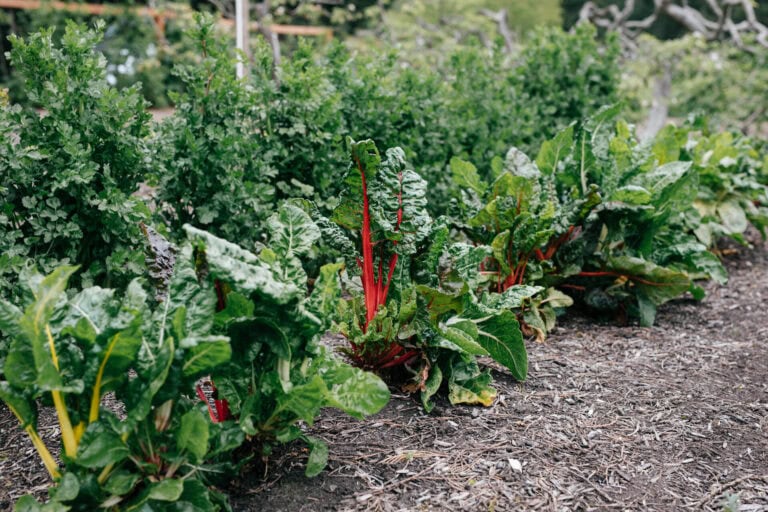
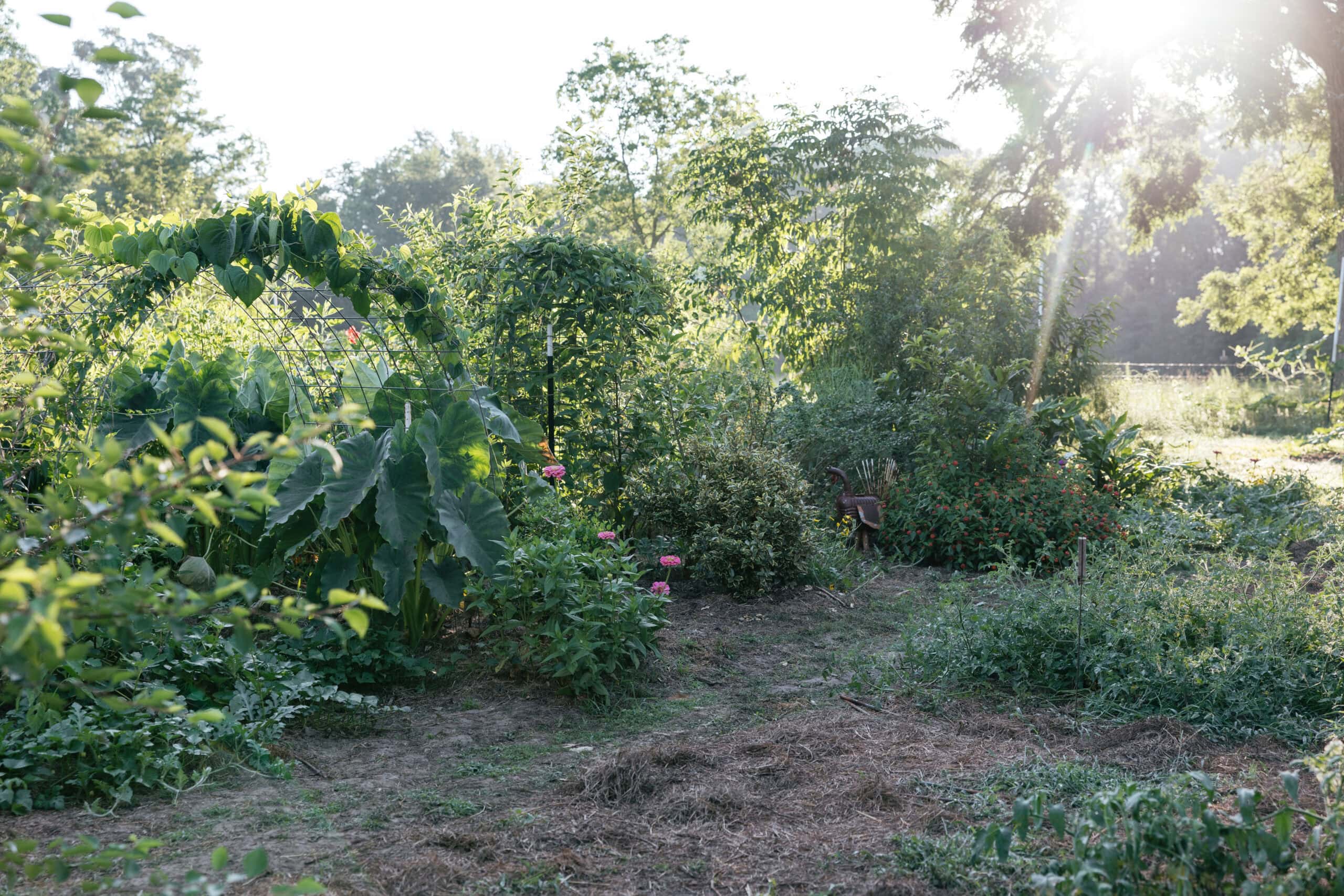
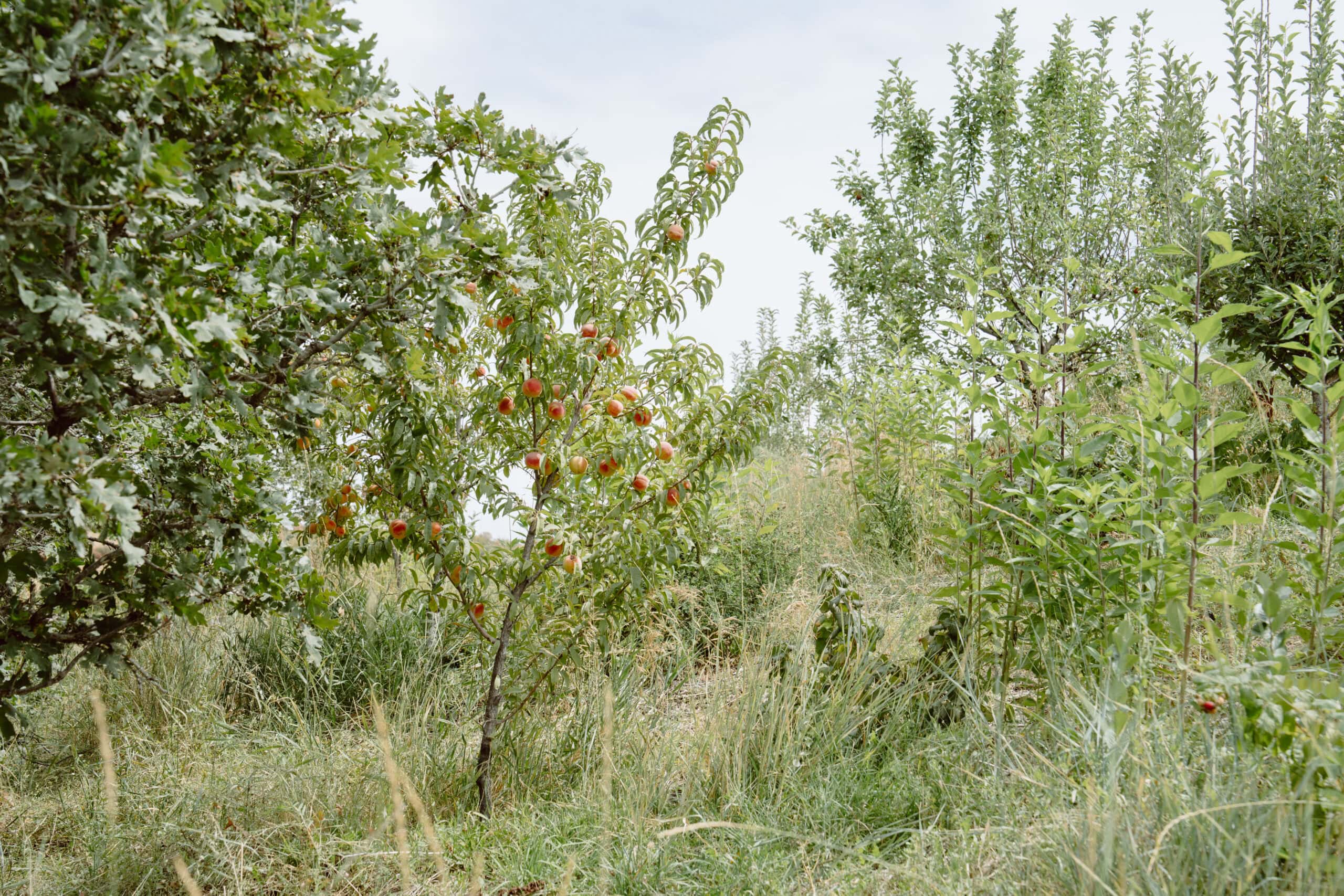
But don’t let the orchard’s layout give you the wrong impression. The idea here isn’t to recreate a scaled-down, geometric orchard at home. Instead, Jason’s vision of a holistic orchard encompasses a wilder, forest-style planting that largely takes care of itself once established.
It promises not zero work, but different work: more thinking and observing up front, less spraying and fertilizing later. Notice what is already working in the forests in your area and imitate those in your own design.
And that is exactly what Jason did to build his entire method. After years of trial and error, he discovered that the one thing necessary wasn’t some special training in permaculture, but instead the ability to observe and pay attention:
“What if patience was your secret weapon instead of constant vigilance? What if observing nature could take the place of researching pests and diseases?”
With that encouragement, let’s get to know the man behind this promising vision of holistic orcharding.
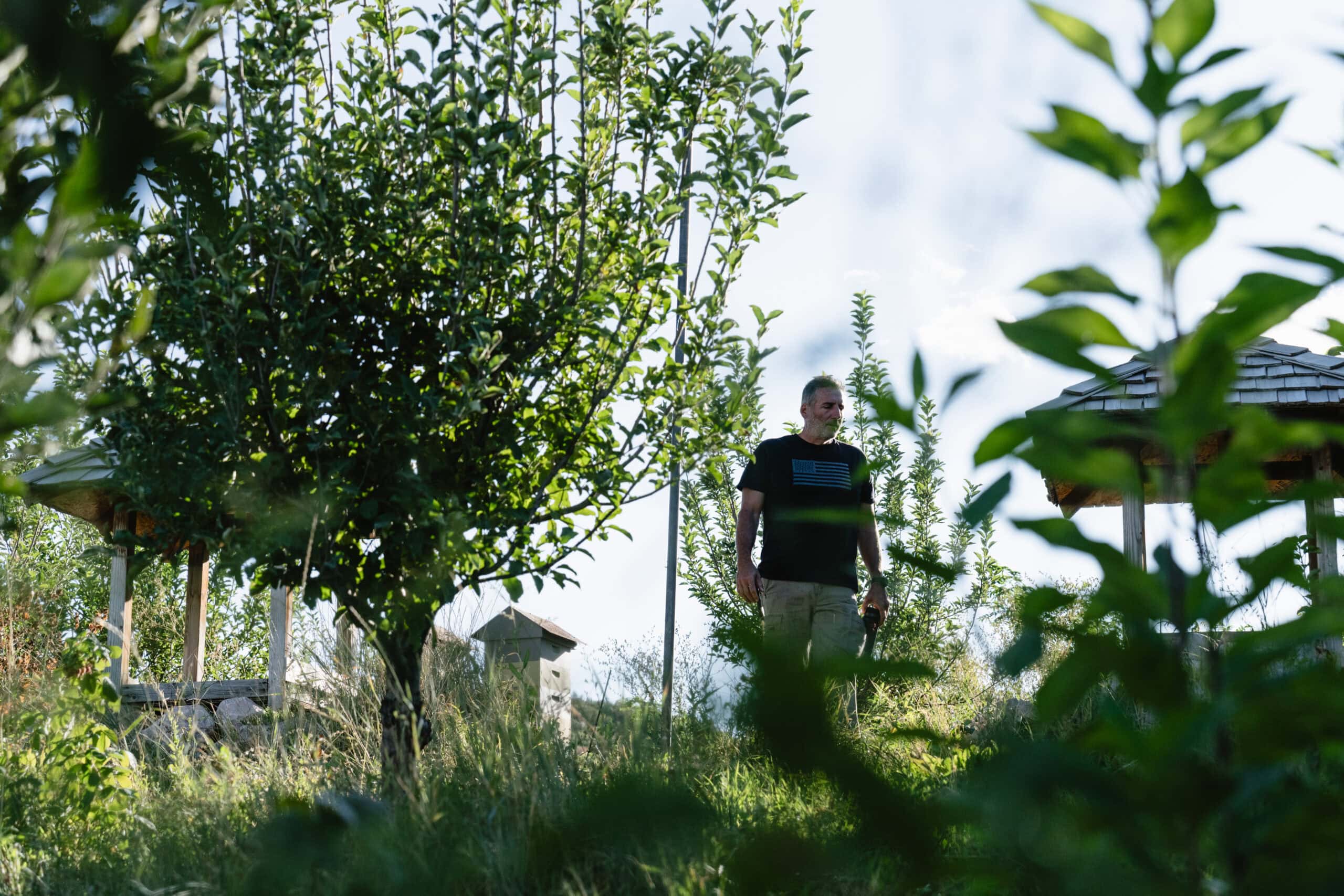
Meet the “Food Forester” Behind This Series
Jason has been doing this now for over 20 years, but he started as a backyard gardener just trying to grow more food for his family.
Over his two-decades-long career, he has established permaculture gardens and orchards in very different climates, including Utah, Hawaii, and Southern Africa. He has consulted with more than 50 rural and urban growers, including helping frustrated fruit tree owners become confident orchardists. He co-founded a national test farm for permaculture homesteading techniques focused on helping families not just survive off their land, but to thrive.
He does all of it with the explicit goal of empowering others to build their own resilient food systems, and that’s the promise that his Holistic Orcharding class, and this series, aims to deliver. His own journey from organic gardener to permaculturist, then orchardist, and now food forester has prepared him well to mentor others. The turning point, and the thing he’s most passionate about sharing, was that last stage in his evolution, what he calls his discovery of “the wisdom of the forest.”
Holistic Orcharding
Join Jason Ross for a hands-on holistic orcharding class that shows you exactly how to grow a thriving, low-maintenance orchard. No complicated watering, costly fertilizers, or toxic sprays required. You’ll need little more than soil, plants, and a few basic tools, and you’ll gain the skills and confidence to harvest abundant fruit while working with nature, not against it.
The Miracle Hiding in a Forest Floor: Food Forest Benefits
What is it about forests that are so special? Similar to Paul Gautschi’s observations of the forest floor, Jason Ross notes that, “Forests in their natural and native state are often, not always, but often, highly, highly productive.”
This ability to produce so many calories has a lot to do with the idea that a forest has multiple layers, with trees representing only the top layer of food production. The layers below the tree canopy multiply the harvest and help the trees themselves to bear more fruit, without multiplying the work.
A native forest is a stark contrast to modern agriculture’s row-crop monocultures that fight with nature at every turn, using a series of expensive and time-consuming inputs from chemical pest and weed control to fertilizer, not to mention constant human oversight. A home orchard in a family homestead setting can work with nature instead. If it resembles the forest, it will pencil out much better in terms of labor and cost than commercial-style gardening.
Be forewarned that if you were expecting neat rows, this type of orchard will look “messy” by comparison. But that messiness is a sign of a working ecosystem, not neglect. As Jason Ross says, “to see the beauty of it, you must bring your Garden of Eden eyes.”
The Honest Trade-Offs of Holistic Orcharding
An apparent lack of order in your orchard owing to the lack of straight rows isn’t the only cost to this style of orcharding, also known as “permaculture orcharding” in some circles.
When you decide to plant an orchard, what you’re essentially doing is setting up an ecosystem, and those take time to get established. Rome was not built in a day, and neither will your orchard be. Soil, pests, and weeds will all take a toll in the first two years. Know that this is normal and to be expected, and that you’ve likely done nothing wrong. Perseverance is the name of the game.
Speaking of which, those first two or three years require real upfront work before you see any of the literal fruits of your labors. You have to devote time and energy to researching potential cultivars (cultivated plants with desirable traits) and/or varieties (naturally occurring, genetically distinct plant species) for your property, cutting swales (a trench that is dug on contour to catch water), setting up irrigation, building soil, and planting perennial companions between your trees. And even after all that, your holistic orchard will not produce as much food per acre than chemical row gardening could.
But – and here comes the upside from Jason himself – “your holistic orchard will require much less work and cost, and it will be natural and clean and healthy for your family.” The holistic orchard is so low maintenance because fertilizing happens naturally, plant propagation is nearly free, watering needs shrink over time, and pests become far less of an issue as the system matures and finds balance.
Eventually, there comes the fun part: roughly six months of harvest (depending on where you live) instead of one single season. You will pick asparagus and cherry in the spring, then berries and stone fruits through summer, and finish with fall elderberry and Jerusalem artichoke.
You’re probably wondering now what trees could actually do well on your land. Jason has some great suggestions in his class, and Jason has some great tips in his class. We go there next in Article 2 on choosing fruit trees for your particular climate and property, so check that out if you’re ready to jump into researching and acquiring some trees.
Commonly Asked Questions About Starting a Home Orchard
Not at all. Years ago, while living in a condo in Hawaii, Jason could successfully feed his family of (then) six from small grow boxes in a tiny backyard. You need a lot less land than you think, and a single fruit tree with a few companion plants in a ring around it is a great starting point. Most suburban backyards will take years to fully plant and produce, which means you likely already have more space than you can use right away.
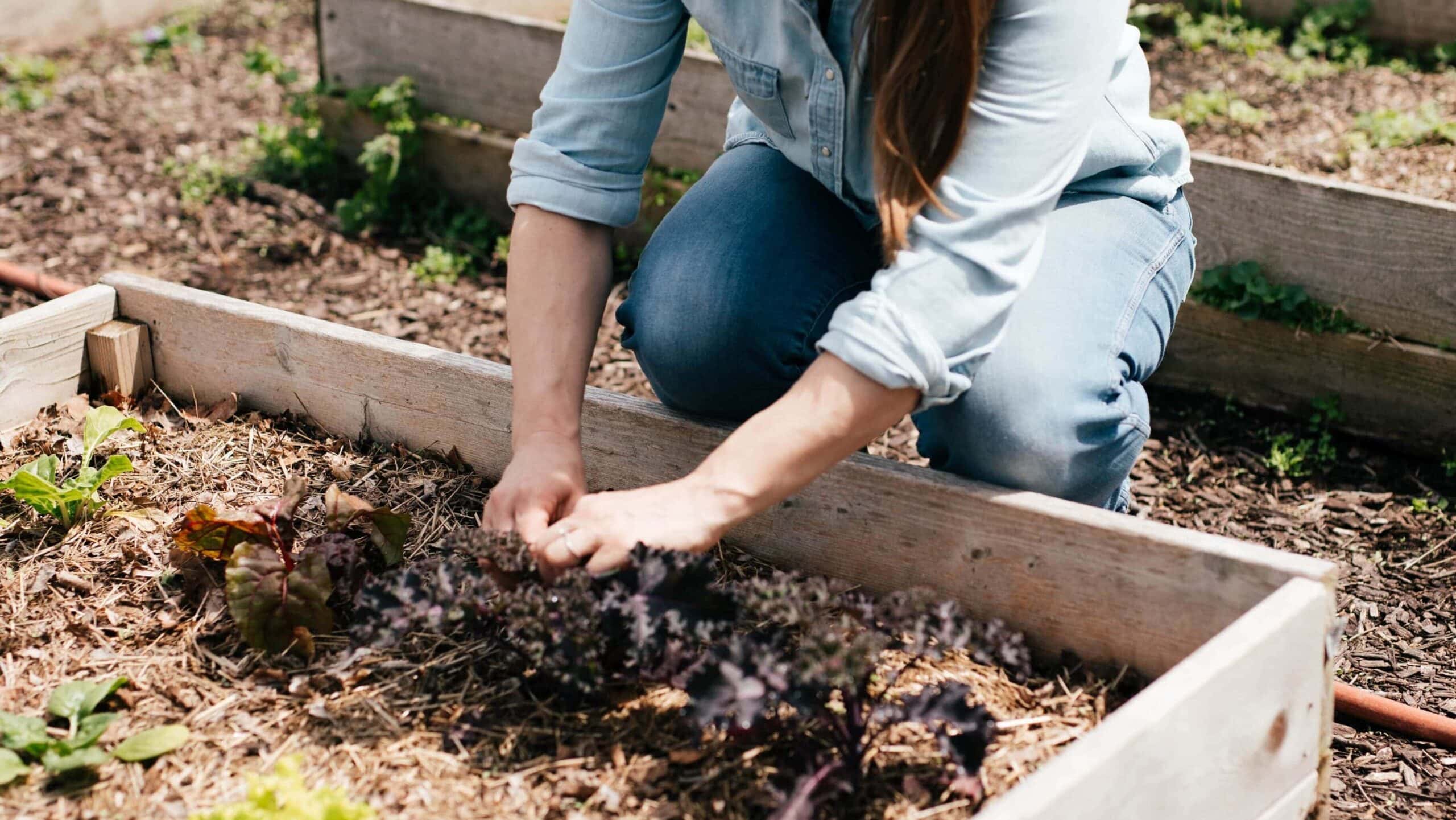
The first two to three years take real setup work: prepping soil, setting up irrigation, and choosing plants and putting them in the ground. But these are all things that kids could absolutely help with.
After that initial investment, holistic orcharding requires far less ongoing labor than a traditional row garden because the system can more or less maintain itself.
A garden is intensely managed soil that gets rebuilt every season, while an orchard is a large area where soil develops naturally over years and even decades. Orchards mimic a forest's own systems for fertility and pest balance instead of requiring you to manage every input by hand.
Yes, though it requires patience. Natural decomposition and nitrogen-fixing plants build soil fertility over time, and predatory insects take over pest control as the orchard matures. The trade-off is accepting some pest damage (with potentially large amounts initially) and a slower ramp-up instead of instant, chemically-assisted results.
Most fruit trees take three to four years to reach real production, while smaller perennials like berries and asparagus take about two years. After year four, a mature holistic orchard will typically produce more food than one family can easily harvest and preserve.
One More Thing
While there are few choices in life that don’t come with their own set of disadvantages, holistic orcharding is one decision you can confidently step into.
After the initial, heavier outlays of money, time, and patience, growing your holistic orchard in the long-term requires a tiny fraction of the effort and money that commercial methods do.
This week, get started by building the vision for your future holistic orchard. Pick one spot in your yard, even if it’s just the ground around a single existing tree. Picture it in a year with plants growing in a ring beneath it instead of the bare grass, mulch, or dirt that’s there now.
That mental shift, from empty space to layered food production, is the entire foundation of holistic orcharding.
In the next article on choosing fruit trees, we walk through how to choose the right trees for your specific climate and land so that your first planting actually thrives. Jason covers his full tree-selection process, including how he chooses cultivars for his own hillside property and the resources he leans on, in the Holistic Orcharding class. If you want to learn how to grow more fruit with less work, then this class is for you.
Holistic Orcharding
Join Jason Ross for a hands-on holistic orcharding class that shows you exactly how to grow a thriving, low-maintenance orchard. No complicated watering, costly fertilizers, or toxic sprays required. You’ll need little more than soil, plants, and a few basic tools, and you’ll gain the skills and confidence to harvest abundant fruit while working with nature, not against it.