SERIES: Article 1 | ▶ Article 2 (this one) | Article 3 | Article 4 | Article 5
This is Article 2 in our five-part Home Orchard Series, based on the Holistic Orcharding class by permaculture consultant Jason Ross. If you've ever felt that growing your own fruit trees seemed like it would take more time, money, and stress than they’re worth, then this series is for you. If you have not read Article 1 yet, start there to understand why planting a small orchard makes sense for every homestead. After this article, continue to Article 3 on planting and soil, Article 4 on companion plants, and Article 5 on pests and the first harvest.
How Much Land Do You Actually Need?
What image comes to mind when you hear the word “orchard”? Is it acres and acres of fruit trees, neatly arranged in long rows?
That’s not what food forester and permaculture expert Jason Ross has in mind, as we covered previously.
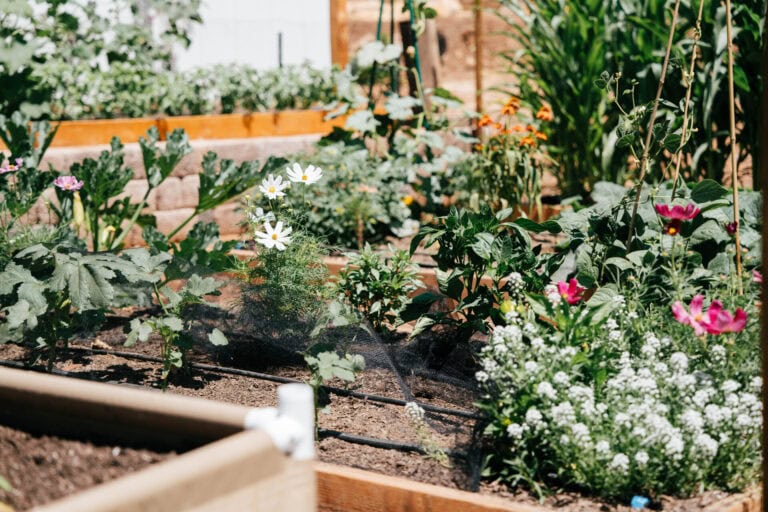
For whatever reason, the conventional wisdom seems to be that you need ten acres to homestead. But unless you’re planning to graze many large animals, that’s a lot more space than most families need. In fact, drawing from his own decades of experience, Jason shares, “I’ve grown enough food to feed my family of six in little grow boxes in a tiny backyard in a condominium in Hawaii,” using locally adapted sweet potato and taro as staple crops.
His approach to orcharding is just as practical and forgiving. He recommends that you “start with what you’ve got,” and begin by planting a single guild. What’s a guild, you ask? In permaculture, a guild is a group of plants arranged to support each other’s growth – kind of like companion planting for perennials. So a guild in the context of a holistic orchard is a grouping of perennial food plants that act as a living support system for your tree, increasing diversity, food production, and helping your fruit tree to produce more fruit.
All of this to say: A single fruit tree with a planted ring underneath it is a complete guild. Multiple trees can work too, and even non-fruiting trees can serve as anchor plants for your guild. So you don’t need space for rows and rows of plantings – just one or two groupings is a great starting point, and these can fit in most urban and suburban backyards or front yards just as well as on larger rural parcels.
Buying the Right Tree the First Time
Almost every orchardist, even those who self-propagate trees, started out by purchasing trees. (Propagation is a fun but completely optional part of holistic orcharding. It’s the creation of new plants from plants that are already growing well in your area or on your property. There’s a bonus lesson on propagation in Jason’s Holistic Orcharding class, but we’ll also cover it in more depth in Article 4 of this series.) So at this stage in your holistic orcharding journey, you’ll likely need to shop around.
Before you make your purchase, it pays to do some research. There’s a lot to consider when choosing a fruit tree, and you want to choose wisely, since you’re committing to that tree for years to come. Jason Ross’s top recommendations for where to buy trees are the local nursery and the local university extension or agricultural university.
Local nursery: Buying from a local nursery is a reasonably safe bet because they have already thought about which cultivars (cultivated plants that have been selected for certain desirable traits) or varieties (a naturally occurring plant species with stable traits) perform in your general area, though microclimates and terrain within the same town can still vary considerably.
Local university extension or agricultural school: Another great resource is your local university extension or ag school’s website. It is one of the most precise, free resources available for matching a specific cultivar to your exact altitude, sun exposure, and application (like pie cherries versus eating cherries).
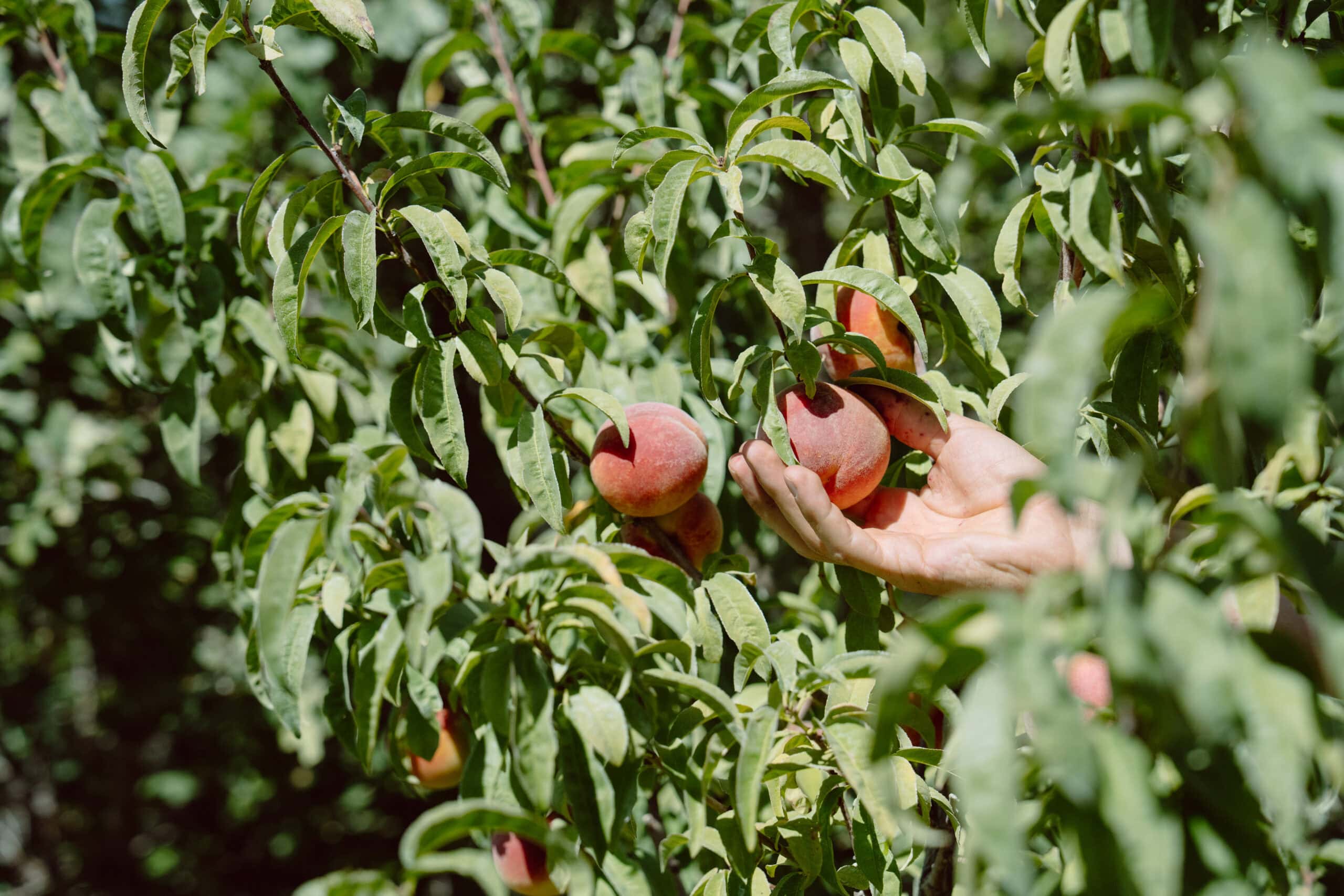
One smart, budget-friendly strategy Jason suggests is to plant three trees even if you only need one. It gives you the chance to try out different varieties and cultivars, or to buy three of the same variety or cultivar and experiment with the kind of care they need. The way you afford this is by choosing younger, bare root saplings. Not only do these offer the best selection and value, but Jason has observed that these tend to catch up to the more expensive, potted, mature trees within about five years.
One caution as you shop: Pay attention to whether a tree is self-pollinating or will need cross-pollination (meaning, a second tree in the same family nearby). Many stone fruits, for example, require a pollinating partner planted close enough to co-pollinate and fruit.
For some, picking a tree is an agonizing decision. They overresearch, punt the can down the road, and ultimately make mistakes anyway. But mistakes are a normal, unavoidable part of the process, and Jason’s strategy for buying more of the less expensive trees is a great way to hedge your bets. So choose your tree, and don’t worry. As Jason puts it, “The best time to start a tree is five years ago. The second best time is right now, so don’t hesitate. Go for it.”
Need more support on how to approach this research phase? Jason walks through his own tree cultivar research process, including exactly which questions to ask a university extension office before buying, in his Holistic Orcharding class.
Holistic Orcharding
Join Jason Ross for a hands-on holistic orcharding class that shows you exactly how to grow a thriving, low-maintenance orchard. No complicated watering, costly fertilizers, or toxic sprays required. You’ll need little more than soil, plants, and a few basic tools, and you’ll gain the skills and confidence to harvest abundant fruit while working with nature, not against it.
Turning Your Existing Lawn Into Orchard Space
Once you’ve taken the plunge and bought a tree (or three), the question becomes where to plant them. Starting a food forest is probably a lot easier than you think, and unless you’re living in a high-rise, chances are your prime real estate is hiding in plain sight: the lawn.
Though we love the tidy look of lawns, it’s what Jason calls a “biological desert,” hosting very few insects and almost no plant diversity compared to a food forest. Wouldn’t it be lovely to use that space to grow food and flowers instead?
And planting into your lawn has one major advantage over raw, broken ground: The soil underneath a lawn has usually been protected and watered for years, meaning it’s probably ready to go without several years of soil reconditioning.
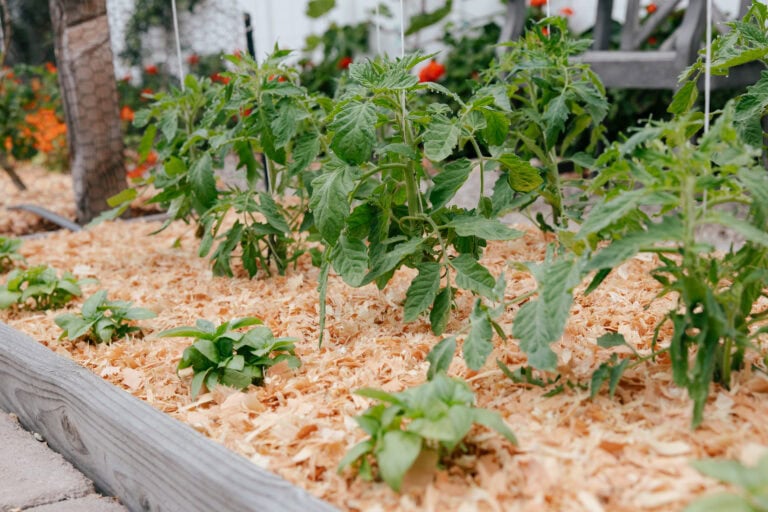
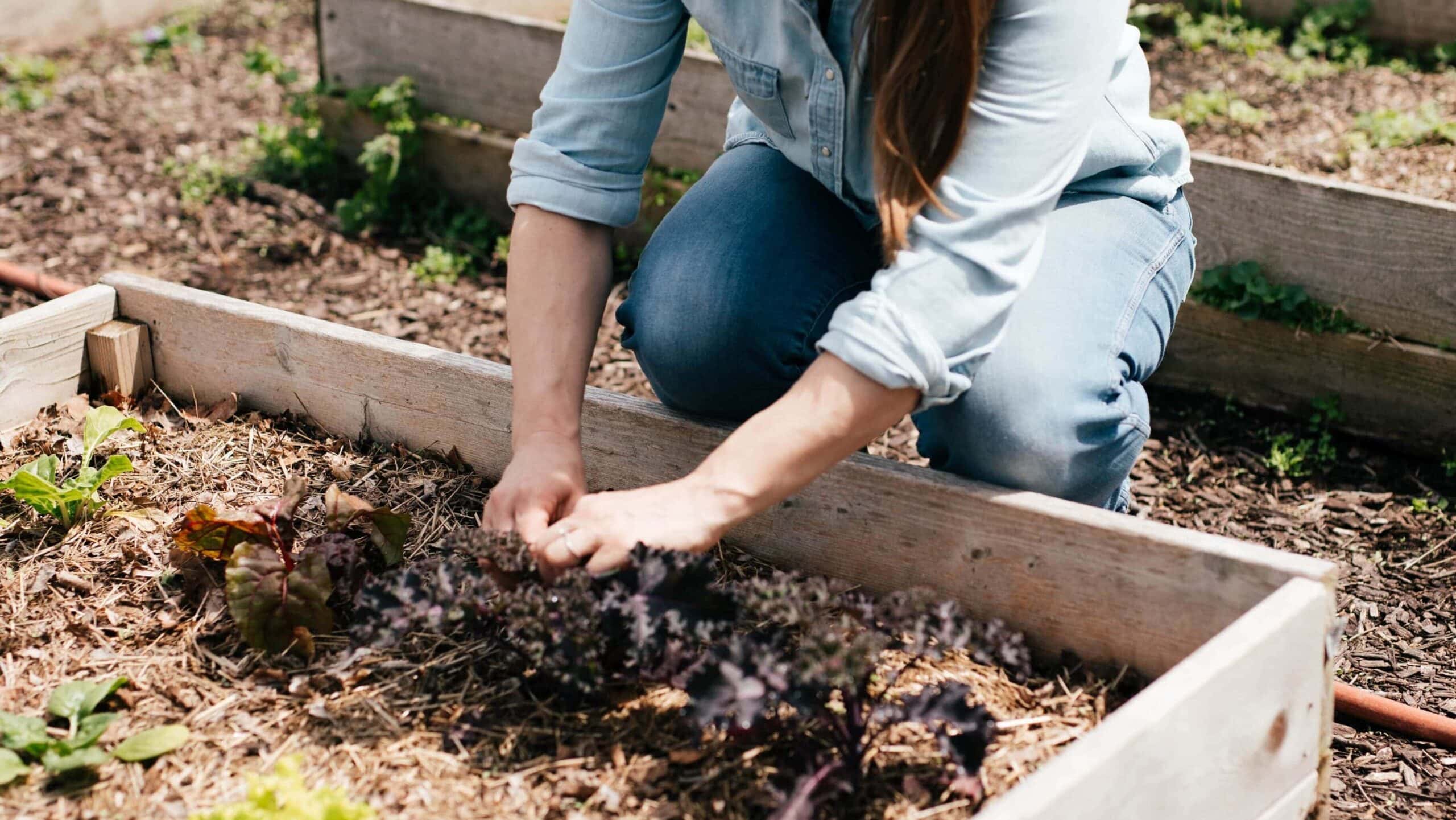
Jason's actual conversion method is simple. He begins by flipping the grass roots-up, adds a layer of compost, sets up drip irrigation on top, places clean cardboard over that, and then plants straight through the cardboard, finishing with a layer of wood chips.
Given the ease of the process, we’d understand if you were to get a little excited and carried away, but start small. There’s no need to convert your whole lawn in one season! Start with a 10 by 10 foot square (or 3 by 3 meter square) or one guild circle at a time, working outward from an existing tree or planter.
Matching Trees to Your Microclimate
There is one last set of considerations before settling on the piece of ground you’re going to use for your orchard: sun, water, and timing. Factoring these into your decision will make the difference between a tree that just survives, and one that thrives and gives a bumper crop.
Sun: Sun and shade needs vary enormously by region. Hot, high-altitude areas often need more shade, while cloudy climates may want full sun. Experimentation is the only reliable way to find out what your specific yard needs, as when Jason’s haskap berries planted in the sunniest parts of the orchard didn’t make it. From evaluating his failures in full sun, he employed dappled
shade to make a big difference in the orchard by planting trees to provide a sun relief canopy for the rest of the plants.
Water: Watering needs are highest for about the first two years after planting, then taper off significantly as deep, tough perennial roots establish. (Strong soil actually reduces future watering needs, and building your orchard’s soil and learning how to water efficiently are both topics we’ll cover in the next article of this series.)
Timing: Trees are safest planted in the “bumper seasons,” meaning early to mid-spring or fall, avoiding the harshest summer sun. Perennials that fill in around trees can generally be planted year-round as long as they get enough dappled shade to avoid the worst of the summer stress.
Commonly Asked Questions About Choosing Fruit Trees
It’s much less than most people assume. Jason has grown enough food for a family of six in a small condominium backyard, and a single tree with a planted ring around it is a complete, legitimate starting point. Unless you are planning to graze large livestock, the commonly cited “ten acres” supposedly needed for homesteading represents far more land than a home orchard, and the typical family, actually requires.
Definitely! And it can often prove easier than starting on poor, broken soil because lawn soil has usually been protected and watered for years. Just follow the Jason Ross method: flip the grass roots-up, add compost and drip irrigation, cover with clean cardboard, plant through it, and finish with wood chips, converting a small section at a time.
A cultivar is a specific cultivated variety within a plant type, such as a Rainier cherry versus a Bing cherry. The reason cultivar choice matters is that these plants are adapted for a specific set of conditions. The wrong cultivar for your elevation, sun exposure, or frost timing can fail to fruit at all, so matching cultivar to location is worth the extra research step.
Either can work well as long as you have done enough research to know a specific cultivar suits your location, which local nurseries and university extension offices can both help confirm. Buying smaller, cheaper saplings and experimenting with a few varieties is often smarter than investing heavily in one mature tree, since younger trees typically catch up within about five years and can teach you a lot in the meantime about the proper ways to care for a tree.
Some do. Certain stone fruit varieties are not self-pollinating and need a second, compatible tree planted close enough to co-pollinate. The way to avoid any problems here is to check pollination requirements before you buy, since this is one of the most common reasons a single, isolated fruit tree fails to produce.
One More Thing
It sounds counterintuitive, but Jason claims it’s best to launch your orchard with a “non-plan.”
That’s just his way of saying: pick your trees, get started, and don’t worry about it. You will learn a ton along the way, which will include making massive mistakes and adjustments as you get better attuned to the local forest and what God is doing there. As an encouragement, he adds, “I hope you’ll give yourself grace and you’ll relax into the learning and the gentle journey of holistic orcharding.”
Your next steps in this journey entail walking your yard this week with two questions in mind: Where does the sun actually fall through the day? And, what is already growing there right now?
Those two observations will tell you more about what can succeed there than any climate zone map. Once you have a tree picked out and a spot chosen, Article 3, the next in this series, describes just how to get that tree planted and start building the soil underneath it into something that improves with age. Jason demonstrates his complete tree-buying and site-matching process, including his own hillside property's quirks, in the Holistic Orcharding class.
Holistic Orcharding
Join Jason Ross for a hands-on holistic orcharding class that shows you exactly how to grow a thriving, low-maintenance orchard. No complicated watering, costly fertilizers, or toxic sprays required. You’ll need little more than soil, plants, and a few basic tools, and you’ll gain the skills and confidence to harvest abundant fruit while working with nature, not against it.
Jason Ross did not start out as an expert. Like most people, he started as a gardener, planting the same rows of annuals every spring and fighting the same battles with pests, poor soil, and thirsty plants every summer. Somewhere along the way he discovered the wisdom of the forest next door to his Utah property, a 15,000-acre stretch of wild land that grew tens of thousands of Saskatoon berries and choke cherries without a single human hand tending them. That discovery tipped him over into permaculture and food forestry for good. Over the past 20 years, Jason has established permaculture gardens and orchards in Utah, Hawaii, and Southern Africa, co-founded Umdoni Farm as a national test site for permaculture homesteading techniques, and consulted with more than 50 rural and urban growers. He took what was once a pipeline easement full of clay and rubble on his own property and turned it into a lush, productive food forest using the same principles he teaches in Holistic Orcharding. He is also the author of the Black Autumn series of preparedness novels and screenwriter for the Homestead movie and TV show. His goal now is simple: empower others to create their own resilient food systems, one fruit tree at a time.