This is the second article in our five-part Pressure Canning Series, based on Carolyn Thomas's Pressure Canning class. New here? Start with Pressure Canning 101 (Article 1) on why pressure canning matters (it can safely preserve things water bath canning can’t!). Continue the series: Canning Meat and Broths (Article 3), Canning Low-Acid Vegetables (Article 4), Troubleshooting Pressure Canning Mistakes (Article 5)
Pressure Canning Supplies
If you’re new to pressure canning, you will be happy to hear that the supply list is quite short. In fact, apart from the canner itself, you probably already own most of what’s needed.
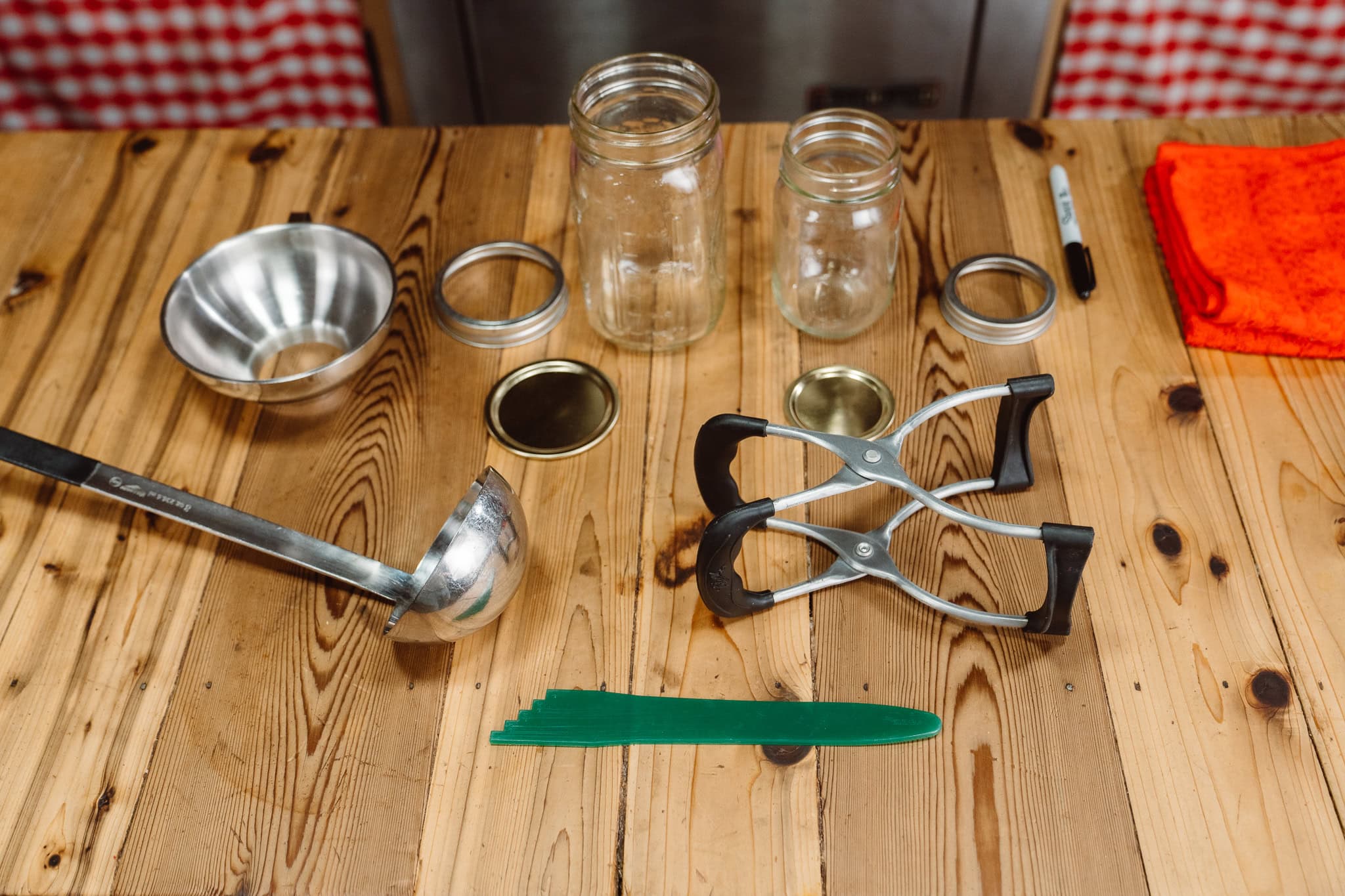
- Jars – Available in pint and quart sizes with regular or wide mouths. The choice mostly comes down to personal preference, but some tested recipes call for pint jars or smaller (chili is one example).
- Lids – New two-part lids are required every time you can, though bands can be reused for years as long as they aren't rusted.
- Funnel – A wide-mouth funnel keeps the jar rim clean while filling, which matters directly for getting a good seal later.
- Jar lifter – A jar lifter is so essential that Carolyn keeps two on hand in case one breaks mid-project!
- Debubbler tool – A bubble-popping tool made of plastic or wood (not metal) that removes air bubbles from the jar before sealing.
- Accessories – A permanent marker for labeling lids, plus regular kitchen tools like ladles, towels, and measuring cups, round out the list.
There’s one more item we haven’t covered yet, and it’s the star of the show: the pressure canner.
The One Essential Tool: Choosing Your Pressure Canner
There are two main types of pressure canners:
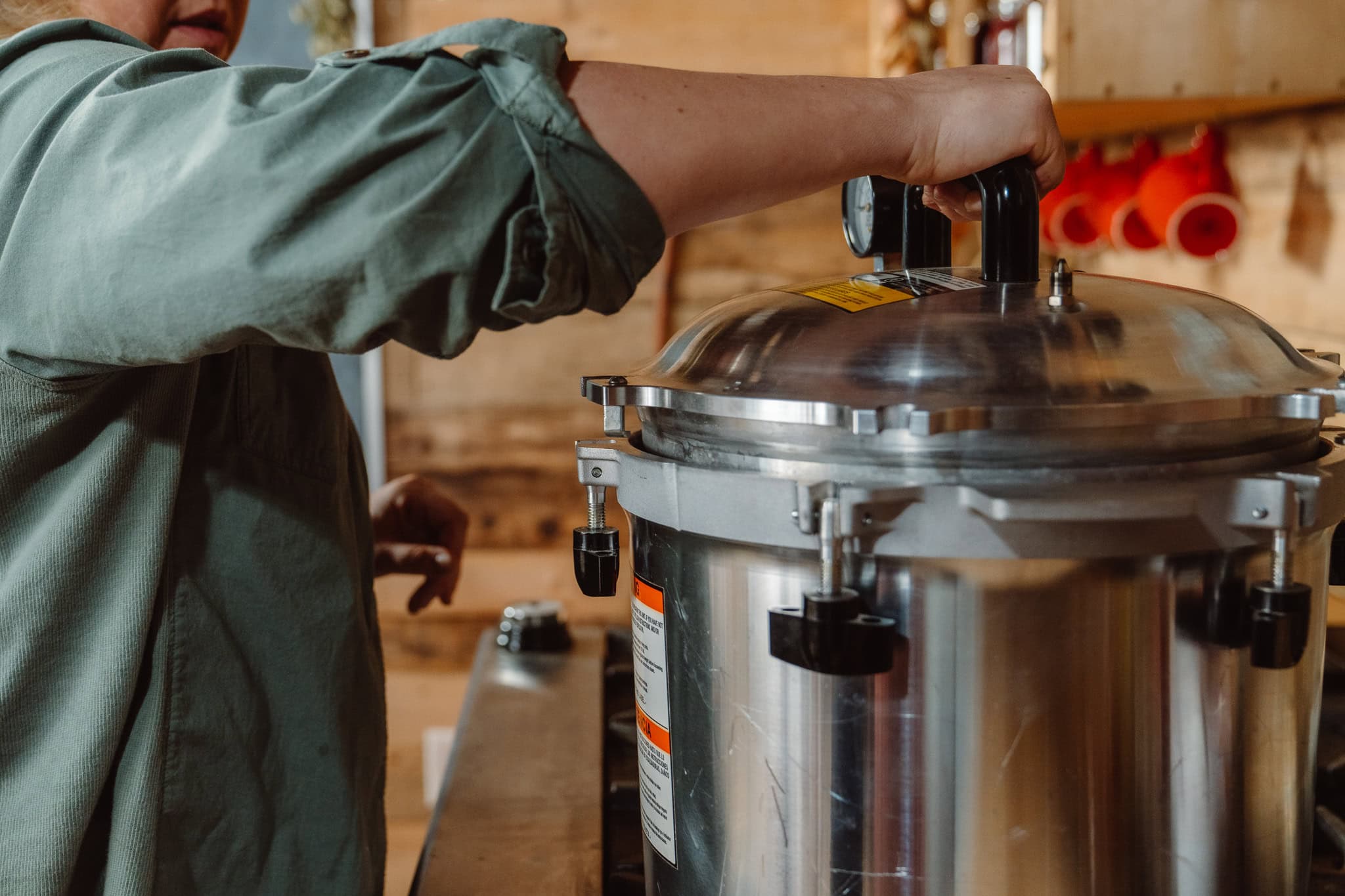
All American canner: This design is a metal-to-metal seal with screws on the lid to keep it closed and firmly in place. These are built to last for generations (read: they’re heavier, and heavy-duty). They carry a higher upfront cost, but also the added convenience of no rubber gasket to maintain.
Presto canner style: Rubber-gasket canners are lighter and less expensive, but the rubber gasket needs to be replaced every few years and inspected regularly for cracking. There are a variety of different brands available.
Either style cans safely and successfully – the decision just comes down to your budget and how long you want the equipment to last. Every canner, regardless of type, needs at least one rack in the bottom to keep jars from resting directly on the canner floor (if it doesn’t come with a rack, create a homemade rack by putting a dishtowel at the bottom of the canner). A few of the taller canners come with two racks so you can stack your jars and fit more inside.
Modern pressure canners include valves and gauges designed to release rather than fail. These built-in safety backups make the exploding pressure canner fear a thing of the past, as this truly no longer applies to today's equipment.
Weighted Gauge vs. Dial Gauge
When it comes to using your pressure canner, know that both types can have two types of gauges for regulating the pressure: a dial gauge or a weighted gauge
Dial gauges: These must be calibrated and tested regularly. Carolyn Thomas has seen a brand-new gauge be off by as much as three pounds of pressure, so it’s essential that this be checked at the local county extension office before using it for the first time, and annually every year after that you use it.
What’s the risk if the gauge is off? A gauge reading that’s too high means your food may be a little overcooked – not a big deal. But if the reading is even a few pounds under actual pressure, that can mean botulism spores are not being fully killed, which could be deadly.
Weighted gauges: This design involves fixed weights corresponding to fixed pressures. They never need testing or calibration because they work on simple physics. For the All American canner, the weighted gauge comes built-in, while the Presto canner’s weighted gauge is an after-market purchase.
What to look for with the two weighted gauge designs: The two slightly different weighted gauge designs produce different sounds when coming up to pressure. Rather than reading a dial, you’re listening and watching for a gentle “jiggle” or “hula.” In the case of the All American pressure canner, the weighted gauge jiggles between one and four times per minute (about once every 15 to 60 seconds). On the other hand, the Presto canner won’t jiggle, but will move in a gentle rocking motion reminiscent of a slow hula hoop. This is known in the canning world as a “hula.” (Tip: Hearing Carolyn Thomas explain this on video in her class makes it so much clearer!)
Pressure Canning
Join Carolyn Thomas from Homesteading Family as she shows you how to fill your pantry with safe, healthy, and delicious pressure-canned foods!
The last thing you need to know is the elevation level in your kitchen. Every canning recipe is written for sea level, but you need to adjust your actual target pressure depending on your kitchen's true elevation. You only need to look this up once (per kitchen you can in) and then make the necessary change to the pressure.
What to Do If a Jar Breaks Inside Your Canner
Before we move to frequently asked questions, let’s address what to do if there is a broken jar inside the canner.
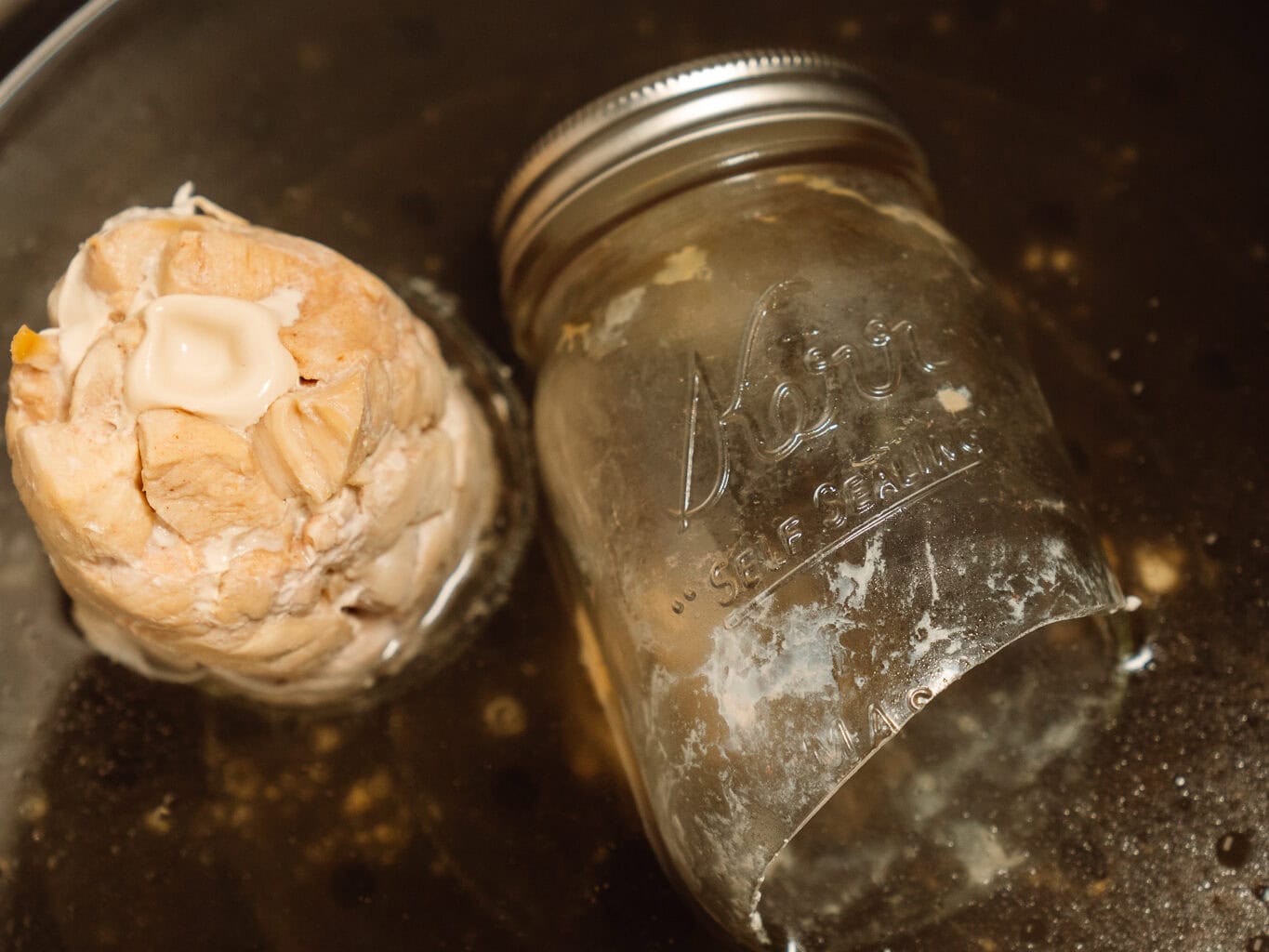
First, know that this is a normal event, and it happens even to experienced canners. While it’s not necessarily a sign of a mistake or failure, there are two causes behind broken jars, and both are avoidable:
- An existing defect in the jar, like a nick, chip, or hairline crack that wasn't caught sooner.
- Thermal shock, or putting a cold jar filled with hot food directly into hot water inside the canner. This may be too much temperature change for the glass to handle, which can break the jar. The fix is simple and successfully prevents breakages: always let your jars sit in warm water in the canner before filling them, so they go in warm rather than cold.
Let’s turn now to a few of the other safety and equipment concerns surrounding pressure canning.
Commonly Asked Questions About Pressure Canner Equipment and Safety
A dial gauge shows a numeric pressure reading (similar to the speedometer in your car) and must be tested and calibrated regularly to stay accurate. A weighted gauge uses fixed weights that correspond to fixed pressures, so it never needs testing or calibration.
Both types can pressure can safely and successfully, but the choice usually comes down to convenience and personal preference – in other words, whether you have access to gauge testing (fewer and fewer local county extension offices are providing this service) and whether you prefer to read a number or listen for a “jiggle.”
A dial gauge should be tested before the first use of the season and ideally every year afterward, since gauges can be inaccurate straight out of the box. Testing is typically done at a local county extension office, though fewer offices offer this service than in the past. A weighted gauge does not require testing because it works on simple physics rather than a calibrated mechanism.
Beyond the pressure canner itself, you need jars, new two-part lids, reusable bands, a wide-mouth funnel, a jar lifter, and a bubble-popping tool. Most other supplies, like ladles, towels, and measuring cups, are standard kitchen items you likely already own. A permanent marker for labeling lids completes the list, since labels help you track what's in each jar and when it was canned.
A broken jar usually comes from either an existing defect (a nick or crack in the glass jar that you missed during inspection) or thermal shock from a cold jar hitting hot water too quickly. This happens even to experienced canners and does not necessarily mean you made a mistake. Prevent it going forward by always warming your jars in the canner before filling them, so they enter warm rather than cold.
No! A pressure cooker is built for fast cooking, but not for maintaining the sustained, calibrated pressure that safe home canning requires to kill off all bacteria and spores (which means bringing the pressure canner to a temperature of 240–250°F, or 116–121°C).
Pressure canners include specific gauges and safety mechanisms designed for the longer processing times that low-acid foods need. Using a pressure cooker instead of a true pressure canner is not a safe substitute for preserving low-acid food.
Basic rubber-gasket canners typically start around 100 U.S. dollars, while heavy-duty metal-to-metal seal canners cost more upfront but last for generations without needing replacement parts. The cheaper option works well for getting started but will likely need a new gasket every few years.
Whichever you choose, either type is a one-time investment that pays for itself quickly when you start filling your own pantry shelf rather than spending that money at the store.
One More Thing
Once you’re feeling comfortable with the equipment and have acquired everything you need, it’s time to actually put all this learning to good use and can something.
The next article in our series on pressure canning walks through your first real project – nutritious, gut-healing chicken broth – using the same 10 steps you'll use for everything else you ever pressure can. Imagine the satisfaction of going into cold and flu season knowing you’ve got some jarred chicken broth ready in the pantry for a day when you’re feeling under the weather.
See the next article on canning meat and broth to get inspired, and watch Carolyn Thomas demonstrate the full equipment setup firsthand in her Pressure Canning class.
Pressure Canning
Join Carolyn Thomas from Homesteading Family as she shows you how to fill your pantry with safe, healthy, and delicious pressure-canned foods!
Carolyn Thomas learned to preserve food as a child, watching her mother and grandmother turn homegrown fruit into jam on the kitchen counter. Today, she and her husband, Josh, and their 11 children live on 40 acres in Idaho, growing and preserving much of what they eat. Carolyn has spent more than 15 years studying traditional domestic management arts, from herbal medicine to historical and modern food preservation, and she now teaches pressure canning through Homesteading Family and the School of Traditional Skills.