A Problem You Don’t Often Hear About
It’s a frustrating—and surprisingly common—problem for new and experienced homesteaders alike: hens eating their own eggs. If you've been searching for ways to stop chickens from eating eggs, you're not alone.
The good news is, it’s not the end of your egg supply. This article walks you through a few practical, straight-forward changes—and shows how, by letting chickens live as nature intended, you can break the habit and get your flock back on track.
Why Do Chickens Eat Eggs?
Before you can stop chickens from eating eggs, it helps to understand what causes it in the first place. Chickens don’t eat eggs out of defiance—it almost always starts with an unmet need or a situation that sets the stage.
Here are the most common reasons:
Nutritional Deficiency
Hens need steady access to calcium and protein—especially during peak laying seasons or molting. Without it, they may turn to their own eggs as a quick source of what’s lacking. If their feed isn’t well-balanced or oyster shell isn’t offered free-choice, the instinct to “self-supplement” can take hold fast.
Broken Eggs
Sometimes all it takes is one broken egg. Thin shells—often due to low calcium or poor feed quality—are more prone to cracking, especially if bedding is sparse or nesting boxes are crowded. A hen finds the cracked egg, pecks out of curiosity, and the habit begins. And once one bird starts pecking, others often follow. Chickens are excellent observers, so habits, whether both good or bad, tend to spread quickly.
Boredom or Stress
Chickens are highly active, social animals. When confined to tight quarters without enrichment or space to roam, they’re more likely to redirect their energy into pecking behaviors—including at eggs. Overcrowded nesting areas can also lead to accidental breakage and tension within the flock.
How to Prevent Chickens From Eating Eggs
The best way to deal with egg eating is to make sure it never starts. A well-fed, naturally active hen with clean, comfortable nesting space rarely goes looking for trouble—or for yolk.
Here’s how to create a low-stress, egg-friendly environment on your homestead:
Provide the Right Nutrition and Outdoor Access
A hen that’s getting everything she needs from her diet and has plenty to do outside the coop is far less likely to develop bad habits and make mischief.
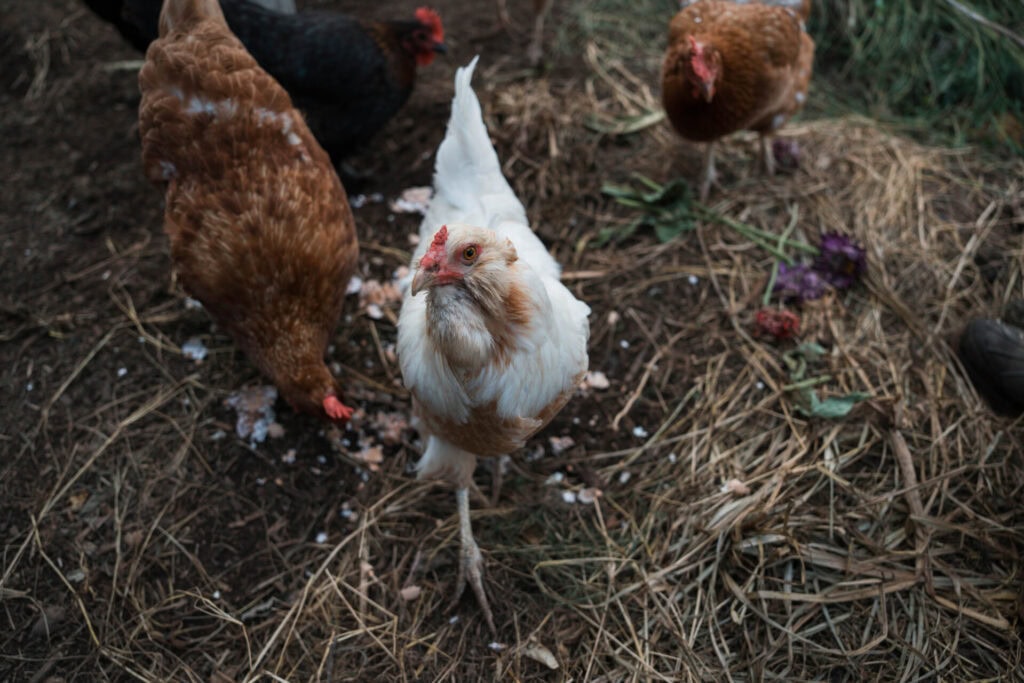
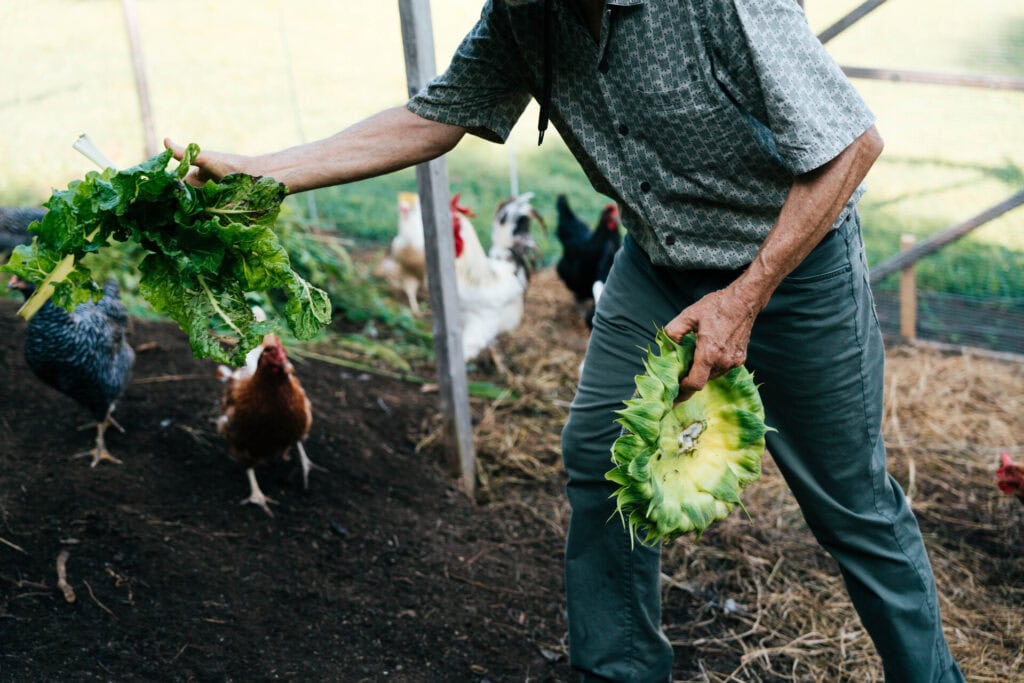
By giving your chickens opportunities to be outside through mobile chicken tractors, electric netting on pasture, or free-ranging, you allow them to scratch, forage, and roam just as they would in the wild. This is the most natural and preferred way to raise chickens, and will provide the benefit of excellent nutrition while also keeping them occupied and contented.
When harsh weather or other circumstances don’t permit time outdoors, aim for a spacious run or coop filled with deep bedding and include decomposable organic materials like culled fruits or vegetables from the garden and grass clippings.
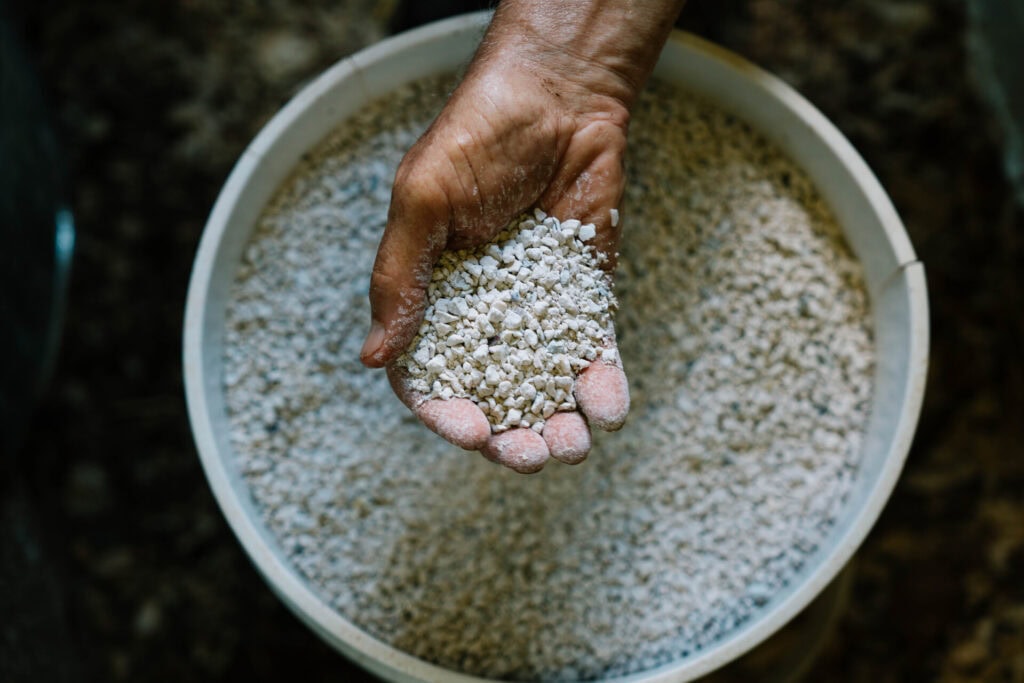
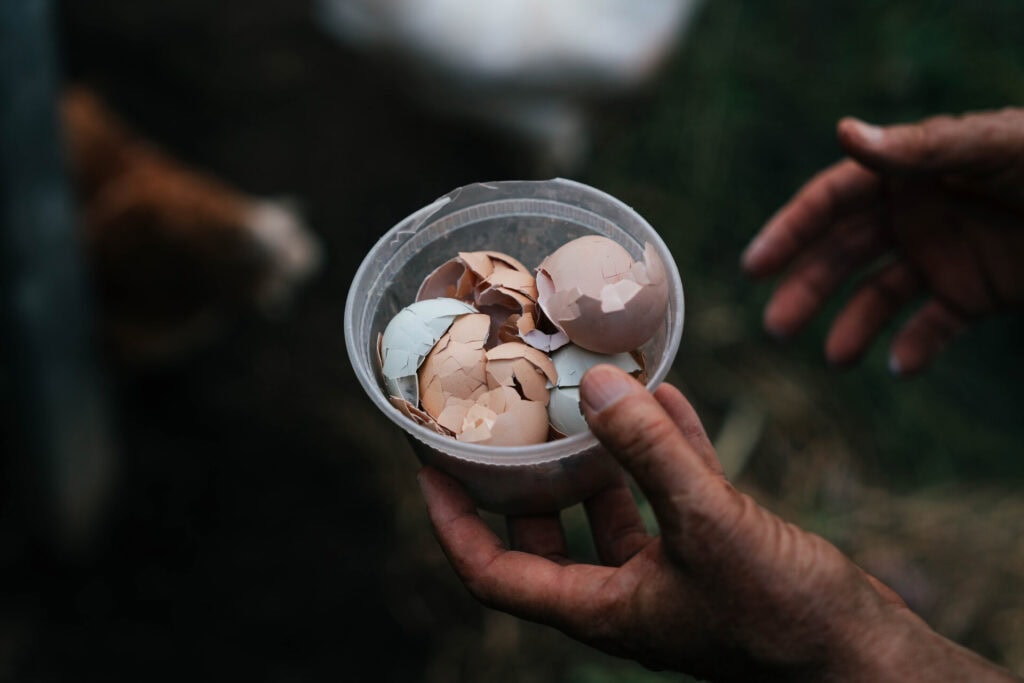
Most pastured flocks will need to have their diet supplemented by homemade feed options at regular intervals throughout the year. This could include some combination of bugs (either grown by the flockster or self-harvested by the hens while on pasture), soaked and fermented grains, kitchen scraps, and leftover dairy products. If you’re looking to buy something ready-made, high-quality, non-GMO, organic layer feeds (look for 16-18% protein content) are available. In either case, offer oyster shell or crushed eggshells free-choice to increase calcium intake.
During molting or stress, supplement with protein-rich treats like grubs, boiled eggs, or nutrient-dense garden weeds like dandelion, stinging nettle, or burdock. Check out Harvey Ussery’s class on “Backyard Chickens” for more ideas on maximizing natural feeds and instructions for building a mobile shelter that allows your birds to be on grass but protected from predators.
Collect Eggs Frequently
Even well-fed birds can get curious if eggs sit for more than a few hours. Collect eggs at least twice a day—once in the morning and again later in the day. During hot weather or when laying is at its peak, consider checking even more often. If an egg does break, remove all traces of it immediately. If collecting eggs within a few hours of laying is unrealistic, a roll away or roll out nesting box is a good option for you.
Optimize the Nesting Environment
Well-designed nesting boxes reduce the risk of broken eggs and keep hens relaxed and focused on laying, not pecking.
Keep boxes dark and quiet—this helps prevent pecking and protects your hens’ privacy.
Use clean, soft bedding like straw or pine shavings to cushion the eggs.
Finally, make sure you have enough space: one nesting box approximately 12-14” in each direction for every 4–5 hens is a good rule of thumb.
Stop It Once It Starts
If you’re already dealing with broken eggs and messy nesting boxes, it’s time to act quickly. Once a hen starts eating eggs—and especially once others catch on—it can become a hard habit to break. But it can be broken by implementing a few strategic measures.
Identify the Culprit
It only takes one hen to start a bad habit and teach it to others.
- Observe the flock as often as possible or use a trail camera to monitor the nesting area
- Look out for egg yolk on beaks, combs, or chest feathers
- Temporarily isolate small groups of hens to narrow down the offender
- Use colored leg bands to track individual birds
Break the Habit
Once you’ve found the culprit(s), the goal is to stop the behavior immediately by removing both the temptation and the reward.
Remove broken eggs right away. Leaving them only reinforces the behavior.
Add decoy eggs made of ceramic or wood to the nesting boxes. Even golf balls can do the trick. They’re unbreakable, less interesting, and help train hens that pecking yields nothing.
For persistent offenders, blow out a real egg, fill it with mustard or dish soap, and leave it in the nest. Most chickens find the taste unpleasant and lose interest after a few tries.
Practical Solutions from Experienced Homesteaders
Once you’ve addressed nutrition, nesting, and identification, the next layer of prevention comes from day-to-day observation and simple, natural adjustments. Often, what looks like an egg problem is actually a boredom problem, a stress problem, or a space problem.
Here are some effective strategies homesteaders use to stop egg eating and keep it at bay:
Offer Enrichment That Encourages Natural Behaviors
Idle birds get curious. Curious birds peck at things.
You can keep your flock engaged and stimulated by mimicking the diversity they’d experience in nature. Hens will stay contented and occupied with a few simple enrichments: hang cabbage or squash, scatter scratch grain into deep mulch, or rotate logs and perches to keep things interesting.
Reassess Flock Dynamics
Tension in the coop—often from overcrowding, bullying, introducing new birds, or too many or overly aggressive roosters—can drive egg eating.
Your birds will naturally establish a pecking order, but watch for dominant hens chasing others away from nesting boxes.
Make sure each bird has access to feed, water, and a private place to lay. If needed, temporarily separate aggressive birds to ease pressure.
Through proper management, many problems of this sort can be avoided—and Harvey’s class is a great place to start no matter what issue you may be facing with your hens.
What to Do if Egg Eating Persists
Most hens will stop eating eggs once their needs are met and the behavior is interrupted—but every now and then, one bird won’t. If you’ve tried nutritional fixes, nest box adjustments, and behavior deterrents with no success, it might be time for a harder decision.
Some Habits Are Hard to Break
Once a hen learns that breaking and eating eggs gets her what she wants, it can become a deeply ingrained behavior. Worse, egg eating is contagious—other birds will mimic what they see, especially in close quarters.
Protect the Rest of the Flock
Isolate the persistent egg eater to prevent her from teaching the habit to others.
If isolation doesn’t work, consider re-homing her to a flock where egg-laying isn’t the priority—or where she’ll be managed separately.
As a last resort, some homesteaders choose to cull a chronic egg eater, especially if the health and productivity of the entire flock is at stake.
Be a Steward, Not Just a Keeper
Making the call to rehome or cull is never easy—but part of wise animal husbandry is knowing when one bird’s behavior threatens the welfare of the whole flock and ceases to serve the needs of the homestead. When we choose to raise animals traditionally and ethically, we also accept the responsibility of managing them with intention and care.

You Can Do It!
If your chickens are eating their own eggs, it can feel like a major setback—especially after all the time, care, and feed you’ve invested. But take heart: this is a common issue, and in nearly every case, it can be corrected.
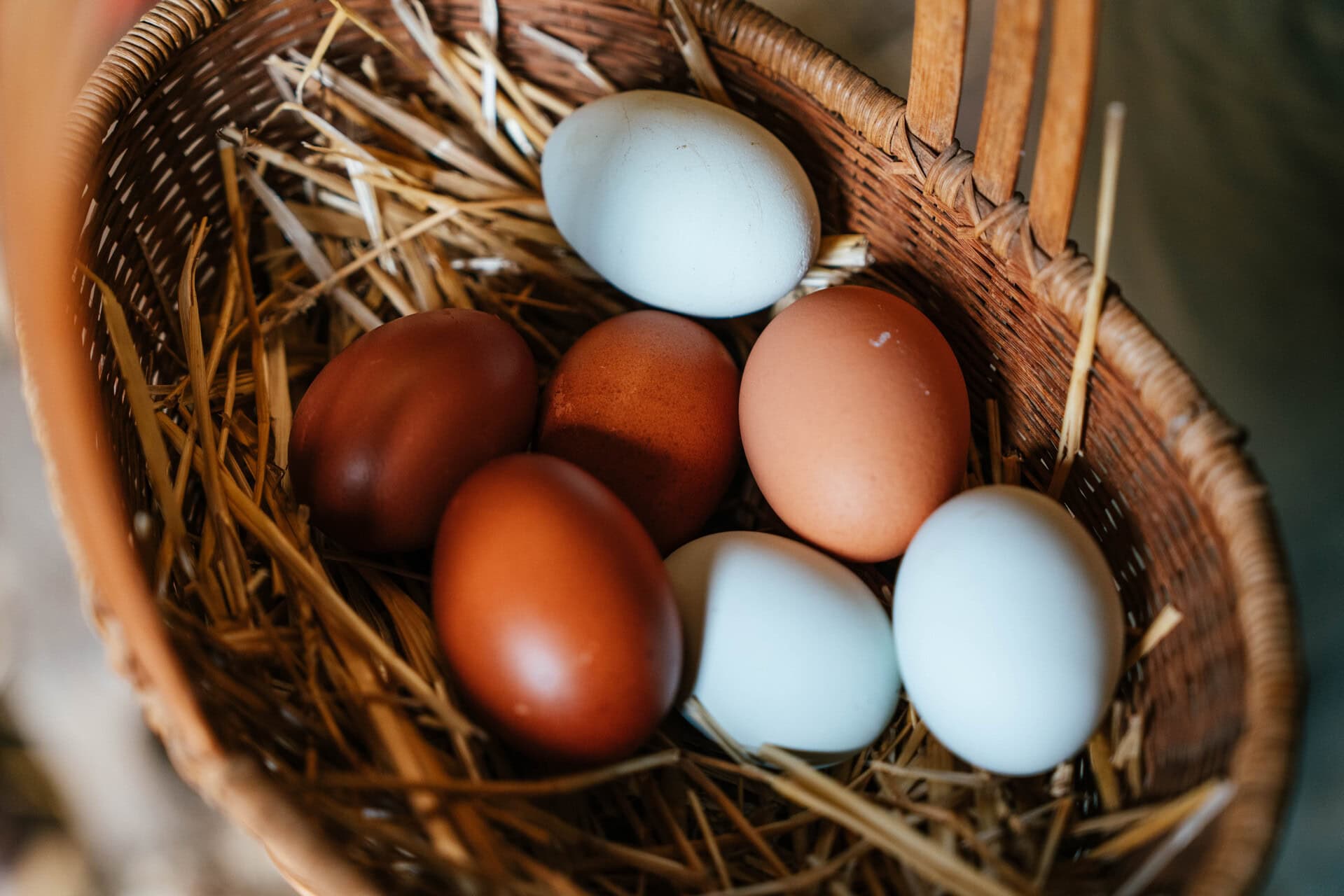
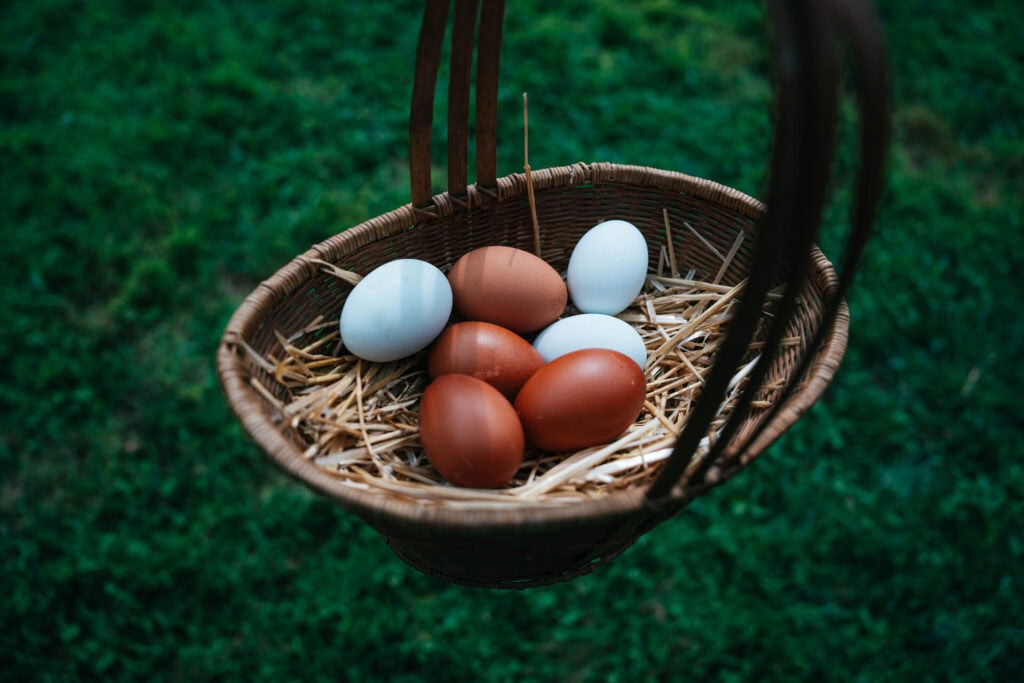
With good nutrition, space to roam, and consistent, respectful care, you’re not just solving a problem—you’re building a thriving homestead. When we let chickens live like chickens—free to scratch, forage, lay, and roost with dignity—they reward us with abundance. And yes, that includes a basket full of clean, unbroken eggs.
Backyard, Egg-Laying Chickens
Join Harvey Ussery from The Modern Homestead to learn to keep a healthy and sustainable flock of backyard egg laying chickens.