This article is the third in a series on Raising Meat Rabbits. See article one here, article two here, and article four here. If you’re ready to go all in, check out our class on Raising Rabbits with Daniel Salatin of Polyface Farm.
In this third article in our Meat Rabbits series, we will demystify the production side and share the information you need to implement a breeding program that can start feeding your family in only 4–5 months.
The Case for Meat Rabbits, a Protein Production Powerhouse
Following a natural and relaxed breeding schedule, your does can throw five litters per year of six to nine kits each on average. That means each of your does can easily have between 30 and 45 bunnies a year. Conservatively, we’re talking at minimum an impressive 100 pounds (45 kg) annually from just one doe!
Consider, too, that these results are probably manageable for you right now, with the resources – time, money, and energy – currently at your disposal. It’s hard to say that about any other meat animal.
So let’s start with how to manage a doe’s reproduction.
Knowing When and How to Breed Your Does
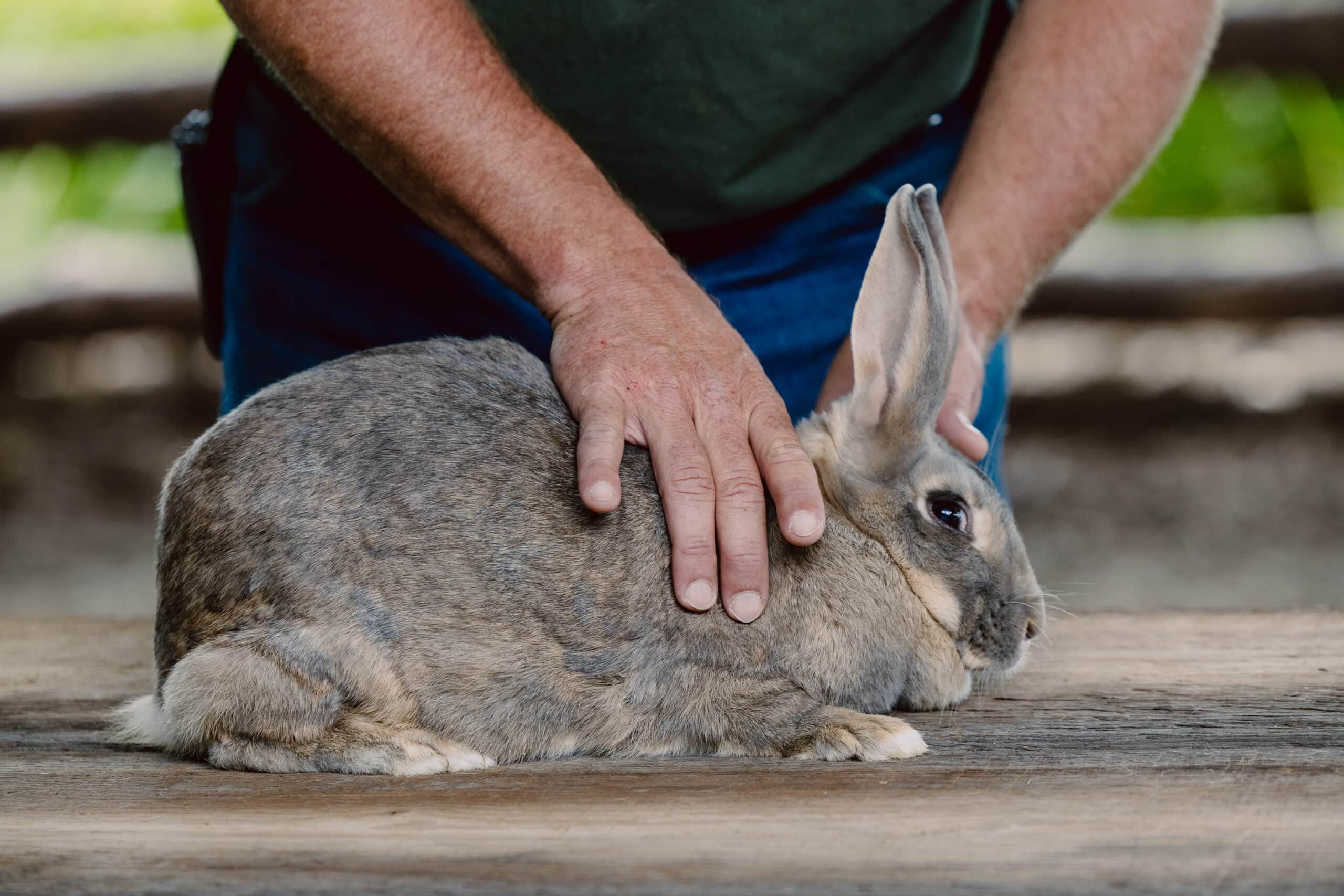
The age at which a doe can conceive fluctuates from breed to breed. Smaller breeds mature sooner than extra large breeds, but expect her to be ready by 18–20 weeks. At full size, her weight should be between 9 and 11 pounds (4.1–5 kg). Bucks take a bit longer, maturing at around 22 weeks.
Telling Does and Bucks Apart
Generally, the sex of your rabbit should be pretty obvious by around 12 weeks. With practice, you may be able to sex them younger, but you risk mistaking an immature buck for a doe, since the male’s genitals finish developing at around the 12-week mark.
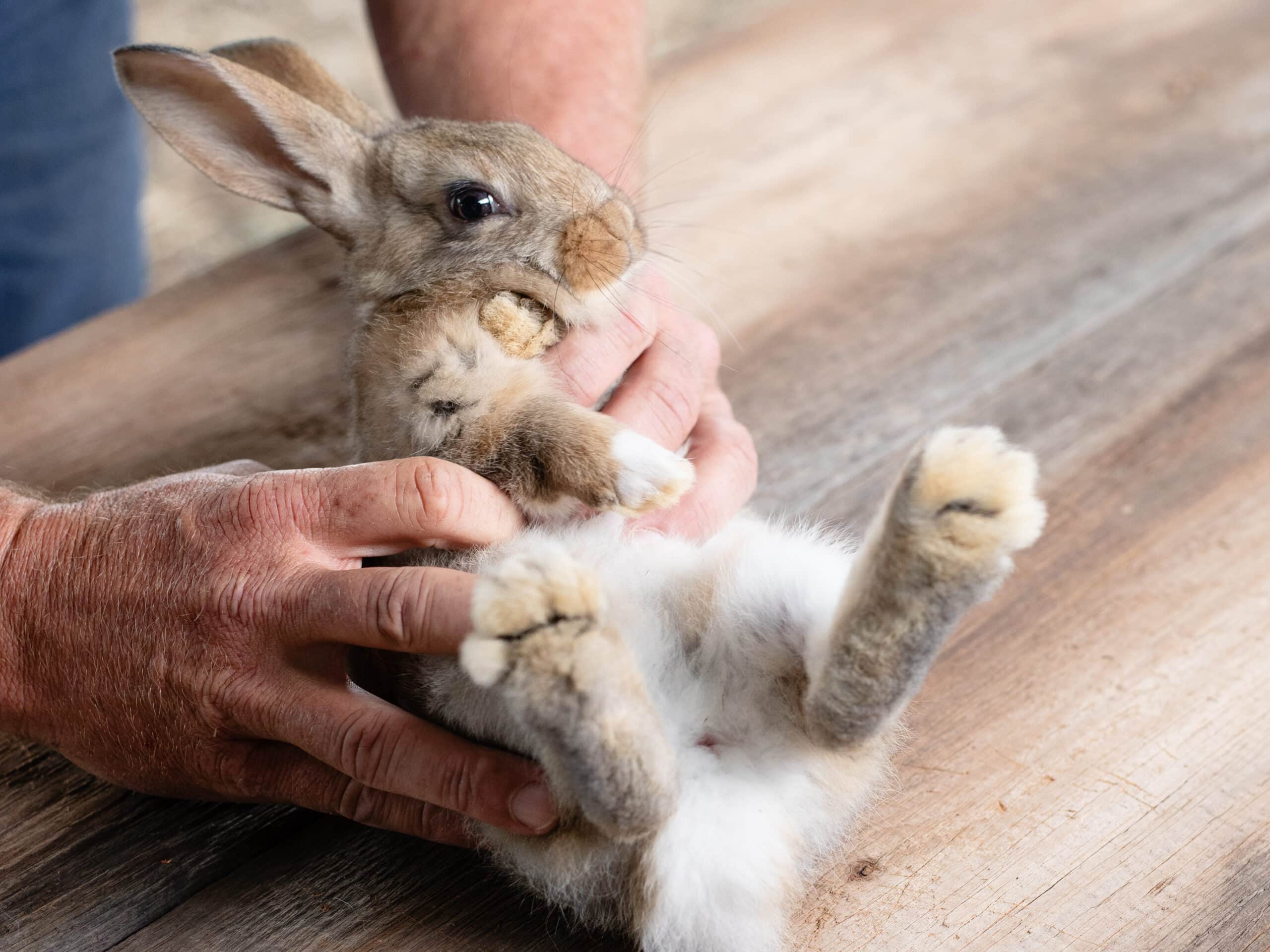
To determine the sex of your rabbit, grab it by the scruff and flip it over. Gently pull the tail downwards, pull back on the fur above the genital area, and observe the area. If necessary, apply light pressure. A protrusion means you’re holding a male. If you see a slit with two openings on either side, it’s a female.
Achieving Conception
Before you breed a mature doe and buck, there’s an important rule you need to follow to avoid unnecessary injury to your rabbits: Always bring the doe to the buck. She is very territorial and will not take kindly to an intruder.
On the other hand, a buck will eagerly welcome a doe’s arrival in his cage and should finish his business in under a minute. After the buck dramatically falls off, restore the doe to her cage.
Gestation and Kindling
Once you’ve determined a positive pregnancy, a doe’s gestation takes 28–32 days. This is a good time to make or acquire a nesting box. Ensure it’s large enough to fit your doe and several growing kits, but not so big that kits could get lost in the hay.
(For nesting box size recommendations by rabbit weight, see the School of Traditional Skills’ Raising Rabbits class skill sheet inside the class.)
Nest Box Timing and Setup
At least two or three days before the doe’s due date, place the nesting box and materials in the cage. Offer an overabundance of older, stemmy hay or straw. These should be dry and not of high quality (for instance, avoid alfalfa or second-cutting hay). Steer clear of anything leafy, but long, dead grasses are fine.
When you see her making the nest and lining it with her fur, you’ll know she’s about to kindle, or give birth, within days (maybe hours).
What To Do (and Not Do) When Kits Arrive
Once the doe has kindled, whoever regularly handles the rabbits should inspect all the kits. Don’t let anyone unfamiliar to your doe touch them, as the doe may not recognize their scent and end up destroying her litter.
After kindling, wait three to four weeks before removing the nesting box. It will be very soiled at that point, and its contents will make a great addition to your compost pile.
Raising Rabbits
Join Daniel Salatin of Polyface Farm as he walks you, step-by-step, through everything you need to raise rabbits for meat at home, from your first cage build to your first harvest, using a system simple enough for kids to run in under 30 minutes a day.
The Breeding Schedule
To achieve a sustainable, year-round supply of meat, the goal should be for each doe to have four to five litters annually. Typically, this means rebreeding your doe at around five or six weeks after a litter is born. This window gives her enough downtime to recover, but not so much that she becomes fat and unproductive.
In a temperate Northern Hemisphere climate, fall and spring will be the easiest times to get your does pregnant. Outside of those seasons, so long as you’re not experiencing extreme temperatures, continue breeding them.
Managing Weanlings (7–12 Weeks)
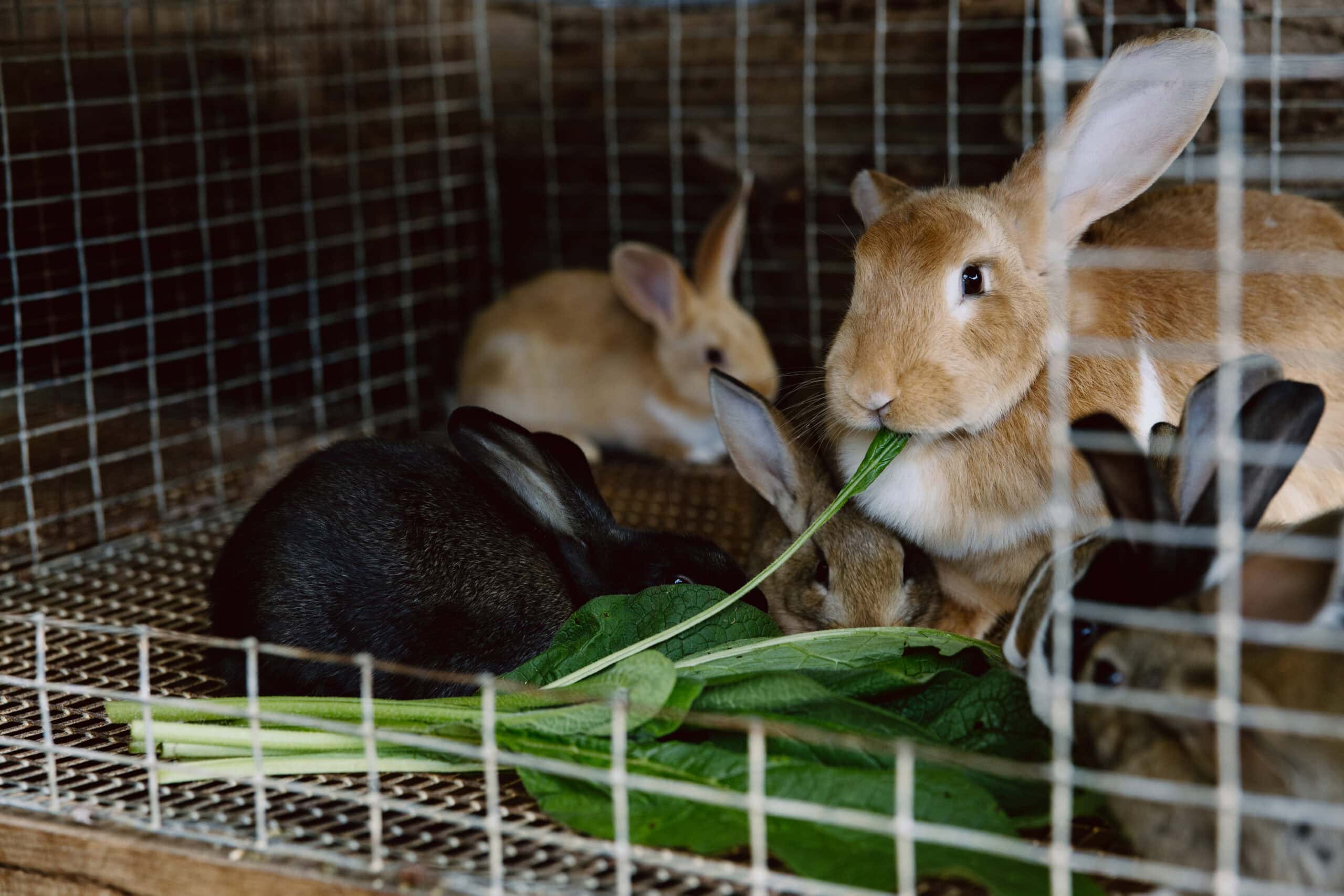
After bunnies are weaned around 5–6 weeks, they’re hardier and better equipped to digest grass. Plus, they’re larger and less likely to escape! That makes harepens an excellent option for housing your weaned rabbits 7 weeks and older during the warmer months. A harepen can hold a whole litter of up to 8 or 10 rabbits.
But if there’s no grass, or it’s too hot or too cold, weanlings can stay in their wire cage together. Just separate them if they get to fighting.
During this grow-out phase, you’ll want to track their weight as you approach the recommended 12 week harvest mark. Growth benchmarks for measuring a medium to large breed’s butcher weight are as follows:
- At 8 weeks, the goal is 3.5–4.25 pounds (1.6–1.9 kg), with 3.5 representing good growth and 4–4.25 representing excellent growth
- At 10 weeks, the goal is 5–6 pounds (2.3–2.7 kg), with 5 representing good growth and 5.5–6 pounds (2.5–2.7 kg) representing excellent growth
- At 12 weeks, the goal is to have achieved solid growth of 6 pounds (2.7 kg) up to 6.5 or 7 pounds (2.9–3.2 kg)
Record Keeping
Within the lifecycle of a rabbit, there are several important events to keep tabs on. The more rabbits you have, the more information to record. The key elements to track in your breeding program are:
- Breeding bucks and does (these should have identification tags hanging outside their cages – a number on a piece of old steel should suffice)
- Due dates and rebreeding dates by doe
- The number of kindles a year by doe and the weaning day for each litter
- The numbers and sizes of successful litters
- New breeding stock
These items should be tracked in a well-organized spreadsheet. This tool can also track genetic performance across the herd and help you pick up on patterns, like which does and bucks perform the best. This valuable at-a-glance information will help you make informed decisions about the direction to take your herd. Feel free to have fun with it and create a template that takes the kindling date you input and autofills dates for future events like weaning, rebreeding, check-ups, and butchering.
We love a great spreadsheet, but when you’re out with your rabbits at chore time, you need a simpler solution. This is where a small notebook or pocket calendar comes in handy. It should contain the essential dates you’re tracking, like due dates and rebreeding dates.
Hands down, recordkeeping may be the essential element behind successful rabbitries. With these two tools, you can avoid many a mistake simply by keeping your records up to date.

One More Thing
After this closer look at a rabbit’s lifecycle, things are starting to come together. It’s clear the various aspects we’ve explored so far in this series – feeding, care, and breeding – all work together to create a huge payoff. And it doesn’t need to be complicated, either. In fact, growing your rabbit herd and managing the breeding cycles of your does is almost as simple as writing dates in the calendar.
Using good records to track important elements of your rabbits’ lifecycles is a tremendous asset on your journey, and will simplify every step of the process. But the key takeaway is this: You can raise an impressive amount of rabbit meat each year without pushing your breeding stock beyond their natural ability.
Interested in jumping into rabbits now? Access the Raising Rabbits class offered over at the School of Traditional Skills. From the comfort of your own home, you can go from uncertain beginner to a confident rabbit handler. All in under three hours.
We end our series on meat rabbits in part 4. In this last article, we’ll cover the question everyone wants to know: how to process and cook rabbit.
Raising Rabbits
Join Daniel Salatin of Polyface Farm as he walks you, step-by-step, through everything you need to raise rabbits for meat at home, from your first cage build to your first harvest, using a system simple enough for kids to run in under 30 minutes a day.