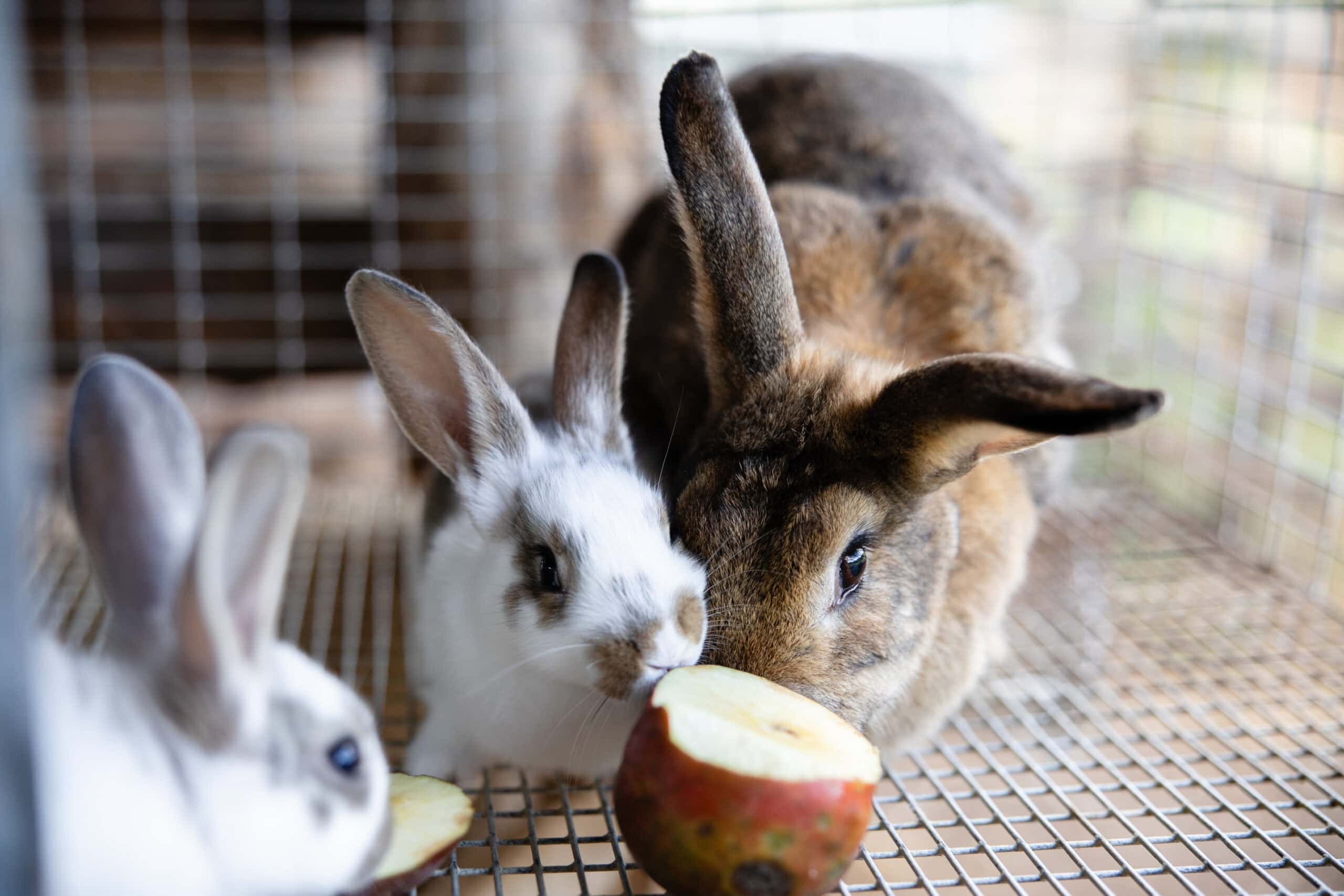
This article is the first in a series on Raising Meat Rabbits.See article two here, article three here, and article four here. If you’re ready to take the next step, check out our class on Raising Rabbits with Daniel Salatin of Polyface Farm.
When it comes to raising rabbits for meat, the reasons to consider this venture are many. Here are the top five:
1. Small space: Rabbits don’t require much space. Since they’re quiet and small, they fit perfectly on just about any homestead.
2. Low cost: Startup and maintenance costs are low.
3. Tasty meat: The meat is delicious and versatile, providing a source of fresh, high-quality meat year-round
4. Fast results: They grow and reproduce quickly, with some breeds reaching maturity in as little as eight weeks.
5. Kid-friendly: Kids as young as seven can shoulder the responsibility of raising meat rabbits because they’re easy to care for, need under 30 minutes daily, and are lightweight enough to be handled by small hands.
Intriguing, right? Let’s evaluate whether meat rabbits are the right fit for your homestead, beginning with this first in a series of four articles on how to raise meat rabbits.
Are Backyard Meat Rabbits Right For You?
There are three key questions to address before deciding whether you should jump into rabbit production: Will your family eat rabbit? Can you process them (or find someone to do it for you)? Does your setup (i.e., zoning, climate, space) allow rabbits?
Eating Rabbit
While rabbit consumption was common as recently as the early 1960s, rabbits have since developed a reputation as a cute pet, and nothing more. But it is one of the most efficient, sustainable, and flavorful meats you can raise, and it deserves a place back on our tables. We’ll cover cooking methods in part 4 of this series.
Processing Rabbit
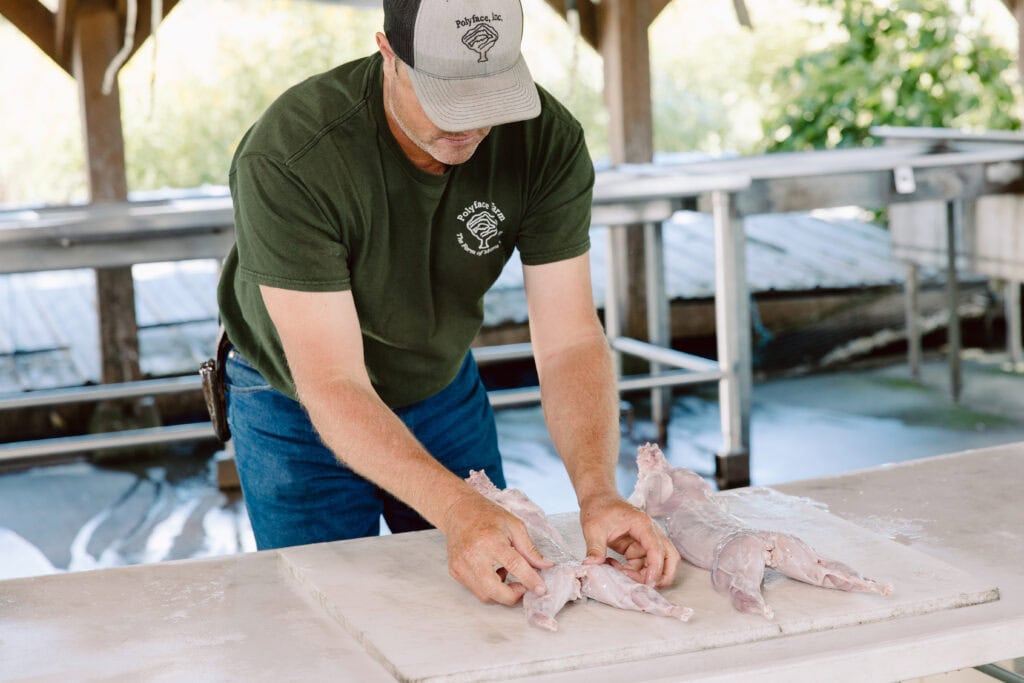
For some people, this is the biggest hurdle – and you could simply find someone to do the processing for you. That said, butchering rabbits on-site is straightforward and requires minimal experience and equipment. The essentials are some buckets, a clothesline, a metal pipe (or wooden 2×4), paracord loops, a couple knives, and access to water and a tub. Watch someone experienced do it once (like Daniel Salatin in our class on Raising Rabbits) and you should be all set to tackle it yourself.
Raising Rabbits Where You Live
Rabbits are not considered agricultural livestock in most places, meaning they’re typically city and even HOA-friendly and can work for your setting, be that a yard, garage, or patio. Plus, they’re incredibly versatile, and with so many breeds available, there is a rabbit already adapted to practically every climate and region.
What Do You Need To Get Started?
If the enterprise still appeals to you after answering those questions, let’s consider the supplies and housing required, beginning with the rabbits themselves.
The Trio
Starting out, you’ll need to acquire breeding stock from distinct genetic lines, typically two does and one buck. This combination provides enough genetic diversity to start and maintain your own rabbit breeding program.
Housing: Indoor and Outdoor Shelters
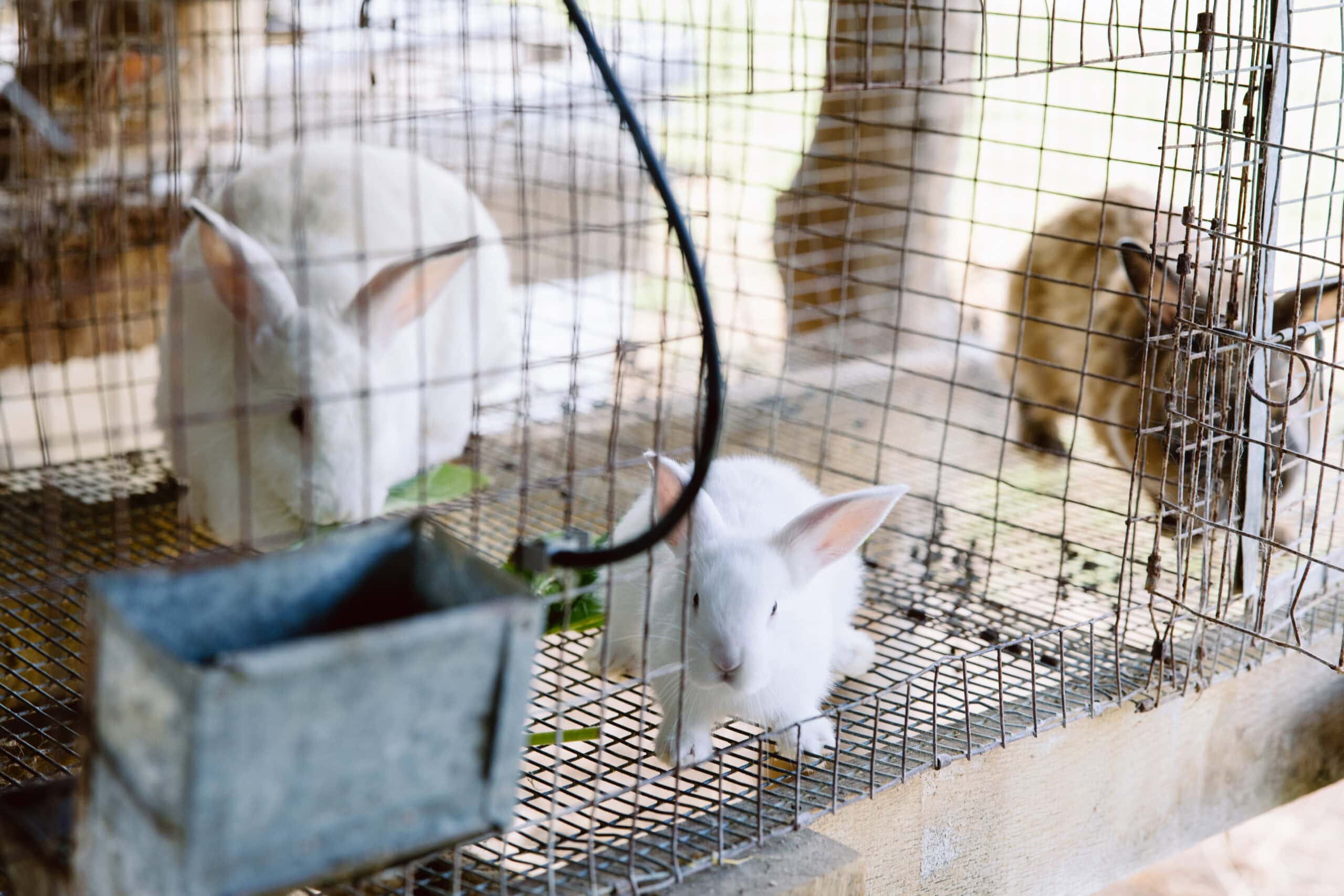
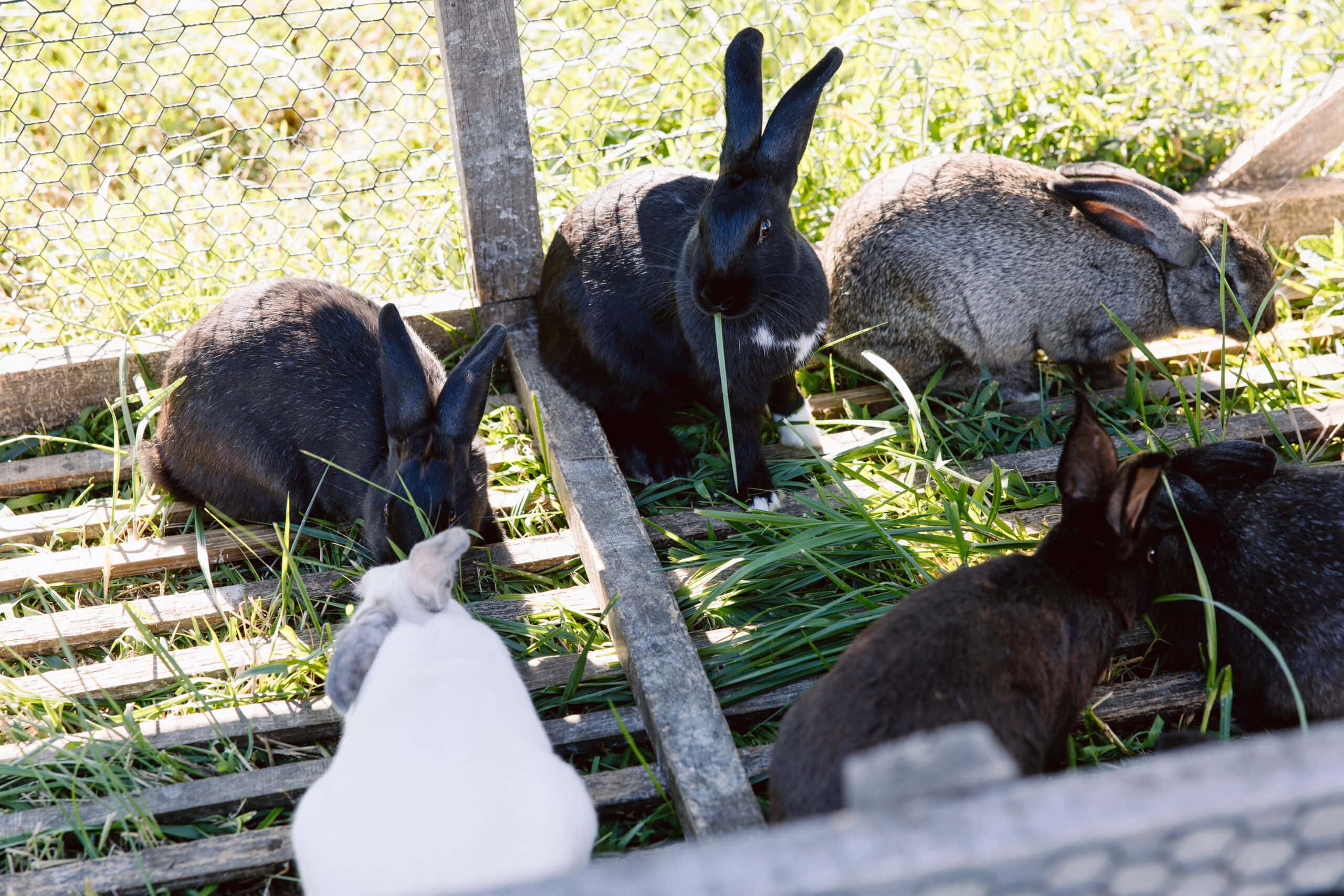
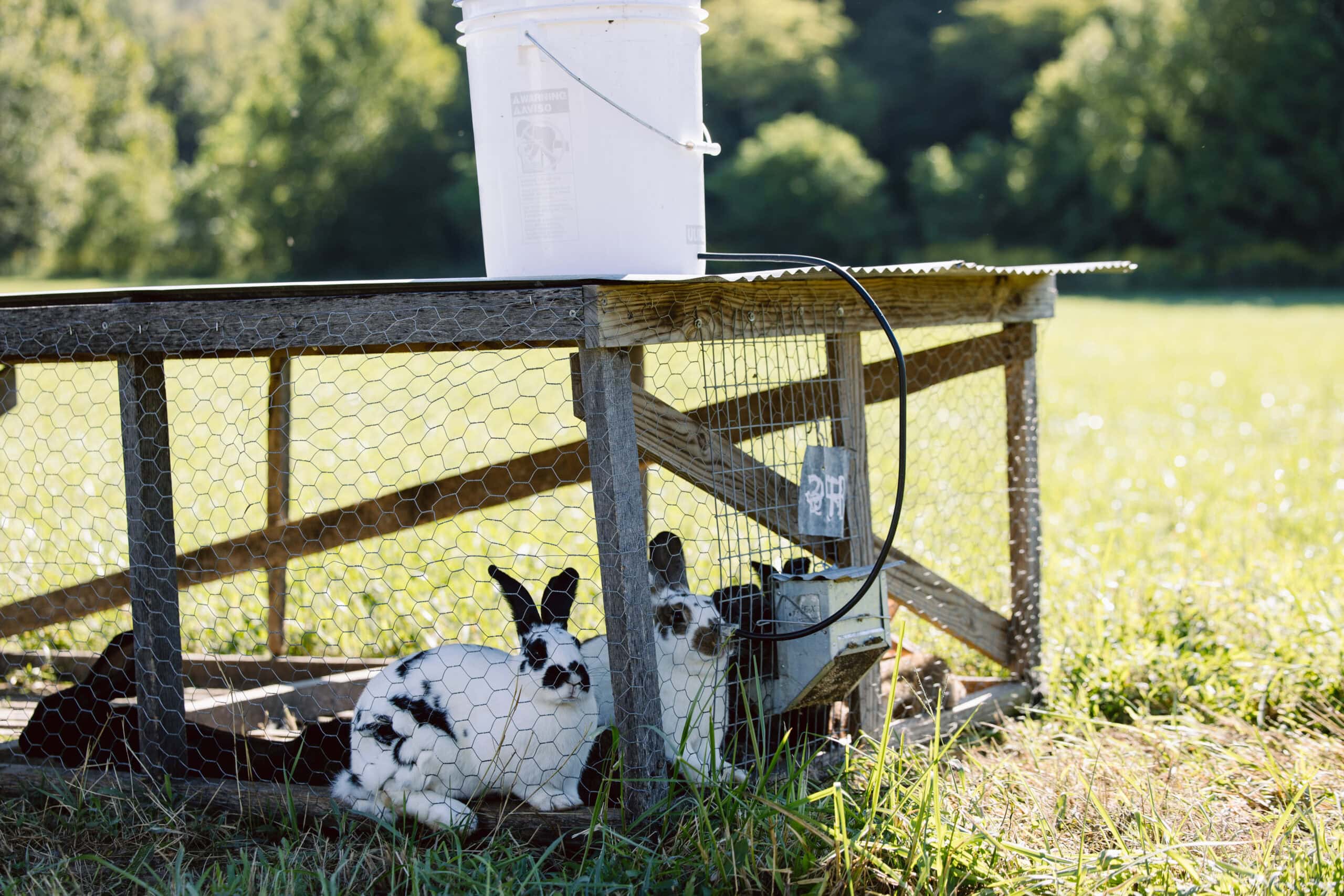
What rabbits require in terms of space and housing is both small (about 3 square feet, or 0.3 square meters, of space per adult rabbit) and simple. If you plan to keep your rabbits on grass during the warm months, expect to build two separate shelters: an indoor cage, and a “harepen” for pastured rabbits.
The upfront investment is minimal, and it’s an easy DIY project to tackle in a weekend. In our Raising Rabbits class, you can watch instructor Daniel Salatin build the cage from scratch in minutes and get access to the complete build plans with a detailed supply list!
Feed and Water Setup
As with other animals on your homestead, the feeding requirements for rabbits change throughout the various stages of their lifecycle. These are important considerations, and we’ll cover them in our next article in this series, “Feeding and Caring for Meat Rabbits.” For now, we’ll stick with the basics of the feeding and watering setup.
Rabbit pellets are a complete feed, and all you need is a fine-mesh feeder installed low enough that kits can reach it. Besides that, a bucket with a lid to hold feed and a container to portion out their daily ration should suffice.
For water, consider an automatic watering system. It may cost more upfront, but it saves time and makes adding more rabbits easier.
Raising Rabbits
Join Daniel Salatin of Polyface Farm as he walks you, step-by-step, through everything you need to raise rabbits for meat at home, from your first cage build to your first harvest, using a system simple enough for kids to run in under 30 minutes a day.
Breeds
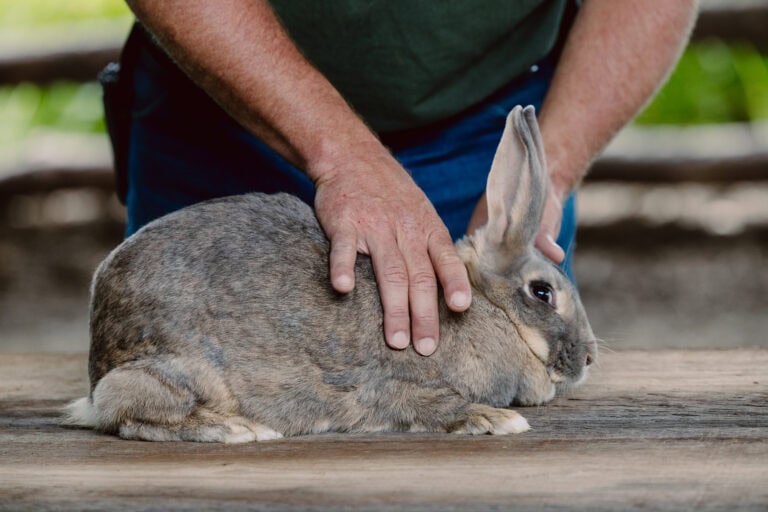
Your choice of breed will depend on which characteristics you wish to prioritize, be it litter size, carcass weight, or something else. There are over a dozen commercial rabbit breeds, but the most popular options for meat production are the New Zealand Rex (NZR) and the Californian.
New Zealand Rex
The NZR typically has white fur, a docile disposition, and excellent disease resistance. Its mothering ability and meat-to-bone ratio are top-notch, with litter sizes spanning from 7 to 14 kits and a live weight of up to 12 pounds (5.4 kg). They mature quickly and can be butchered as early as eight weeks of age. (Note that this is a widely available cross of two commercial breeds, the New Zealand and Standard Rex.)
Californian
The second most popular breed among meat rabbit producers, Californian rabbits are also extremely gentle and highly resistant to disease. Their coarser pelt is typically white with black spots, and they tend to weigh a little less than the NZR and birth smaller litters of 6 to 8 kits on average.
Heritage Breeds
For homesteaders interested in dual-purpose breeds offering meat and fur, the heritage breeds Champagne d'Argent and Silver Fox are worth a look. These docile breeds grow to be large, and their pelts come in a stunning array of colors and patterns prized by tanners.
Top Priority when Choosing a Rabbit
Researching breeds is a fun and helpful way to learn more about raising rabbits. But the number one factor in how well a rabbit will do on your property isn’t its breed, but whether it’s local. And not just that individual rabbit, but its parents and grandparents, too.
A rabbit local to your climate will be custom-made to thrive in your area. When you source locally (within your state, or even better, your own county), you’re more likely to get rabbits already adapted to your climate, bugs, and so forth.
Sourcing Breeding Stock
To get a locally bred rabbit, the first step is to find an experienced rabbit producer with good records and good genetics in your area. To find local breeders, try ARBA.net, the county 4H club, Google, or even Craigslist and Facebook Marketplace. Just be wary of any “deals” on rabbits, especially those advertised through online platforms. Experienced breeders use these sites to sell off underperforming or low-quality animals at bargain prices ($10–15, say, instead of $40–50 per rabbit) to unsuspecting buyers.
Once you’ve chosen the breeder, make a visit (if they don’t allow that, walk away!). Ask to view their breeding and health records. Then look around: Is their facility clean and well-maintained? Do the rabbits appear healthy and alert? Do they have sufficient space? Are they raising their own breeding stock, or sourcing in from other states?
If it all checks out, ask the grower to select high-quality animals for you since they know their genetic lines best.
What to Expect In Year One
One of the most rewarding aspects of raising meat rabbits is witnessing their entire lifecycle, an opportunity that comes multiple times a year.
Imagine you’ve bought your starter trio and breed your does around 18–20 weeks. A rabbit’s gestation is 28 to 32 days. Once the does have kindled (given birth), they will lactate until the kits are weaned at around 5–6 weeks. At this point, the doe is bred again and 4 weeks later has her next litter of babies. Meanwhile, weather permitting, the first set of bunnies have been out on pasture since week 7 and will be ready to harvest by week 11 or 12.
What does this mean in terms of meat output for your family?
A doe from a medium-to-large breed can have five litters per year, averaging six to nine kits per litter. Following the schedule outlined above, each of your does could realistically have 35 to 40 bunnies every year. If you consider that most rabbits are ready for harvest by 12 weeks, and that carcass weight is often three to five pounds (1.4–2.3 kg), just one healthy doe can reasonably produce anywhere between 100 and 225 pounds (45–102 kg) of meat annually! Double that figure for your two does, and you reach 200 to 450 pounds (90–204 kg). Despite the small investment of time and money, rabbits are a homestead-level protein production powerhouse.
One More Thing
For a beginner, there’s hardly a better meat animal to start with than rabbits. The learning curve is gentle, and because they reproduce so quickly, you can bounce back from a mistake with minimal losses.
When you add rabbits to your homestead, you take a big step towards becoming food independent. Yet they don’t just feed your family year-round – they produce valuable manure for your garden and can even provide a side income if scaled.
Ready to go all in? Our class on Raising Rabbits with Daniel Salatin has all the information you need to confidently start producing your own rabbit meat at home.
Raising Rabbits
Join Daniel Salatin of Polyface Farm as he walks you, step-by-step, through everything you need to raise rabbits for meat at home, from your first cage build to your first harvest, using a system simple enough for kids to run in under 30 minutes a day.