This article is the second in a series on Late Spring Beekeeping. If you’re ready to take the next step, check out our class on Natural Beekeeping with Adam Martin of Bee Kept.
Adam Martin's Inspection Philosophy
In the “Natural Beekeeping” class offered at the School of Traditional Skills, Adam Martin, shares his approach to inspecting beehives, and it all hinges on trusting that bees were designed to take care of themselves.
His advice? Inspect with purpose, observe what matters, then get out of the way. This philosophy, developed through years of experience, suggests that there are right and wrong times to open up a hive.
Let’s examine these elements now.
Trust the Bees
“Let the bees be bees.”
That’s Adam Martin’s motto, and the key principle behind the natural beekeeping approach that he has been teaching for almost a decade. Bees have been doing their thing for millions of years without human help. The idea that we need to be checking on them frequently (and feeding them sugar water, and treating them for varroa mites, and…) is a product of human anxiety, not true bee necessity.
The conventional beekeeping method has dominated the U.S. landscape for a long while, perhaps dating back to the middle of the 19th century when Langstroth first popularized his vertical (or stacked) hive design. But it’s time to reimagine our role as beekeepers and stewards. Our job is to provide good housing, seasonally appropriate space, and sufficient resources, and then stand back.
So how can you glean what you need without always having to open up the bee box? Observation.
First Observe, Then Inspect Only When Needed
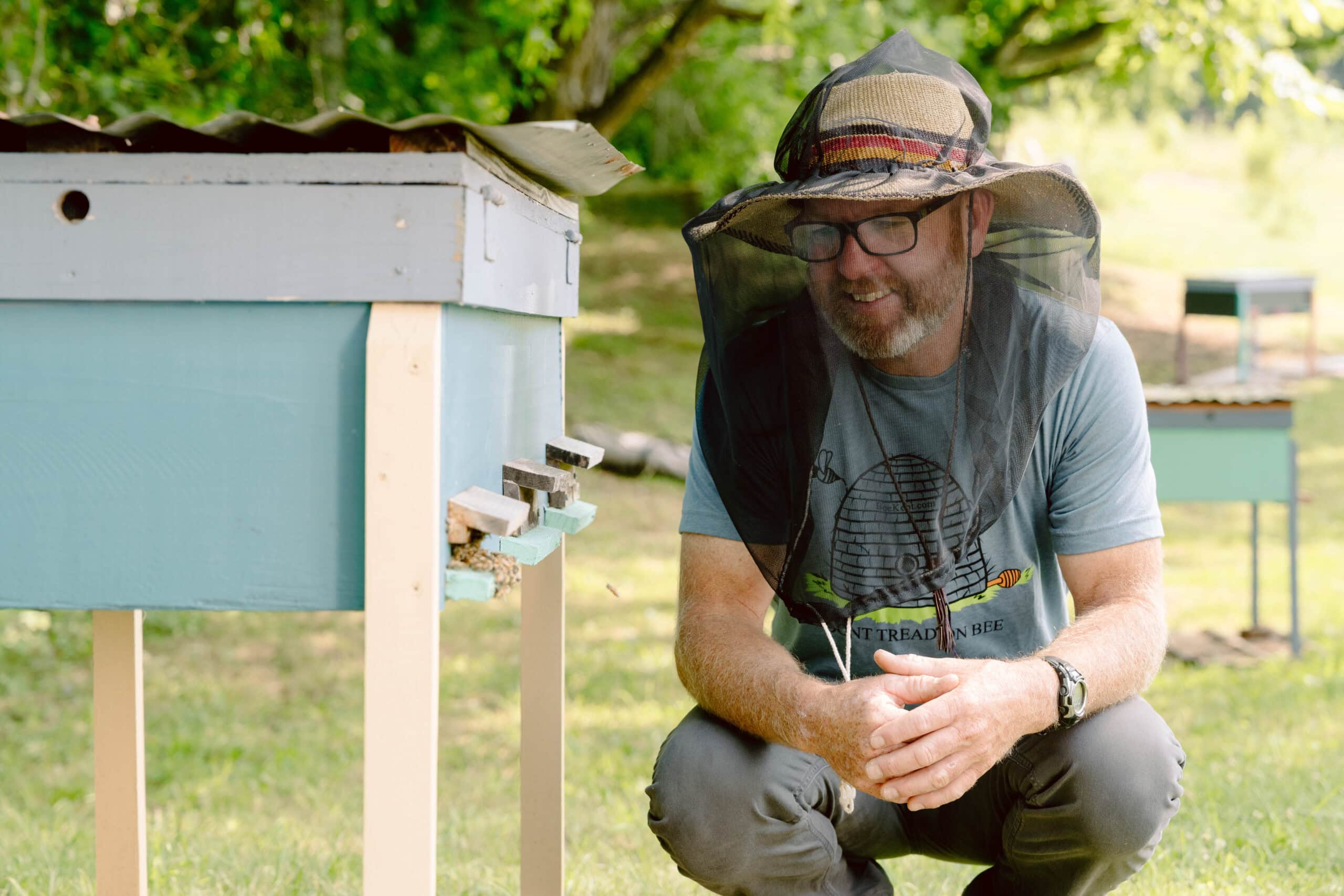
It may surprise you, but external observation can tell you roughly 80 percent of what you need to know about how your bees are doing. This includes watching your bees’ activity at the entrance to the hive, listening intently to the hive, and noting regular patterns of bee behavior.
If you’ve done your observation but still have a specific question to address, only then should you open the hive. Examples of these types of questions are:
- Do the bees need space?
- Is the queen laying?
- Is the colony preparing to swarm?
These are cases in which there’s no replacement for opening up the hive and checking, even if signs may be present outside the hive.
In general, though, remember this: less intervention means less stress on the bees, which means a healthier and more productive hive. Which, naturally, should mean more honey for you!
On that note, here are some do’s and don’t to guide you as you prepare to inspect your beehive.
When to Inspect Your Hive (and When NOT To)
This method of beekeeping may best be described as low maintenance, but high intentionality. No where is this more true than in the decision of when to inspect the hive. If you’re going to inspect the hive with purpose, you need to know when it’s necessary to open the hive, and when it’s better to hold off.
The Right Reasons to Open a Hive
- Space check – Late spring is the time to manage your bees’ space. As nectar flows peak, colony populations multiply quickly, and without prompt action on the beekeeper’s part, swarming becomes a real possibility. In a vertical hive, you’re looking to see if the bees need a honey super. In the case of a horizontal hive, see if the follower board needs adjusting.
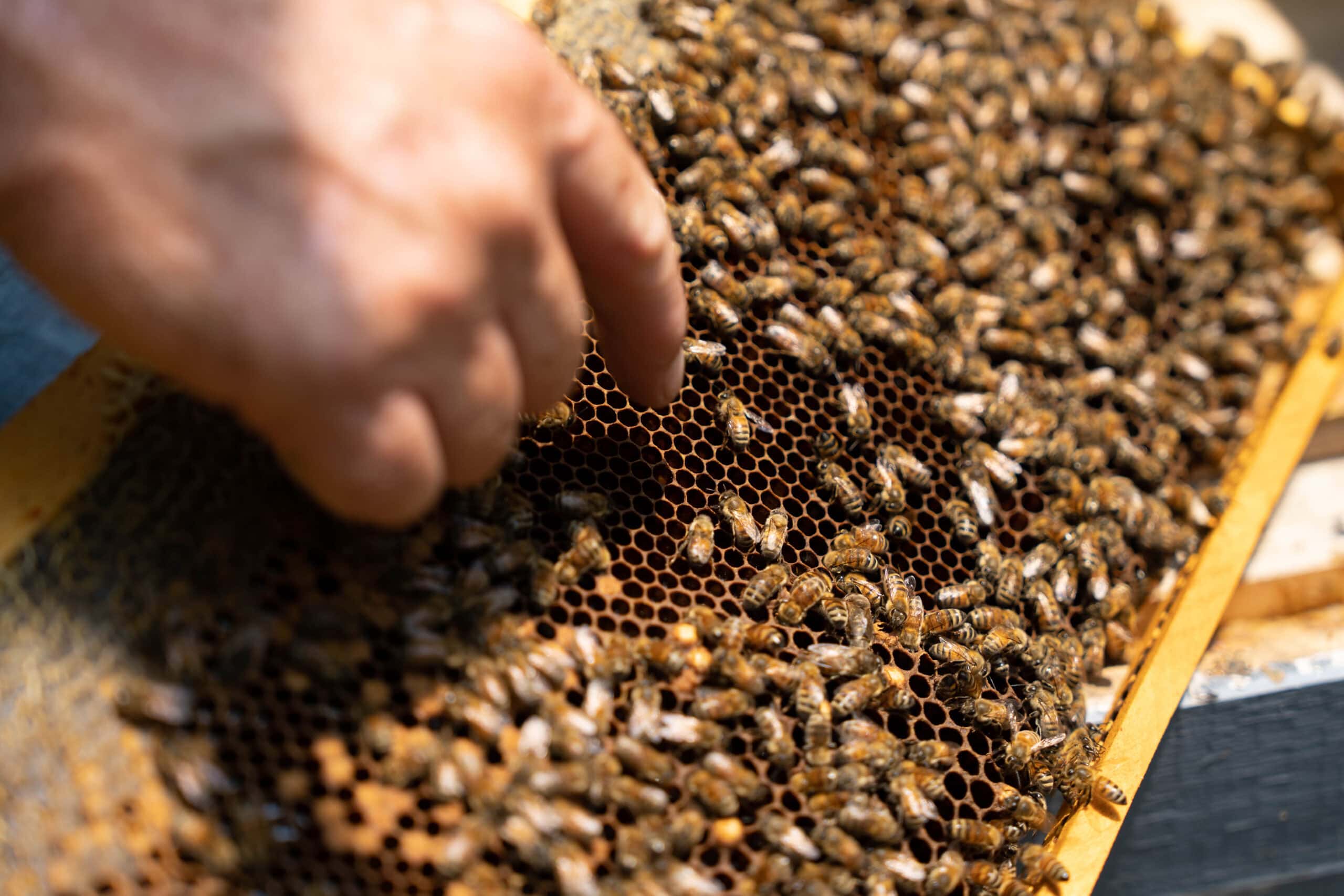
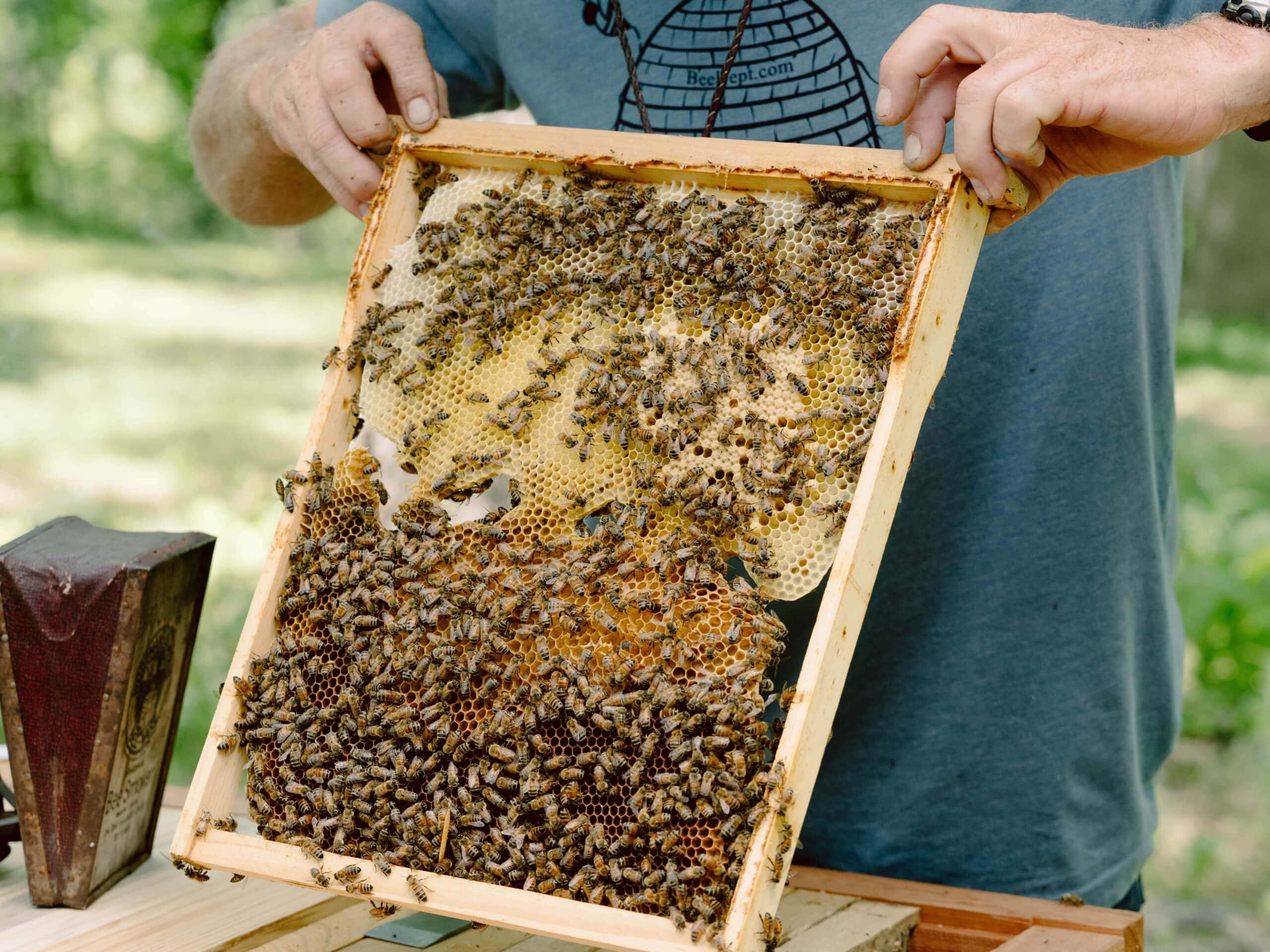
- Queen verification – You want to make sure you’ve got a queen in there and that she’s laying. You don’t necessarily need to see the queen, but you want to find evidence of her. Look for eggs in the brooder frames (they’re the shape and color of a grain of rice, but much smaller). Note that eggs should be easy to find during the spring and summer months, but harder in the fall when the queen becomes less productive.
- Swarm assessment – Check for queen cells if you notice external warning signs of swarming. If you haven’t yet read it, refer to our first article in this series on swarming.
- Health check – Look for signs of disease and pests. A weak brood pattern (brood frames with empty cells throughout) in combination with something that externally looks ‘off’ may suggest there’s a problem in your hive. Causes of a weak, or spotty, brood pattern can be many, from an aging queen to a varroa mite infestation.
- Seasonal milestones – Two to three times a year, a beekeeper should conduct an inspection of the hive. In the spring maintenance, the bees’ space needs to be expanded as they build up nectar and pollen. Once the nectar flow recedes in summer, it’s a good time to harvest capped honey, leaving enough for the bees to get through the winter (in a Langstroth horizontal hive, that means one frame of honey for every two of bees or brood). The fall maintenance will be the time to shrink their space again and may offer a second opportunity to harvest honey if the bees have what they need heading into winter.
Natural Beekeeping
Join Adam Martin from the Bee Kept as he shows you the natural sustainable way to keep bees!
Signs You're Over-Inspecting
If you wonder whether you’re inspecting the hive too often, ask yourself the following:
- Am I opening the hive more than once every 7–10 days during the active season?
- Am I inspecting “just to check” without a specific question I’m trying to answer?
- Have my bees become more defensive over time? (Frequent disruptions stress them.)
- Am I not seeing anything new because nothing visibly has changed since the last inspection?
If you’ve answered yes to multiple questions, chances are you’re opening up the hive more than necessary.
When NOT to Inspect
Even if you have good reason to inspect the hive, if the right conditions aren’t present, try to hold off until they are. Following these guidelines should help to set you up for success and establish a good working relationship with your bees.
Avoid opening the hive during any of these times:
- Bad weather – Rain, drizzle, fog, high wind, and/or temps below 60°F or above 95°F
- Late in the day – Foragers are home, the hive is crowded, and bees are more defensive
- During a nectar dearth – Bees are stressed and more likely to rob each other and be aggressive
- Without a smoker lit – Even if you don't end up using it, have it ready, in addition to your other supplies
Beyond the smoker, there are a few other supplies that you’ll need on hand before proceeding with a hive inspection.
What You Need Before You Open the Hive
These are the tools that Adam Martin recommends. It’s a good idea to familiarize yourself with how to use these before you head to the hive. In particular, practice with the smoker beforehand so you feel comfortable using it when the time comes.
Essential Tools
- Smoker + fuel – Natural flammable materials like burlap, pine needles, or cedar shavings all work, but never use anything synthetic
- Hive tool – For prying frames apart (bees carefully fill in every crack and crevice with their wonder glue, propolis, or with wax comb)
- Bee veil – A light-colored veil (white or tan) is a non-negotiable, but you may prefer to get a whole bee suit with long sleeves included
- Notebook or phone – Recording your observations is an essential part of learning about and keeping bees
Light and Use a Smoker
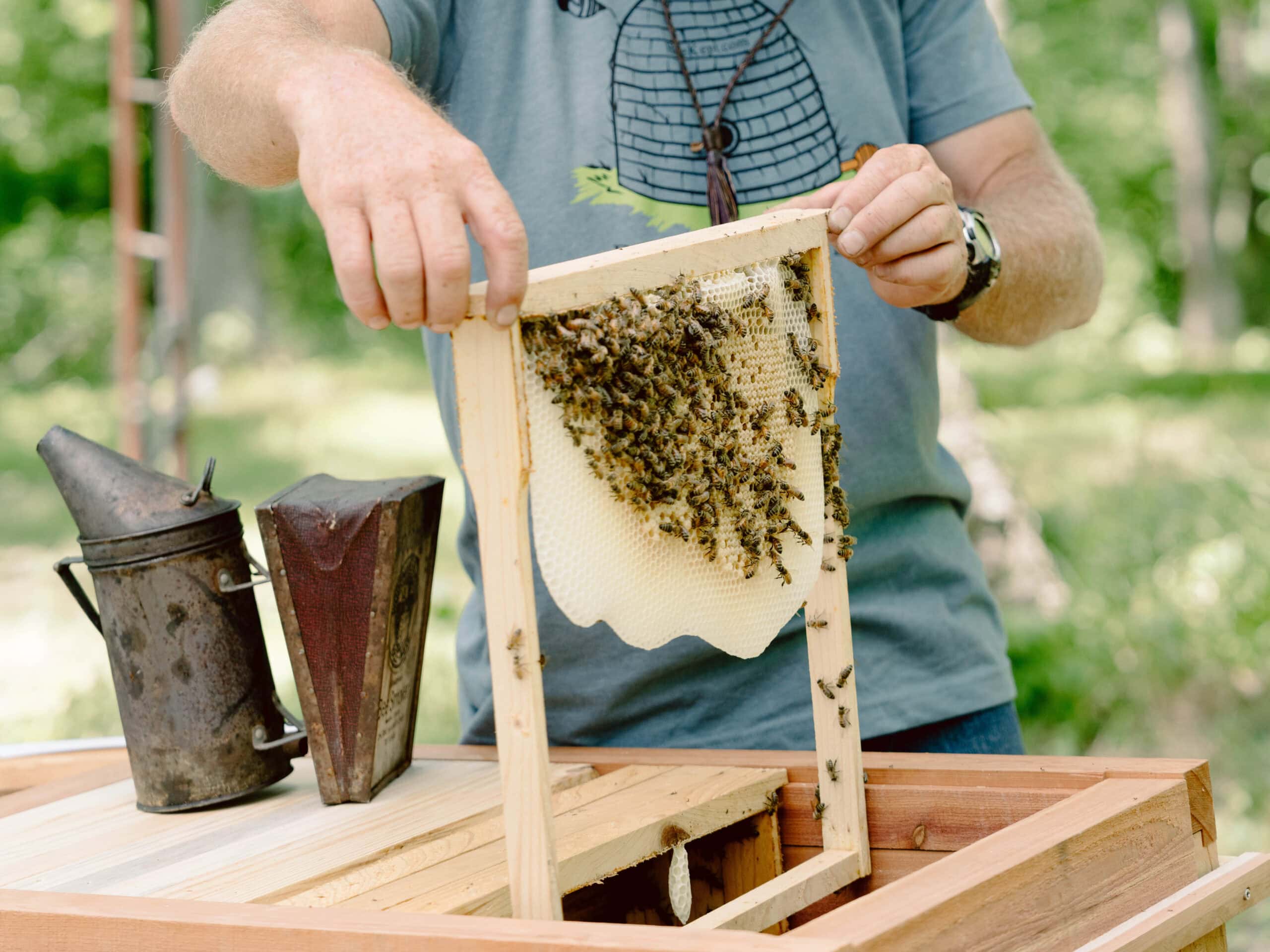
The smoker is such a valuable part of your hive inspection toolkit that it’s worth going into more detail on how to use it properly.
Ten minutes before approaching the hive, light the smoker and make sure it stays lit on your way over (puff it every once in a while and run the bellow on the smoker). Deliver a few puffs at the entrance to the hive, wait 30 seconds, and then smoke under the lid after opening with another few puffs.
The smoke works because it masks the human scent and triggers a survival response which gets the bees focused on consuming honey and saving their foodsource, rather than defending themselves against intrusion. Just remember that less is more: over-smoking agitates them. Always use cool smoke, and use only enough to calm them down.
Optimal Conditions for Inspecting
Once you’ve gathered the short list of must-have tools, the last step is to wait for the right circumstances before moving ahead with the inspection.
- The ideal time of day for an inspection is from about noon to 4 pm, which is the warmest part of the day. This is the point when foragers are out and there are fewer bees in the hive.
- Consider the weather, and plan your inspection for a warm, calm, and sunny day.
- As far as your posture, ensure you’re calm throughout the inspection, and use slow, deliberate movements.
One More Thing
Sometimes, we need to hear the obvious things restated.
Take observation. It’s easy to dismiss such a simple solution, but there really is so much that can be learned about what’s going on inside your hive by quietly sitting near the entrance and watching.
Yes, there will be occasions when you need to open up the hive, but often you’ll get the information you need just from careful exterior observation. Over time, you'll learn to read the signs faster, understand what you’re looking at, and proceed with more confidence.
Here we discussed the when and why of inspecting a beehive. In our next article, the third in our series on beekeeping, we’ll dive into the how. Specifically, we’ll provide tips on how to implement a weekly inspection that doesn’t frazzle your bees.
If you’re convinced that the natural beekeeping approach is better for the bees and better for the beekeepers, sign up for Adam Martin’s class on “Natural Beekeeping” to go deeper into his observation-based beekeeping philosophy.
Natural Beekeeping
Join Adam Martin from the Bee Kept as he shows you the natural sustainable way to keep bees!