This article is the second in a series on Raising Meat Rabbits. See article one here, three here, and article four here. If you’re ready to take the next step in your learning journey, check out theSchool of Traditional Skills class on Raising Rabbits with Daniel Salatin of Polyface Farm.
You’ve read the first article in our series on Raising Rabbits and are seriously considering raising meat rabbits – fantastic! Now you’re wondering how to feed and care for them. While it may seem intimidating at first, it’s a lot easier than most beginners think.
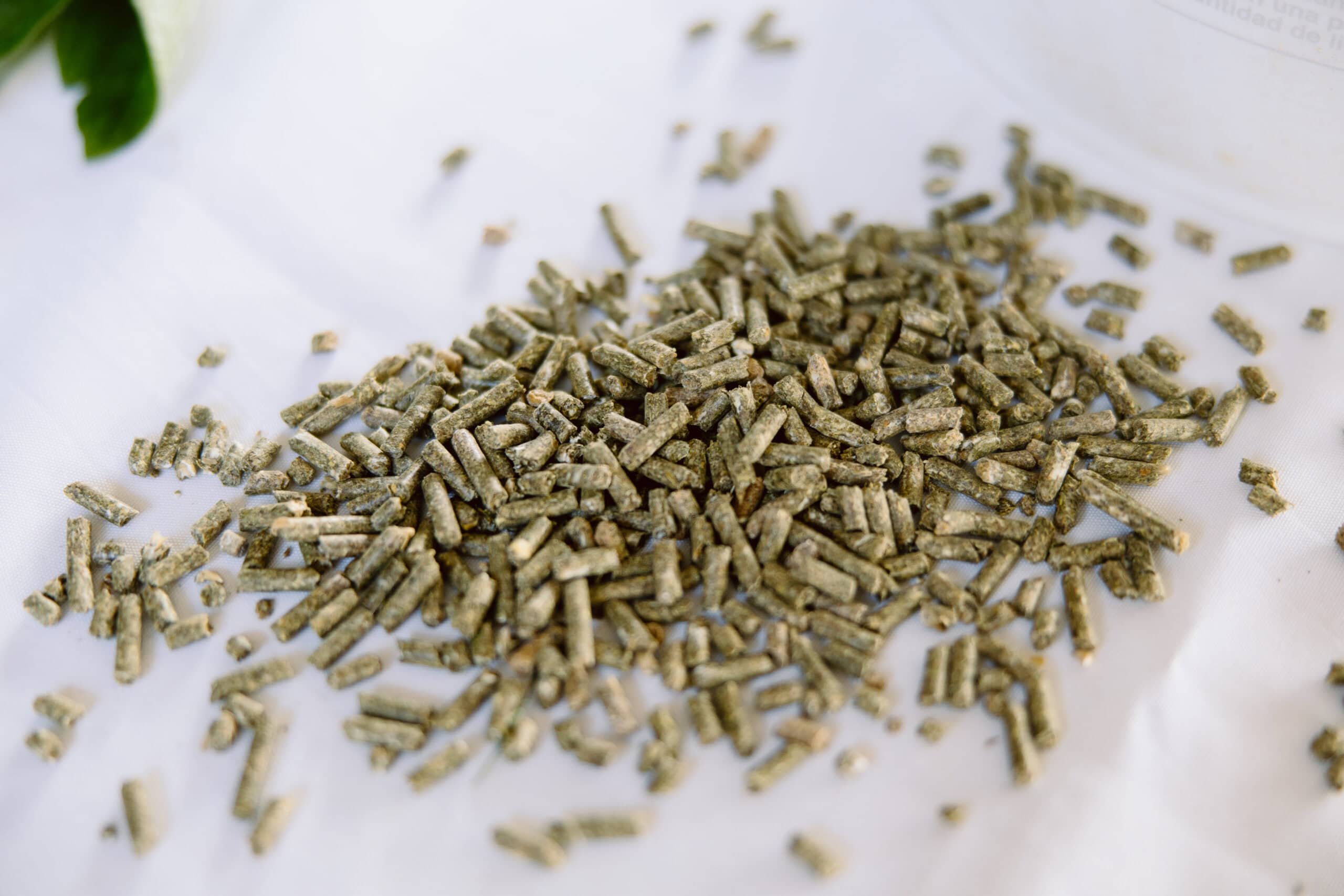
Alfalfa Pellets: A Rabbit’s Primary Feed
An alfalfa pellet with 18–20% protein is the main rabbit feed that you’ll purchase for your growing rabbits. As a total mixed ration (TMR), this is the only food they’ll need to grow well.
This isn’t the cheapest route, but it is likely the simplest that can consistently yield good results, even for a beginner. At the very least, it buys you time to grow in confidence while you care for your rabbits and learn about the wide variety of plants they eat.
Supplementing With Forage and Garden Scraps
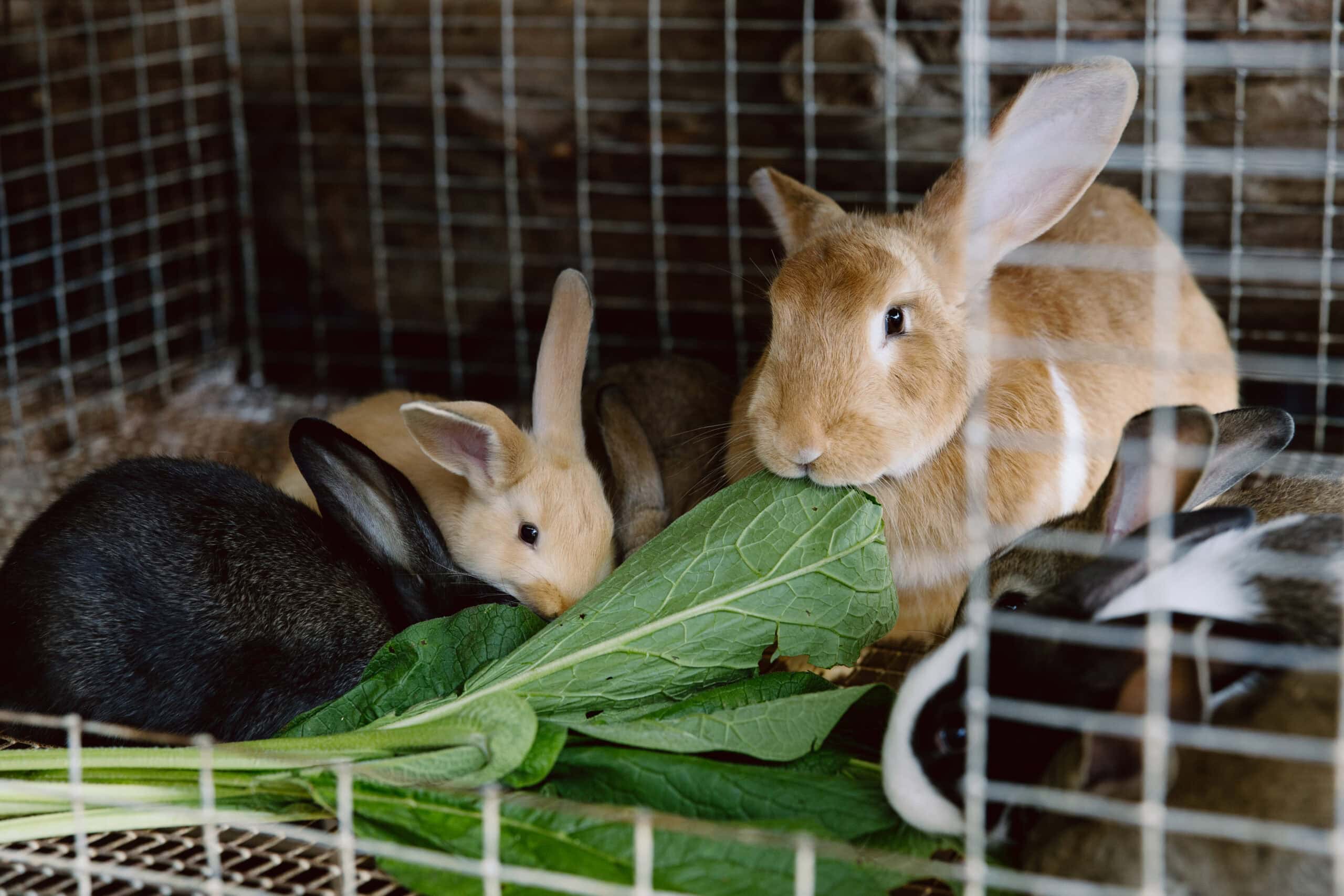
While an alfalfa pellet TMR is enough, there may be times we feed foraged greens, as in cases where high-quality alfalfa pellets are not available. More often, rabbit growers might choose to supplement with greens to lower purchased feed costs and to provide high-quality, fresh nutrition for lactating does and their babies. So the question is: What can your rabbits eat from the plants growing in your garden and yard?
Feeding Caged Rabbits from the Garden
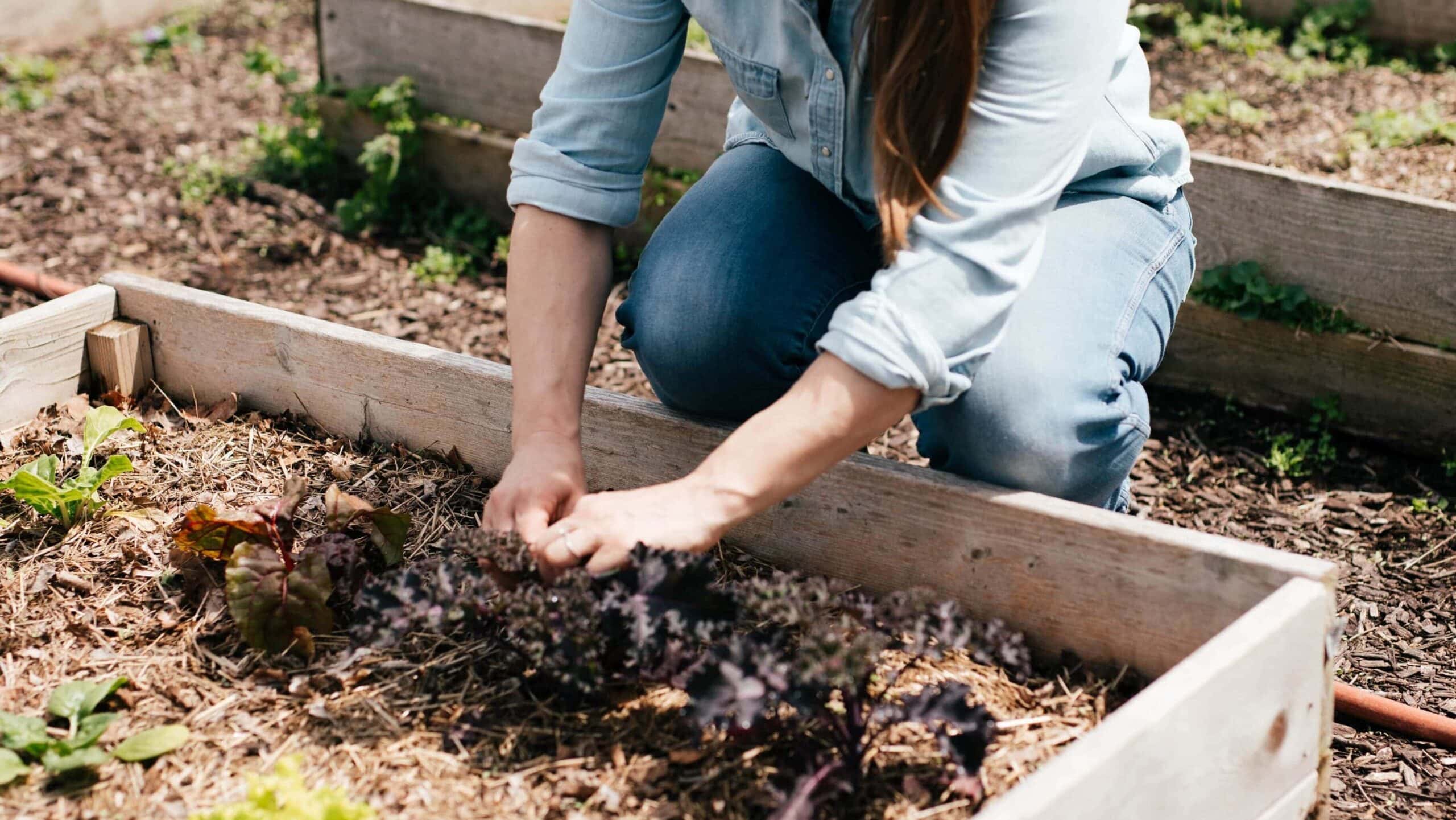
From the garden, many gardening waste byproducts are a delight to rabbits, including pea vine stalks and the parts of various root crops. From the yard, rabbits will eat autumn leaves, fruit tree prunings, and dandelions, among other plants. If you can grow a portion of their feed, consider planting some comfrey (it spreads prolifically) or easy-to-grow cover crops like alfalfa or timothy hay.
Plants to Avoid
Keep in mind that there are certain plant species that are better avoided because they can be potentially poisonous to rabbits, though the list itself is highly debated. As with other grazing animals, rabbits will typically avoid large quantities of toxic plants, unless absolutely famished. In fact, this is one key argument for always offering the pellet feeds: ensuring that your rabbits are never so hungry as to eat anything, including possibly toxic plants. A few examples include wood sorrel, anything in the Allium family (onions, garlic, chives, etc.), and ragwort.
Feeding Pastured Rabbits
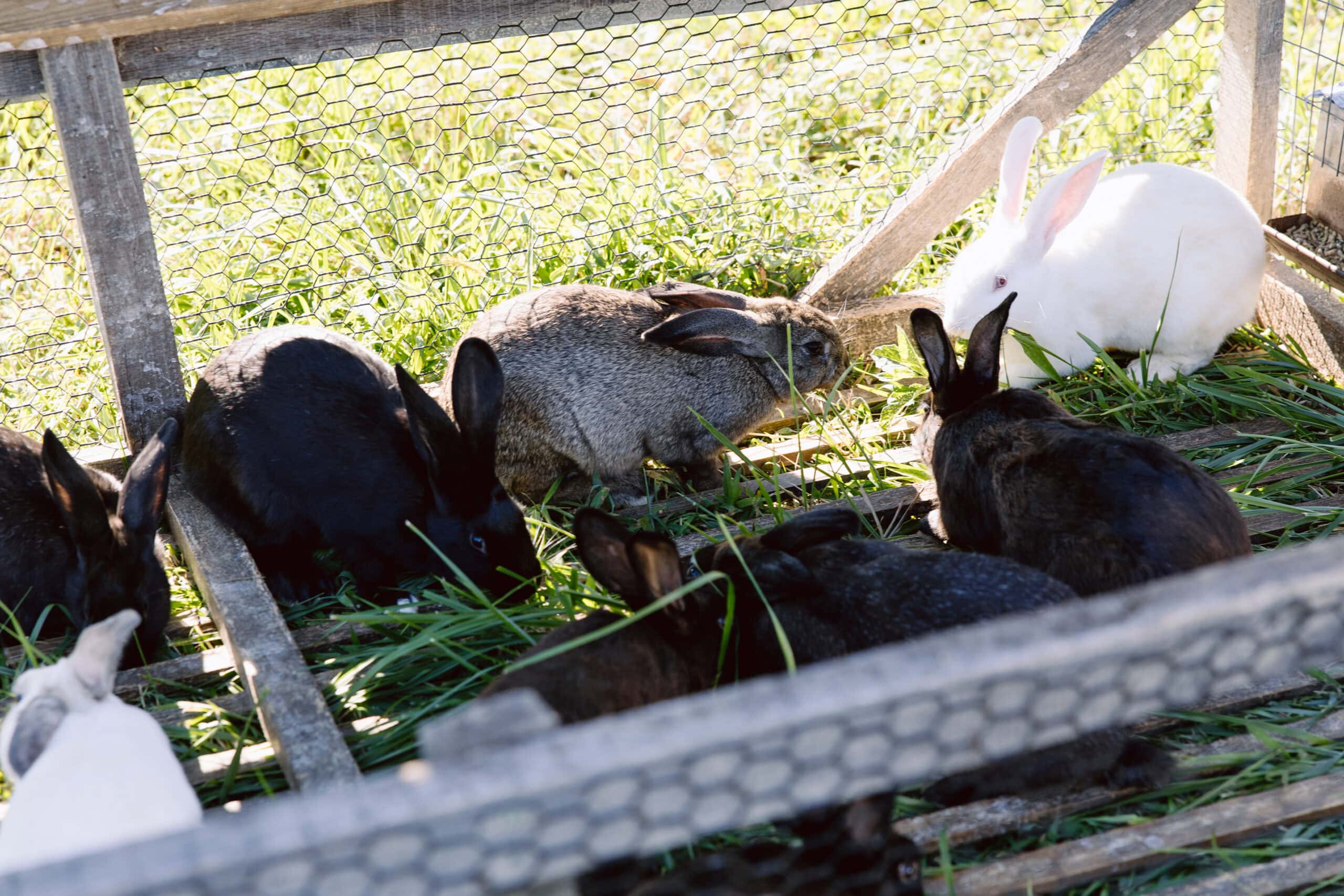
Pastured rabbits outside in rabbit tractors are harvesting a lot of their own feed. They should still get full access to the pellets and receive the same daily ration as indoor rabbits would, but they will self-regulate and cut back their feed consumption based on the amount and types of grasses available to them, the number of times they’re moved daily, the time of year, and their own size and genetic breeding, among other considerations.
Feeding Without Pellets (Or With a Limited Amount)
If you’re limited on the quantity of alfalfa pellets you can offer, grass hay in combination with fresh forbs, grasses, and other woody plants should make up at least 85% of their diet. The last 15% can be covered by fresh vegetables (10%), alfalfa pellets (5%), and limited quantities of fruits and treats (under 5%).
No matter their housing situation, the best time to feed rabbits their pellets is in the morning. Once a day is fine for them, and it simplifies the routine for you. But as they are somewhat nocturnal, supplementing them towards the late afternoon or evening could work well, too.
Watering Your Rabbits
An automatic watering system is a worthwhile upgrade, and the individual parts are inexpensive: water nipples and connectors, water piping, stand-off clips to connect the hose to the top of the cage and keep the rabbits from chewing on it, and a bucket with a lid. (Links to each item are available in the Skill Sheet provided with our Raising Rabbits class.)
Feeding By Life Stage
The nutritional needs of a rabbit change throughout its lifecycle. Feed adjustments must be made for a lactating doe versus a dry doe, for example. Let’s take a look at feeding stage by stage, beginning with kits.
Kits and Weanlings
The healthiest and easiest course of action is to leave kits with their mama for six weeks. When they’re weaned early, they require a higher protein specialty feed calibrated for their age. On the contrary, the more time with mama doe, the less stress they will experience as they self-wean and the more robust they’ll be. During this period, they need access to pellets free choice – meaning, as much as they’d like. Alongside their mom, they will also enjoy the fresh supplemental green feeds you provide.
Raising Rabbits
Join Daniel Salatin of Polyface Farm as he walks you, step-by-step, through everything you need to raise rabbits for meat at home, from your first cage build to your first harvest, using a system simple enough for kids to run in under 30 minutes a day.
Weanlings are rabbits between five and 11-12 weeks old. In warm weather, chances are these bunnies will be out on pasture. “Harepen” bunnies can be fed the same alfalfa pellet TMR. Even though they have access to fresh vegetation, give them a full feed so they can grow as quickly as possible. Since they prefer grass, they will automatically cut back their pellet consumption, eating only what they need.
Breeding Bucks and Dry Does
Bucks and dry does receive the same restricted feeding regimen – you don’t want either of them becoming overweight and unproductive!
As School of Traditional Skills instructor Daniel Salatin recommends in our class on Raising Rabbits, aim to give your mature rabbits a daily feed portion equivalent to about 4% of their body weight. For instance, a buck weighing 6.25 pounds (2.8 kg) should be offered about 4 ounces (110 g) of pellets a day.
How do you know they’re getting the right amount? As a rule of thumb, the rabbits should be out of feed the next morning, but not ravenous when getting their fresh scoop of feed.
Pregnant and Lactating Does
A doe that is pregnant or actively lactating should receive a full feeder so they can adequately nourish their kits. Feel free to supplement them with local forbs or greens you’ve harvested from the pasture or waste products from the garden, offering these immediately and in their whole form.
How Much Time Does Daily Care Actually Take?
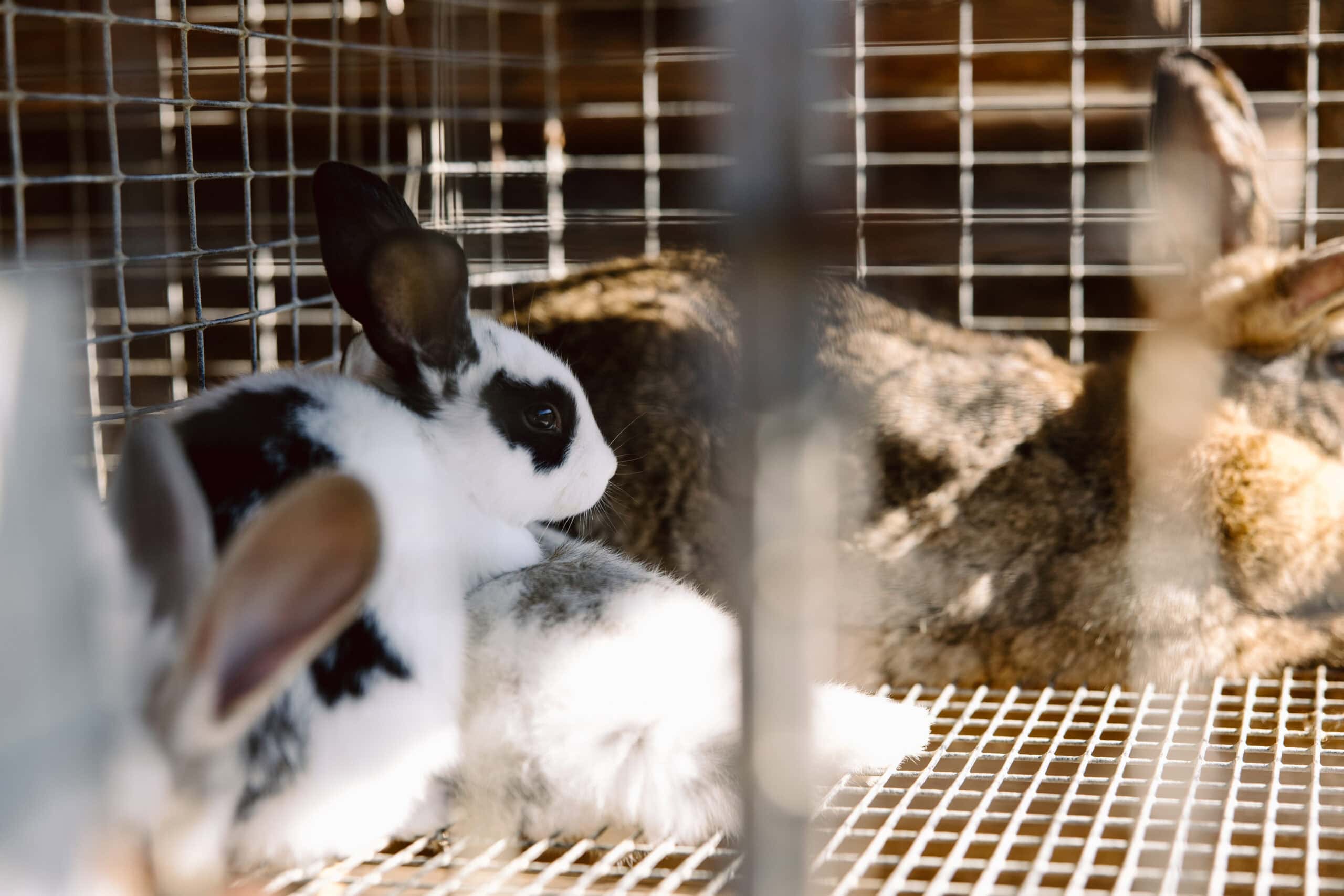
Rabbits require the same kind of individual care, regardless of whether they’re on grass or inside. But some tasks are daily, and others occur regularly (from biweekly up to monthly), depending on the needs of your animals and your production schedule.
Daily Care
For the daily tasks, a realistic estimate is under 30 minutes a day and includes feeding, checking and refreshing the waterer, making observations of each rabbit (and taking notes, optionally), and, in the case of pastured rabbits, moving them.
Regular Biweekly or Monthly Care
Then there are the ‘as-needed’ activities which occur every two to four weeks: mucking out the cage or chores related to breeding. Perform a basic health check whenever you move your doe, which should be roughly every three to four weeks. If something looks off, complete an in-depth health check.
Observing Your Rabbits
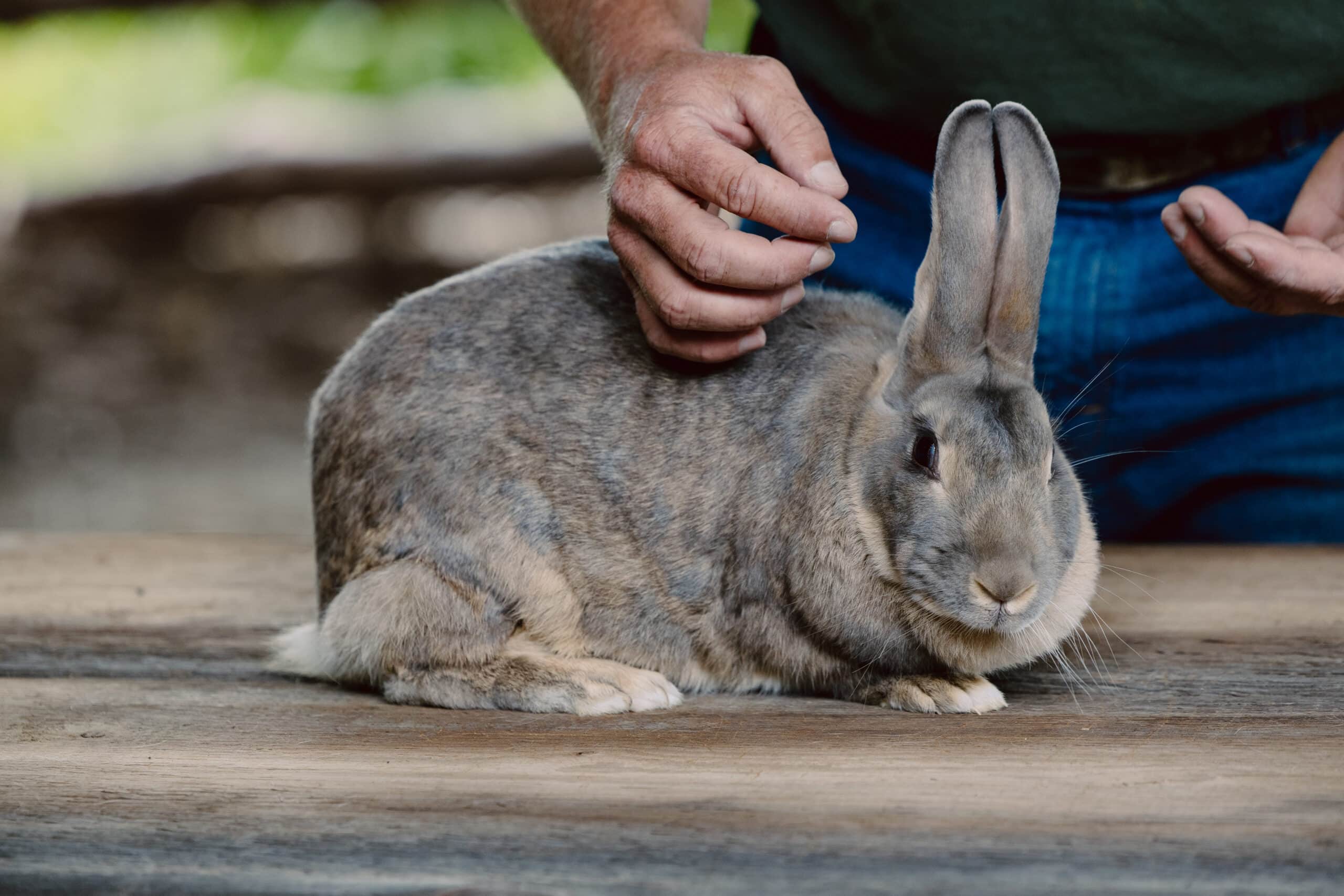
As with any animal on your homestead, observation is key. Daniel Salatin offers this practical advice: “Don’t zone out” while feeding or attending to rabbit chores. This observation stage of your daily care routine is crucial and serves as the first line of defense against potential issues.
Signs of Good Health
A healthy, thriving rabbit will have:
- Good activity level
- Attentive, bright eyes and perky, upright ears
- Fur that is very lustrous, not matted or dirty
- Clean feet
- A healthy appetite
Signs of Potential Illness
Signs that something may be off:
- Excessive lethargy
- Lack of appetite
- Irregular manure (e.g., consistency is extremely moist or slimy)
- Other uncharacteristic behaviors
If you observe one or more of these signs, do a more thorough health check of the rabbit, paying close attention to the body condition and disposition of the individual in question.
One More Thing
Hopefully by now you’re seeing what rabbit rearing involves and how it can fit into your family’s life. With a few key principles and rules of thumb in mind, making the decision of what and how much to feed them is a breeze.
When it comes to raising meat rabbits, feeding will likely be the most expensive ongoing cost you sustain. Once you’ve grown more confident in your ability to care for them, it’s worth looking into sourcing and growing alternative feedstuffs for your rabbits. In the class, we go into more detail about which plants to feed and avoid, providing an easy reference chart for each category. For access to this and more information on caring for your rabbits, check out our resources on Raising Rabbits at the School of Traditional Skills.
Raising Rabbits
Join Daniel Salatin of Polyface Farm as he walks you, step-by-step, through everything you need to raise rabbits for meat at home, from your first cage build to your first harvest, using a system simple enough for kids to run in under 30 minutes a day.