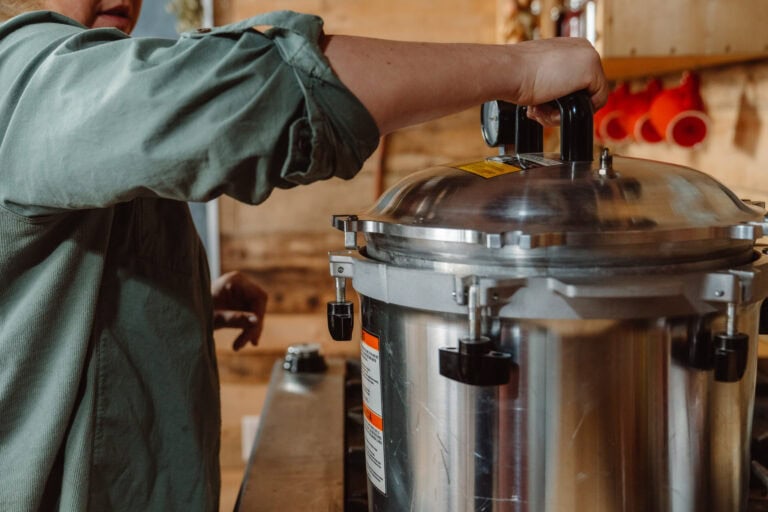
Carolyn Thomas, the friendly and knowledgeable pressure canning expert and co-founder of the School of Traditional Skills, has already guided us through the 10-step process and how to can meat, so in this article we’ll dive into the two main methods for canning some of your favorite garden veggies, green beans and potatoes. And as a little preview, we’ll take the 50,000 foot view of a recipe for pressure canning homemade pot roast that Carolyn teaches in her Pot Roast Canning Lesson. Talk about the ultimate healthy and delicious convenience food!
So pull out your pressure canner, and let’s get started.
SERIES: Article 1 | Article 2 | Article 3 | ▶ Article 4 (this one) | Article 5
This is Article 4 in our five-part Pressure Canning Series, built from Carolyn Thomas's Pressure Canning class. Catch up with Pressure Canning 101 (Article 1), Pressure Canner Basics (Article 2), and Canning Meat and Broths (Article 3). Finish out the series with Troubleshooting Pressure Canning Mistakes (Article 5).
Raw Pack or Hot Pack: Which Method for Which Food
When reading canning directions, you’ll find that typically one of two techniques is given for how to can a certain type of food:
Raw packing means you take raw food and pack it into your warm jars and pour boiling
liquid over it before processing.
Hot packing means you prepare and cook the food first, then put it into warm jars with the hot liquid prior to processing.
Note that these two methods are not interchangeable nor up to the home cook to decide between. Tested canning recipes specify which one to use based on how a certain food performs under pressure in terms of safety and texture.
But rest assured that both methods still follow the same 10-step framework from our last article, and we’ll demo one vegetable canning recipe using each, starting with raw packing green beans.
Green Beans: The Classic First Vegetable Project
Green beans are the quintessential “first vegetable” for home canners. Why? Maybe because the homemade version is worlds apart from store-bought canned green beans, or maybe because they bring some beautiful (and welcome) summer color and flavor into those chilly, gray days of fall and winter.
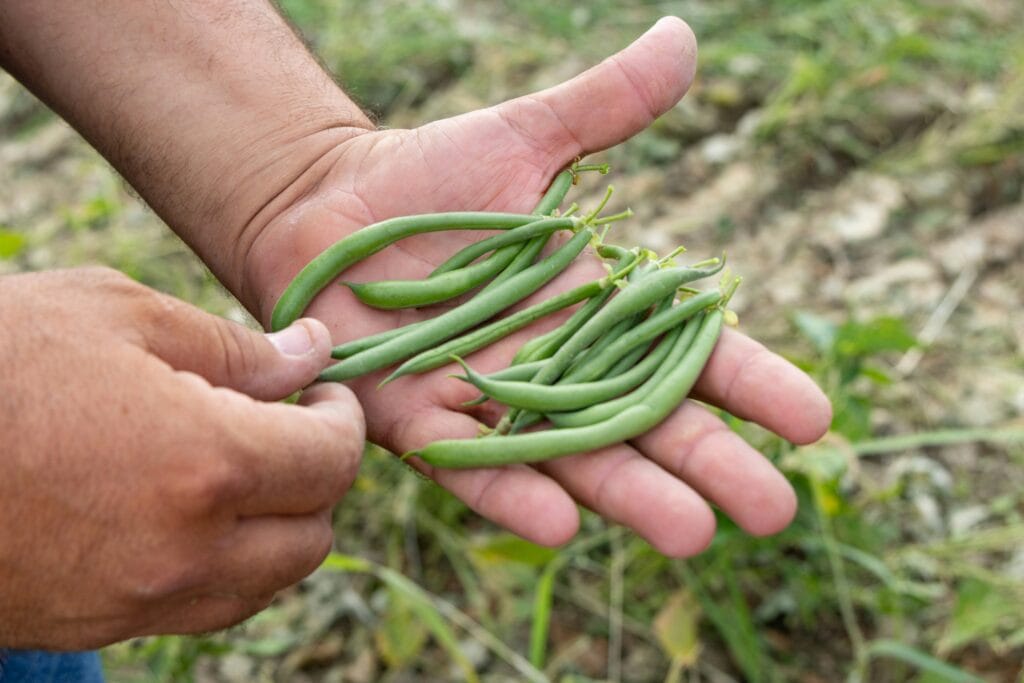
Whatever the reason, green beans should be canned using the raw pack method. While Carolyn demonstrates canning frozen green beans in her class because they were out of season at the time of filming, either fresh-from-the-garden or frozen green beans are fair game as your starting point.
To prep them, simply wash your beans, trim the ends, and cut into one to two inch sections before packing tightly into jars, leaving one inch of headspace. You have the option here to season them with one teaspoon of salt per quart jar or a half teaspoon per pint jar.
Raw pack green beans process for 20 minutes in pints or 25 minutes in quarts, at the correct pressure for your elevation. Expect properly sealed jars of green beans to hold peak quality for roughly one to two years on the shelf.
Potatoes: Why Peeling Isn't Optional
Now we turn to the hot pack method, and this time, the humble spud will help to demonstrate the process. If you lack a root cellar or just want shelf-stable potatoes that can turn into a really quick and delicious side like mashed potatoes, then this part is for you!
Unfortunately, every year there are folks that end up sick due to eating improperly canned potatoes. This is one food item that people often can incorrectly, so we’ll clear up a few misconceptions here.
Carolyn explains it very clearly in her Lesson on hot packing potatoes: “Potatoes are coming straight out of the ground, and botulism spores actually live in the soil. So you want to completely get the skins off the potatoes, just to reduce the bacterial load that's going inside your jars.”
That means potatoes must be washed, peeled, and rinsed again before pressure canning. Then they should be hot packed: boiled for 10 minutes first, then packed into jars using fresh boiling water rather than their starchy cooking water.
If you cut the potato pieces so they’re at least two inches in diameter (or leave small potatoes whole), they don't turn mushy during the long processing time of 35 minutes for pints or 40 minutes for quarts.
One last thing to keep in mind: A jar that loses significant liquid during processing (called siphoning) is still safe to eat if it is sealed, but it should be consumed within a week or two rather than stored long term. Label that jar and set it apart, or at least at the front of the shelf.
Pressure Canning
Join Carolyn Thomas from Homesteading Family as she shows you how to fill your pantry with safe, healthy, and delicious pressure-canned foods!
A Complete Dinner in a Jar: Pot Roast
This is the moment you’ve been working up to: pressure canning a whole meal! And if that weren’t exciting enough, this is a complete meal that can be raw packed, minimizing the time and prep involved to get this food on the shelf. (We don’t have the space to put the whole recipe here, but it’s included in the Skill Sheet that you can download as part of the Pressure Canning class once you become a member.)
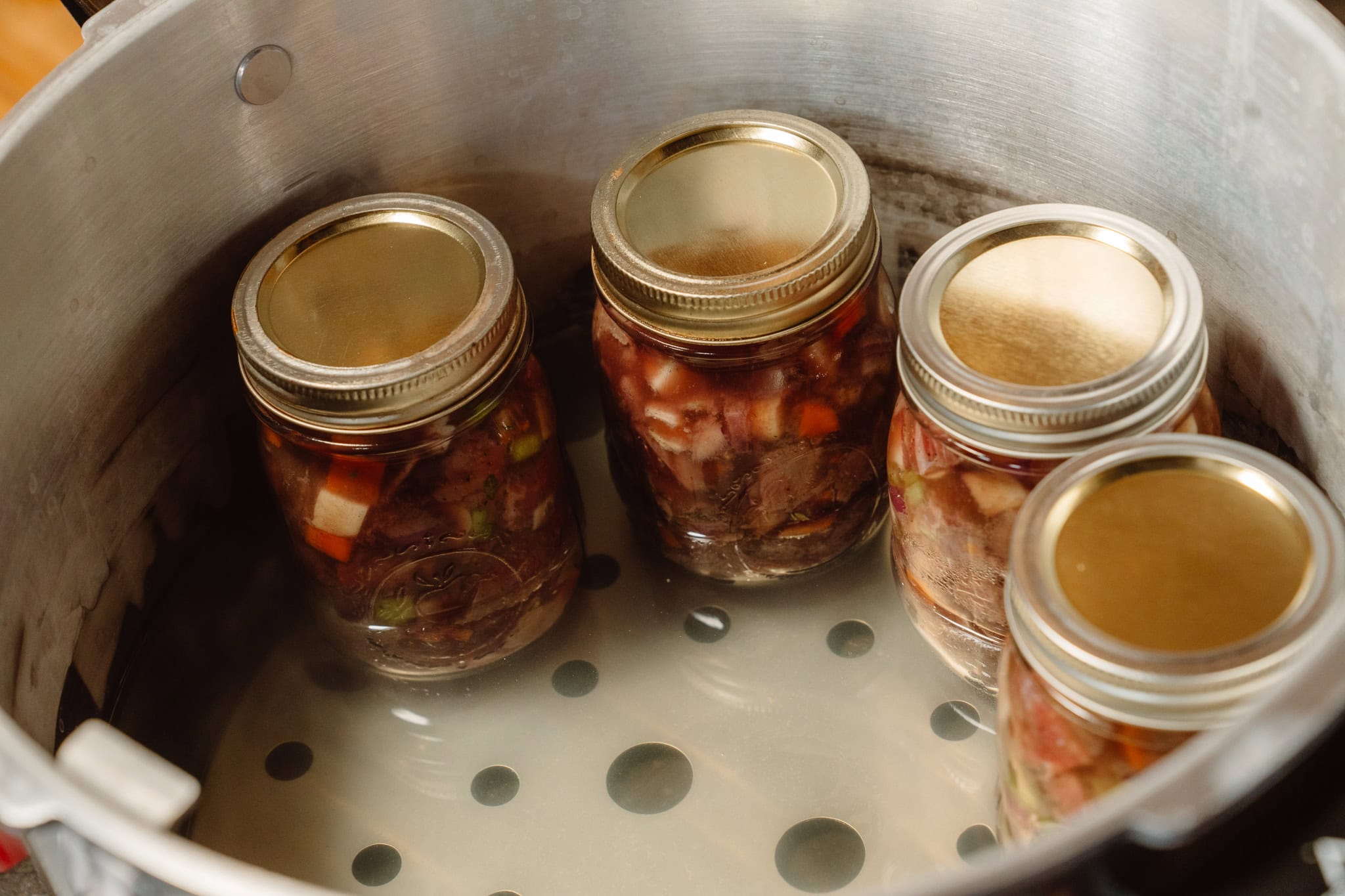
This hearty, wholesome meal combines beef chuck roast, potatoes, carrots, celery, onions, garlic, and seasonings that are mixed raw and packed straight into jars with no pre-cooking required.
Don’t forget to add a small amount of dry red wine in the bottom of each jar. Beyond adding some great flavor, that little bit of acid from the wine plays an important safety role. Meanwhile the alcohol cooks out during processing, which takes 75 minutes for pints or 90 minutes for quarts.
The result is a shelf-stable, heat-and-eat dinner that can be warmed up in as little as five minutes, and served over rice, noodles, or on its own. Who said full meals could only go in the freezer?
Do You Really Need Special Canning Salt?
Before we tackle a few FAQs, it’s worth giving a little more attention to one particular question that Carolyn has heard over and over again in her years of teaching hundreds of thousands at Homesteading Family: “I have heard I should use only pickling and canning salt. Is that true?”
In short, no. It’s a matter of personal preference. Here’s how Carolyn addresses the issue:
“Technically, you can use whatever salt you want… The reason that pickling and canning salt is recommended is because it has absolutely no additional minerals in it… Now, personally, I like the extra minerals. They're really good for our health and so I would take a little bit of cloudiness in my canned goods and trade that happily for having the additional minerals.”
Commonly Asked Questions About Canning Vegetables and Meals
Raw pack green beans process for 20 minutes in pint jars or 25 minutes in quart jars once the canner has reached the correct pressure for your elevation. Both fresh garden beans and frozen green beans work for these canning recipes. Don’t forget to leave one inch of headspace, and add half a teaspoon of salt per pint or one teaspoon per quart if you like.
Potatoes grow in the ground, and botulism spores naturally live in soil, so peeling removes skin that likely carries more of the bacteria. Peeling, along with washing before and after, reduces the risk by reducing the bacterial count going into the jar. Rest assured that following a tested recipe with adequate pressure processing times will kill off any remaining bacteria. This step is specific to root vegetables like potatoes, all of which should be peeled.
Yes, complete meals like a pot roast dinner can be pressure canned using the raw pack method, with all ingredients mixed and packed together uncooked into jars. Meals like this typically process for 75 minutes in pints or 90 minutes in quarts. The result is a shelf-stable dinner that only needs heating, making it a genuine time-saver on busy nights.
No, any salt is technically safe to use in canning. The reason canning salt exists is so people can pressure can jars that don’t have any cloudiness (canning salt is free of additional minerals that make the liquid in jars a little murkier). It’s a cosmetic difference, not a food safety concern, so you’re free to choose what you prefer between a clearer jar or the added minerals that some salts provide.
Properly sealed jars of green beans hold their best quality for roughly one to two years on a stable, dark shelf. They remain safe to eat well beyond that as long as the seal stays intact, though texture and nutrition decline over time. Rotating older jars to the front and using them first keeps your pantry at peak quality.
Raw packing means uncooked produce goes straight into the jar and is topped with boiling liquid before processing. Hot packing means the food is cooked first, then packed into the jar along with hot liquid. A tested recipe specifies which method to use for a given food, since the choice affects both safety and final texture.
One More Thing
We’ve come a long way from our first article, possibly fearful about using a pressure canner, to actually filling jars with green beans, potatoes, meat, and full dinners! That's no mean feat, and certainly an accomplishment to be proud of.
In our final article, we’ll close out the series with the troubleshooting questions every canner eventually runs into, from unsealed jars and bulging lids to cloudy liquid or siphoned jars, so you know exactly what to do the first time something doesn't go perfectly. See Article 5 [link] to finish the series, and watch Carolyn Thomas demonstrate every one of these projects in full in her Pressure Canning class.
Pressure Canning
Join Carolyn Thomas from Homesteading Family as she shows you how to fill your pantry with safe, healthy, and delicious pressure-canned foods!
Carolyn Thomas learned to preserve food as a child, watching her mother and grandmother turn homegrown fruit into jam on the kitchen counter. Today she and her husband, Josh, raise their eleven children on their family farm, growing and preserving much of what they eat. Carolyn has spent more than 15 years studying traditional domestic management arts, from herbal medicine to historical and modern food preservation, and she now teaches pressure canning through Homesteading Family and the School of Traditional Skills.