This article is the first in a series on Late Spring Beekeeping. If you’re ready to take the next step, check out our class on Natural Beekeeping with Adam Martin of Bee Kept.
Late spring’s abundance of food is a time of feasting for your bees, and their industriousness is a wonder to behold.
From what we can tell, they’re thriving, but there may be a problem slowly evolving inside the hive.
Key Decisions Entering Into Summer
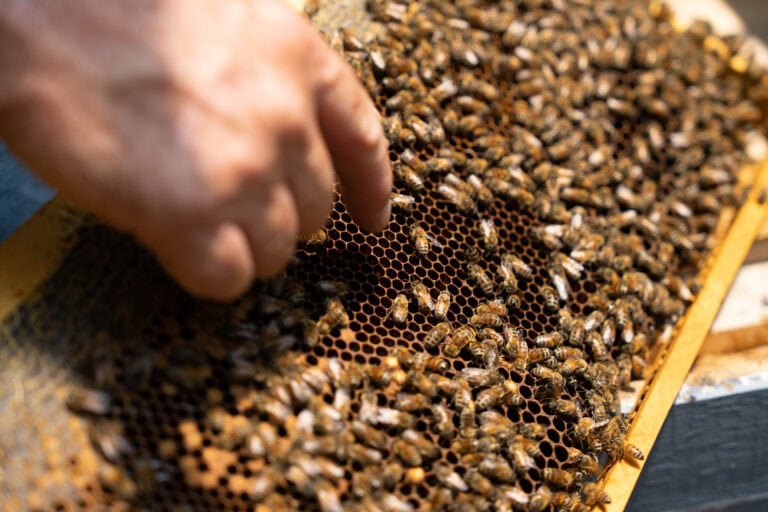
For beekeepers, there’s a sense of urgency come late spring. Nectar is plentiful and bee populations explode as colonies try to meet the demands of the busy harvest time and store up resources for the winter. But unmanaged growth can quickly lead to overcrowding in the hive.
When hive space becomes the limiting factor at this time of year, it raises two questions for every beekeeper:
- Will my bees swarm?
- Does my growing colony have enough space?
It’s not always clear how to navigate swarm season, and the stakes can feel high: either the hive thrives and produces honey aplenty, or half of the colony swarms away, reducing the beekeeper’s future honey harvest.
But there’s no need to panic! By learning to read the signs and crafting a clear weekly action plan, you’ll be able to understand what’s going on in the hive and better position yourself to prevent swarming – or at least to catch a swarm, if it comes to that.
Understanding What's Happening in Your Hive
So work the honey-bees,
Creatures that by a rule in nature teach
The act of order to a peopled kingdom.
– Shakespeare, Henry V
So begins Langstroth’s classic manual on beekeeping, and it’s fitting for our purposes to reflect on the same passage. There is an order in Creation, and a reassuring consistency from one year’s seasonal cycles to the next. Without fail, every year brings a time of plenty and a time of scarcity.
Bees know this rhythm by instinct, but it’s necessary that as beekeepers we understand these patterns as well.
Nectar Flow and the Late Spring Explosion
When the two or three-mile radius around their colony bursts with flowers, the worker bees labor tirelessly to bring in more food than at any other time of year. And it’s not just the worker bees that are hustling during nectar flow. The queen, too, is hard at work, laying at maximum capacity, up to an astonishing 1,500–2,000 eggs per day in the best conditions. Every cell in the colony is being put to use, some filled with eggs where new bees will develop, and others packed with nectar and pollen for food stores. The bees recognize that they must take advantage of this short window before the summer dearth arrives.
This phenomenon of intense honey production is known as the “nectar flow,” and it occurs over several weeks every spring when waves of nectar-producing plants bloom simultaneously. There is some regional variation, but in the Southern U.S., the peak is April to May, while in the more Northern states, it’s June to July, depending on local flora.
As you might expect, this is the season when your colony is most populated – we’re talking between 40,000 and 60,000 bees, depending on breed and management. It’s only a matter of time before the space crunch hits and the whole colony recognizes the hive is crowded.
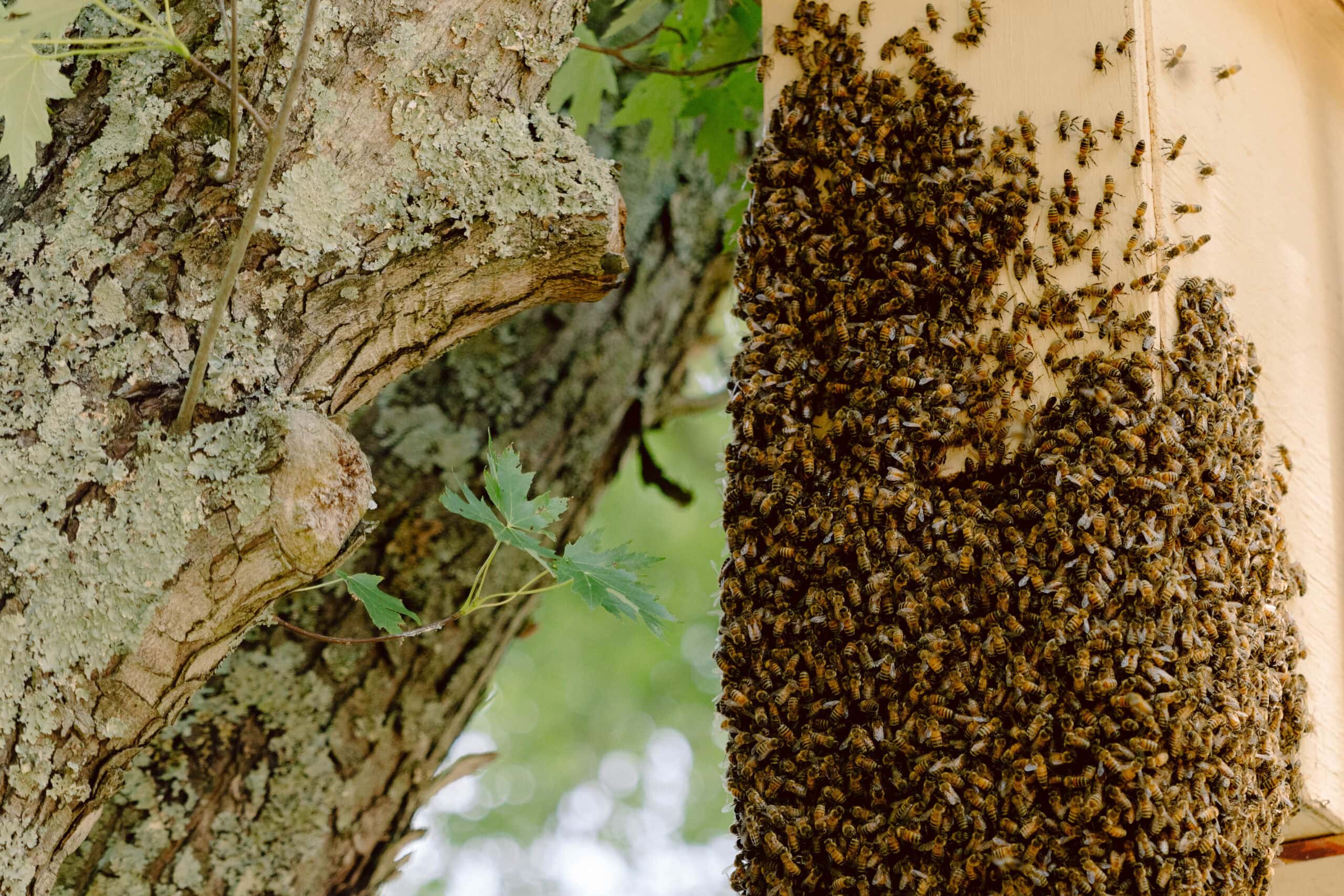
Over the course of two weeks, the bees decide to create a new queen by choosing an egg, feeding her royal jelly, and expanding her cell size. But there can only be one queen, so the colony forces the original queen out of the hive, along with about half of the worker bees. That’s when the hive will swarm, and the original queen with her bees go in search of a new home.
This can be discouraging to a beekeeper who’s caught unawares. But School of Traditional Skills instructor Adam Martin says this is nothing to worry about. In his class “Natural Beekeeping,” he brings years of experience on how to let bees be bees, and explains that bees are hardwired to swarm when they’re healthy, crowded, and enjoying excellent foraging. In short, swarming can be evidence that things are going well!
As if that’s not reassuring enough, Adam shares how an attentive beekeeper can learn to read the signs that a colony is about to swarm and take preventive action.
Natural Beekeeping
Join Adam Martin from the Bee Kept as he shows you the natural sustainable way to keep bees!
Swarm Prevention: Recognizing the Signs and Taking Action
Though swarms may be a natural, healthy occurrence, there’s no denying that it’s frustrating to lose over half your workforce right before the main honey flow.
As with any natural cycle, there are early warning signs that the hive is about to split. These are the things to watch out for if you’re hoping to keep your bees this year.
Early Warning Signs to Look For
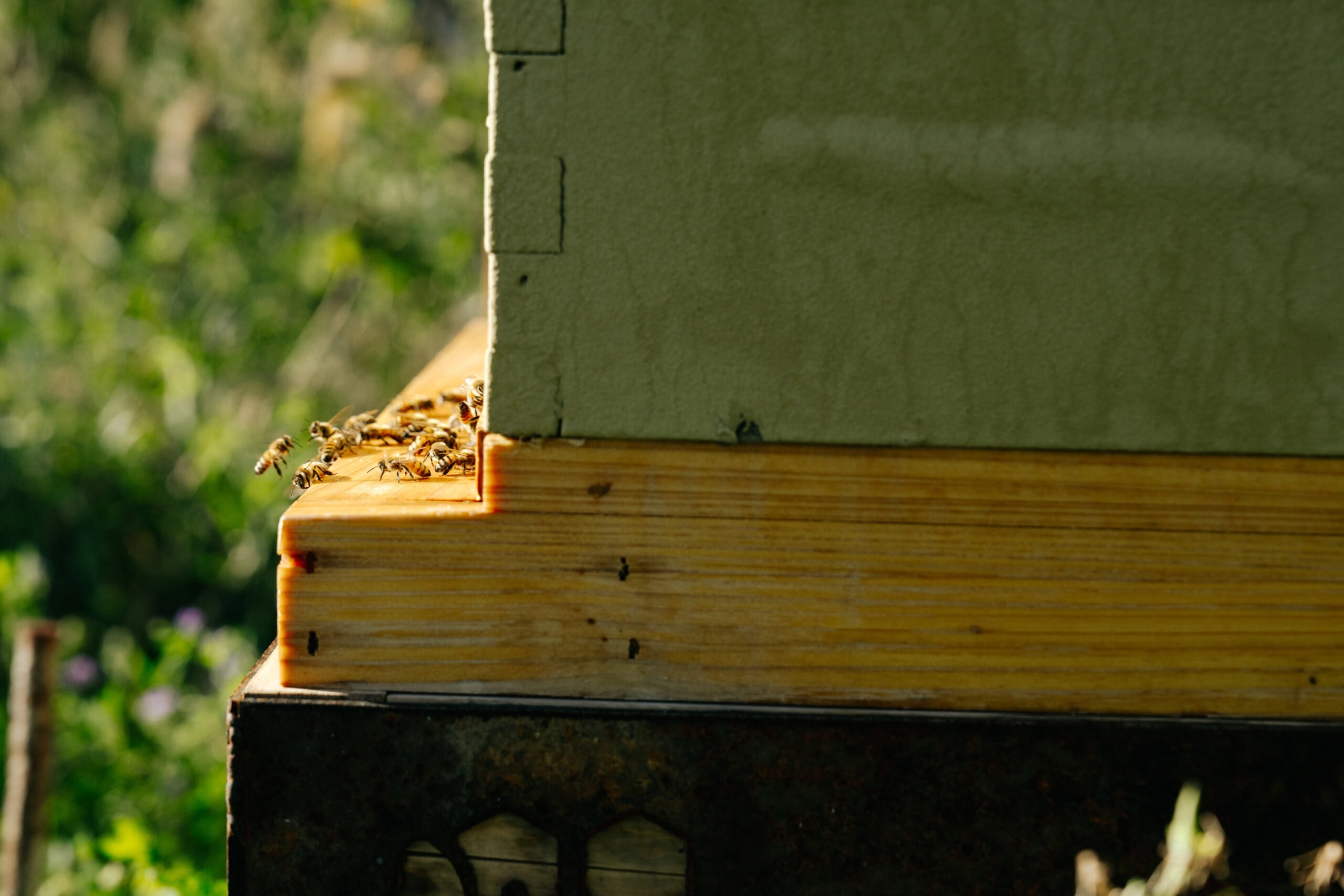
- Excessive Bearding – Large clusters of bees frequently hanging outside the entrance to the bee box in a beard formation, combined with increased aerial activity, especially in the evening (regular bearding can be caused by too much heat or humidity inside the hive, so the overall context matters)
- Queen cells – Swarm cells appear on the bottom or sides of frames, often appearing as elongated, peanut-shaped clusters of at least five cells hanging from frame edges (not the top, which signals supercedure, or the replacing of an old queen with a new one)
- Reduced brood space – The brood nest feels compressed and is surrounded by honey (the honey “rainbow” closes in), because in preparation for swarming, the bees fill the brood comb with nectar to reduce the number of eggs the old queen can lay
- Frantic foraging – Tons of bees coming and going constantly with heavy pollen loads
If you see multiple signs at once, and especially if it’s a warm, sunny day, take action immediately – you're in the swarm window.
The good news? If you’re interested in trying to prevent your bees from swarming, there are several options.
Prevention Tactics That Actually Work
There are two approaches to managing the yearly swarming risk. The first is to routinely observe your bees and try to catch issues before swarm signals appear. But life happens, and if you find yourself needing to act fast, here are a few things you can try:
- Add space early – Don't wait until you see queen cells. If 8 out of 10 frames are drawn and in use, add space now (more on this below).
- Ensure good ventilation – Stuffy hives can trigger swarming, so creating space for air to flow through the hive can make your bees more comfortable and keep them in place.
- Consider a split – If you want to increase your colony count, splitting the hive in two is an option. It’s a controlled form of swarming in which you keep both halves.
You’ll be tempted to open the hive over and over, but don’t overmanage. Constant inspections stress the colony and foster more aggressive behavior on the part of your bees. (For more on how to inspect the hive without bothering your bees, read the next article in this series here.) Observe as much as you can from the outside, and get into the hive only when absolutely necessary.
One intervention that requires opening up your hive is the addition of more frames. Since expanding hive space is the top recommendation for preventing swarming, it’s worth exploring in more detail.
Managing Hive Space During Nectar Flow
In the vertical hives typical of conventional beekeeping, adding space means stacking a honey super on top of the brood box to give the bees more room for honey storage. But natural beekeepers find that horizontal hives are a better option, as recommended here.
Regardless of hive style, you need to know when to add more space. Then we can consider what effective space management looks like in a vertical or horizontal hive.
When to Add Space: The 80 Percent Rule
Giving bees the right amount of space can be a delicate balancing act. You want them to have enough to work ahead, but not so much that they can’t maintain ideal internal temperatures in the hive. The risk of too little space – the feeling of being “almost full” – is a trigger for bees to start preparing to swarm.
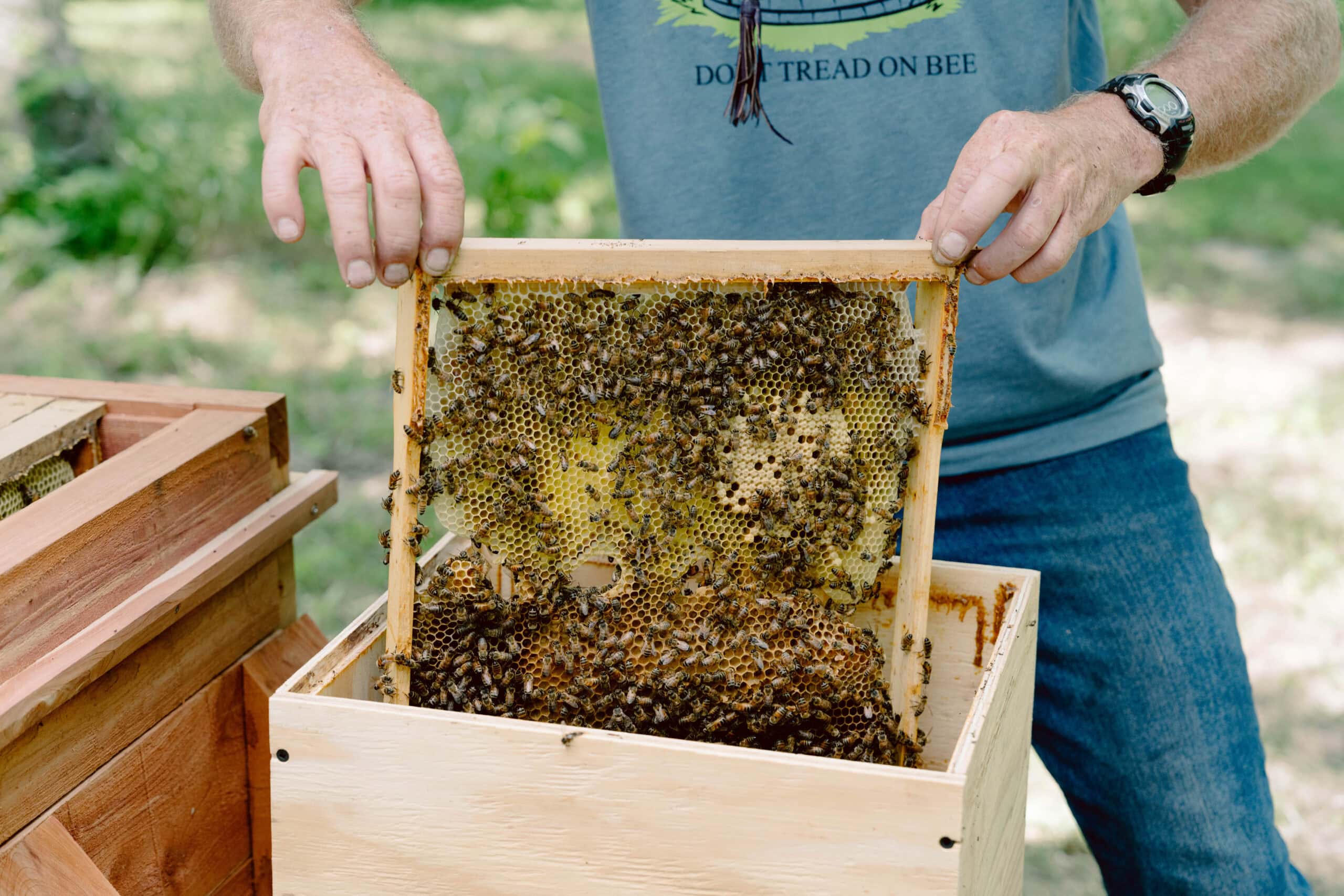
Our job as thoughtful beekeepers is to observe what’s going on outside the hive and only take a quick peek if we have good reason to. If several signs are present, including heavy traffic and lots of bees going to and fro, open up the top frames to check what percentage of the space is used up. The simple rule of thumb most beekeepers use is 80 percent: If 8 out of 10 frames are drawn out and being used (whether for comb, brood, or stores), it's time to add space.
Adding Space to Vertical Hives: How to Add a Honey Super
In a vertical hive, adding space means you’re looking to see if the bees need a honey super. A honey super is an additional box that gets stacked on top of the brood box and is dedicated to honey storage. Just place the super on top – no need to rearrange frames or stress the bees. If you so choose, you can install that honey super with a queen excluder, a screen that keeps the queen in the lower boxes so she doesn't lay eggs in your honey frames.
As far as the frames that go inside the honey super, beekeepers have several options, but we’ll focus on two: drawn comb and foundation. If you have frames with naturally drawn comb (in other words, comb that has already been built out in the past by your bees), use that so the bees can start filling the cells with nectar immediately. The alternative is to use foundation, which are blank frames that require bees to build comb first before storing nectar, lengthening the overall process. But the bees are perfectly capable of doing it, and it’s generally preferable to have them drawing their own comb versus buying a plastic or wax molded comb frame.
Adding Space to Horizontal Hives: Adjusting the Follower Board
For a natural beekeeper using a horizontal hive, adding space is as simple as checking if the follower board needs to be moved to give the bees more frames. The follower board is a movable divider that lets you control how much hive space the bees have access to.
It’s important to start a colony in a space that’s well-suited to their size. For a beginner beekeeper with an average-sized swarm, this may be between 5 and 8 frames. But as the colony expands, slide the board back to give them the room they need.
Around late spring, if bees have filled the brood area and are building into the next frames, move the board to give them two to three more frames. In his class on “Natural Beekeeping,” Adam Martin recommends checking the frame nearest the follower board. If it's fully drawn and being used, move the board.
But what if, despite your best efforts to prevent swarming and add more space, your bees swarm anyway? All is not lost! You still have the remaining colony, which will raise a new queen and rebuild. Yes, your honey harvest will be smaller, but the colony will survive.
And there’s one more strategy you can try: catching your own (or another) swarm.
Catch Your Own Swarm
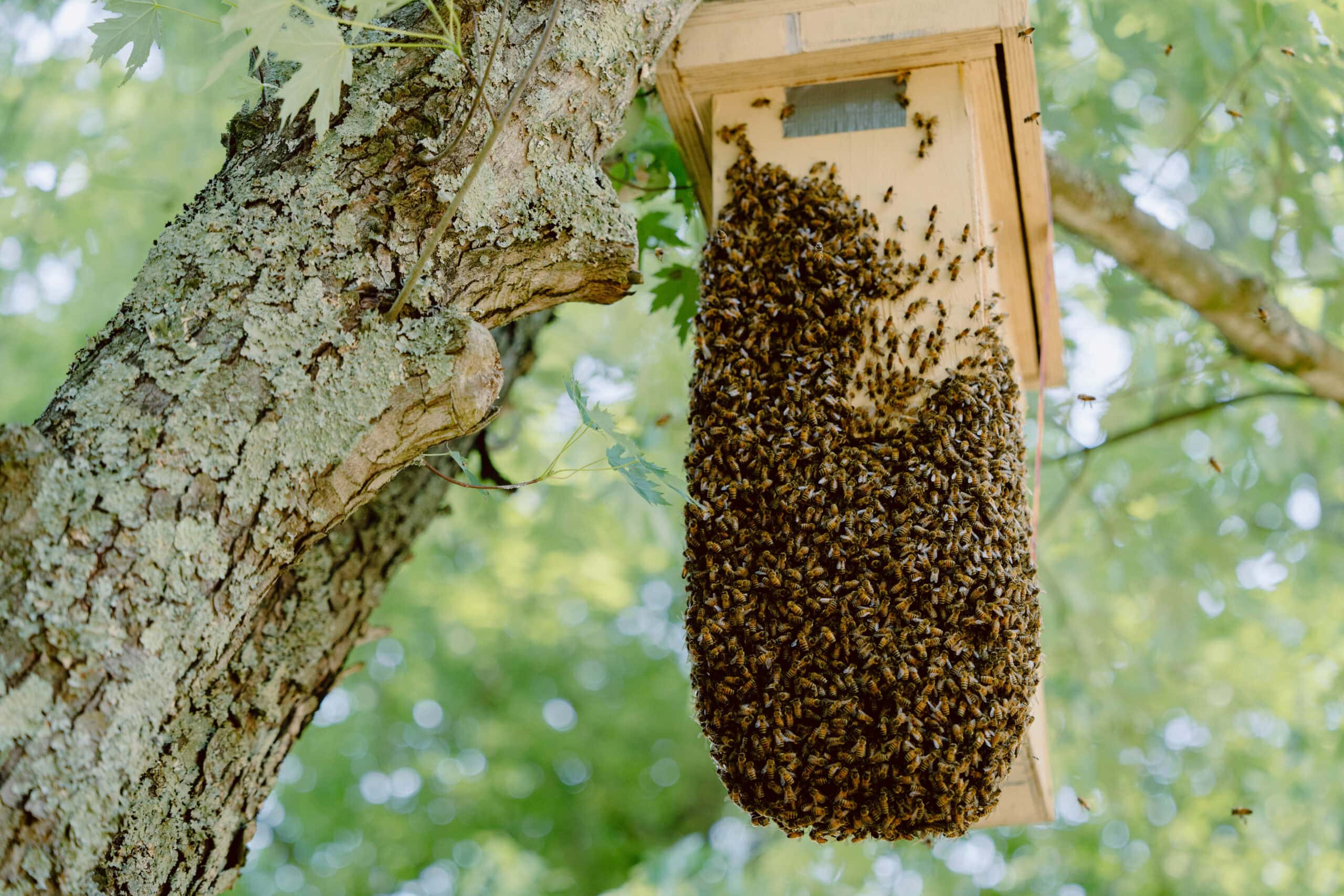
If your bees have swarmed, there is still hope of catching them (or possibly a different local swarm). Set up a swarm trap, and you may just get that swarm of bees to move in. Simply fill the trap with frames from an empty hive and bait the box with lemongrass essential oil.
You can place a swarm trap as low as six feet off the ground, and as high as you want. The best place for a swarm trap is where you feel comfortable installing and then removing it. But to avoid disorienting the bees, locate your trap within 15 feet of the hive you’re planning to put them in.
Read more about how to build and place a swarm trap in this article. For instructions on using and building a swarm trap, see our class on “Natural Beekeeping.”
One More Thing
Beekeeping can be a high-stakes and time-sensitive business at certain points of the year.
Perhaps the trickiest period is the swarm season peak, which Adam Martin calls his personal favorite. But with a little advanced planning and the weekly habit of attending to your bees, you can handle whatever the next swarm season throws at you.
And when you find that you really must inspect, read the next article in this series to prepare yourself mentally and physically.
If you’re ready to get the kind of practical, step-by-step guidance that you’ve always wanted from a veteran beekeeping mentor, look into Adam Martin’s class, “Natural Beekeeping” at the School of Traditional Skills. This is a deep dive into all things beekeeping and offers a refreshingly simple and common-sense approach for the beginner and experienced beekeeper alike. If you’ve been keeping bees the conventional way with chemicals, sugar water, and an intense inspection schedule, or were thinking that this was the only possible method, you will love Adam’s class.
Natural Beekeeping
Join Adam Martin from the Bee Kept as he shows you the natural sustainable way to keep bees!