This article is the second in a series on Summer Preservation. See article one here, article three here, and article four here. If you’re ready to take the next step, check out our classes on Water Bath Canning with Mary Bryant Shrader of Mary’s Nest and author of “The Modern Pioneer Cookbook,” Dehydrating with Darcy Baldwin of The Purposeful Pantry, and Pressure Canning and Freeze-Drying with Carolyn Thomas of Homesteading Family.
The Analysis Paralysis Problem: Too Many Preservation Options?
Nowadays, most folks think to Google “best method for preserving green beans,” but that’s not really the right question. You see, there isn’t one best method. Some foods lend themselves better to one preservation strategy over another, while others are flexible and can benefit from either.
The reality is that the best preservation method depends on four key factors: your end goals for that food, the time you have available, your storage space (freezer vs. pantry), and your equipment. We'll come back to those factors throughout this article – they're the same framework experienced preservers use every season.
In this article, we'll do a quick side-by-side comparison of the two methods, look at a list of foods with recommendations for how to preserve each, and walk through several FAQs along the way.
How do you decide what to can vs. freeze?
Canning and freezing are two different preservation strategies that each have their own pros and cons. We touched on these in our first article on preserving strawberries, but here we’ll dive deeper into both canning and freezing.
To decide when to use which method, it helps to first understand each method's unique characteristics and how they compare.
Canning: Pros and Cons
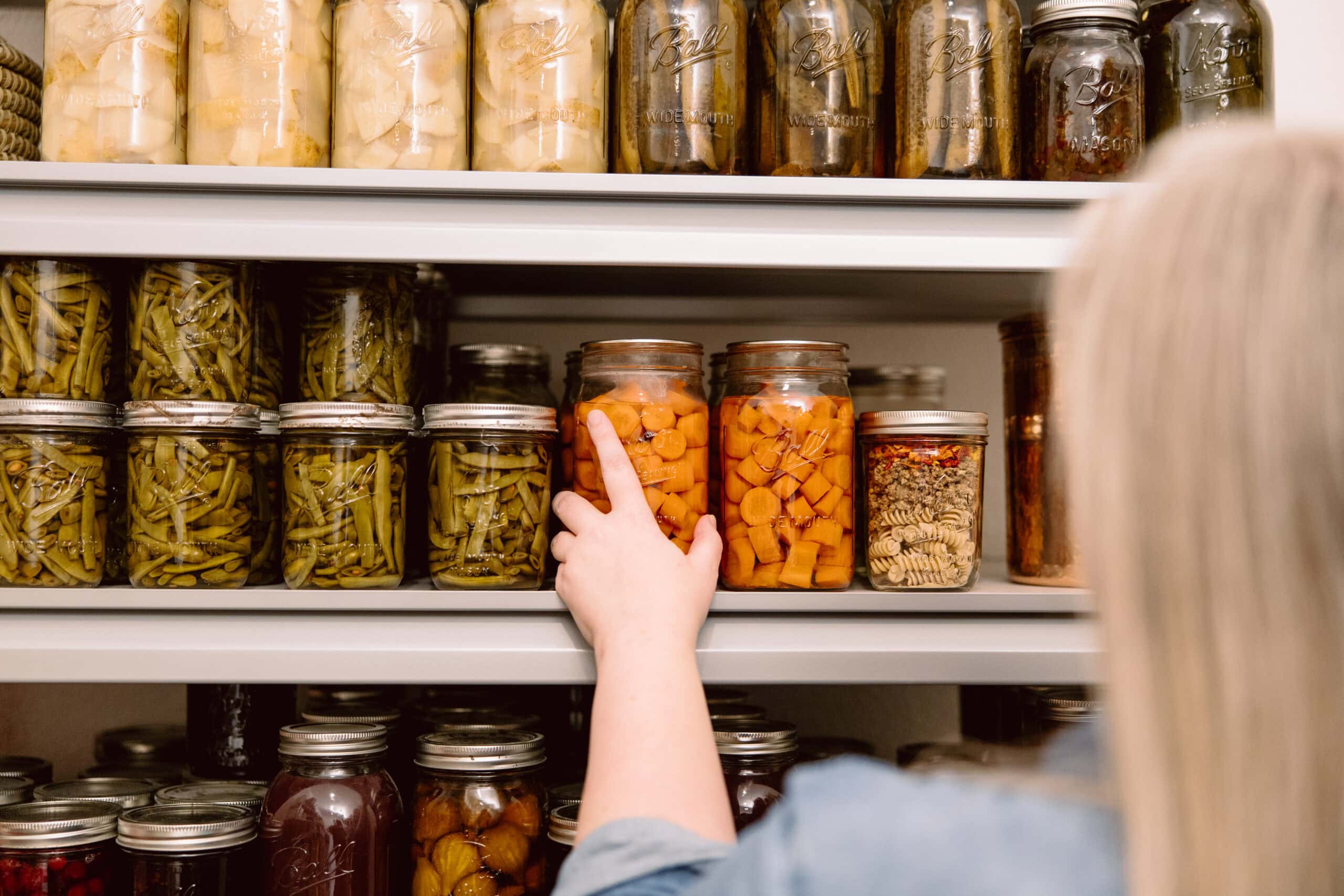
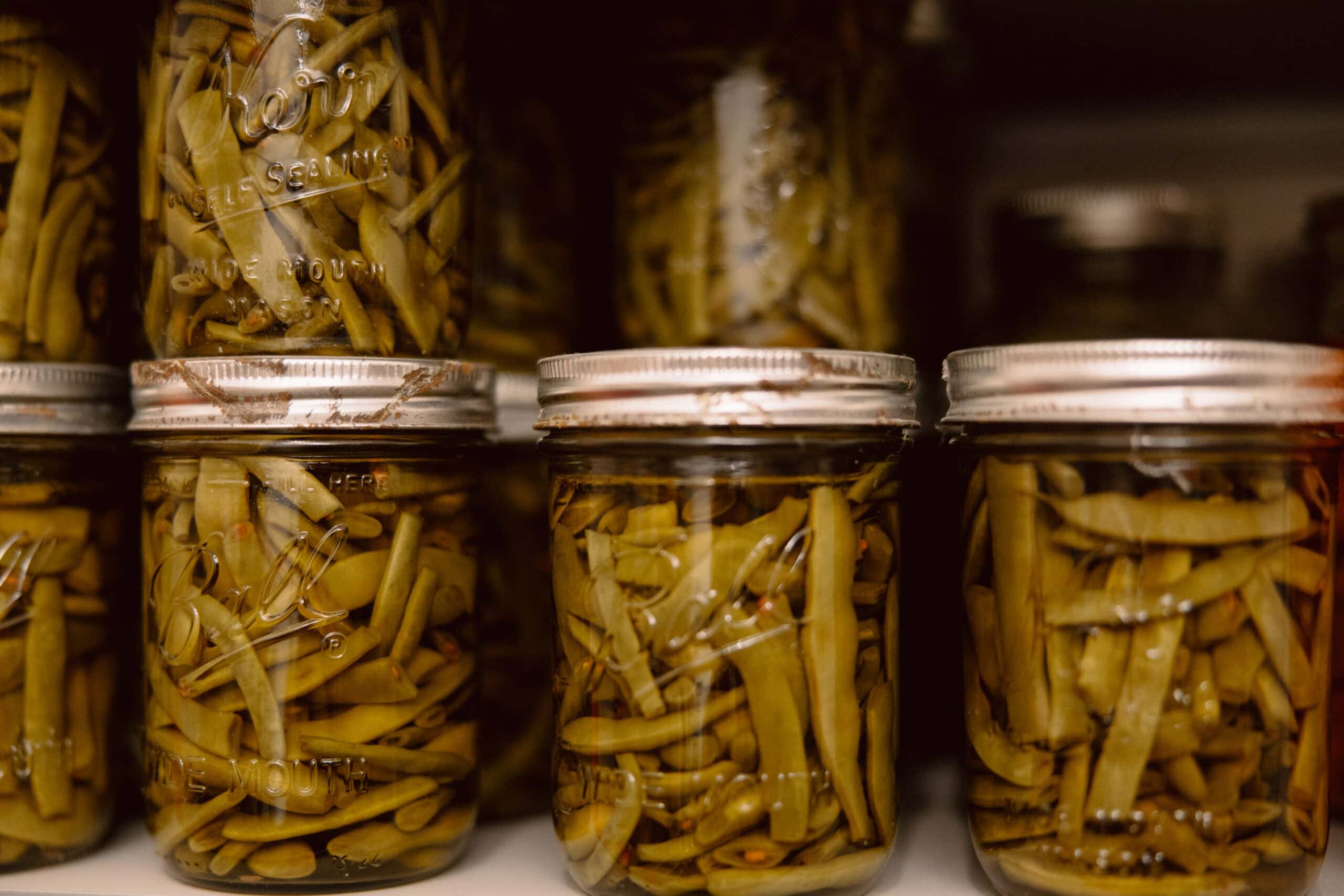
Canned goods are shelf-stable for 12–18 months, easy to use straight from the shelf, and look beautiful lined up in a pantry.
Canning could be the right choice for you if…
- You lack freezer space
- You're often dealing with power outages
- You like the ready-to-eat convenience that canned food offers (it's as easy as open, heat, and serve)
- You want to use your attractive, homemade canned jars for gifting or bartering
There's something deeply satisfying about a pantry stocked with jars you put up yourself, and unlike a full freezer, those jars don't depend on electricity to stay safe. If you’re in a storm-prone area or building long-term food security, canning offers a kind of resilience that freezing simply can't match.
Of course, canning has its own downsides relative to freezing:
- It's more time-intensive, and the process can't be rushed
- It requires some minimal equipment investment upfront, which could be greater if you decide to go for a water bath or pressure canner
- It changes the texture of food, especially vegetables, which end up much softer than their fresh counterparts
- There's a safety learning curve that can be intimidating for a beginner, since tested recipes must be followed exactly and without improvisation
Freezing: Pros and Cons
Freezing could be the right choice for you if…
- You’re looking for the fastest possible option (we’re talking 30–60 minutes total)
- You want your food to retain its nutritional properties since freezing does this better than just about any other method
- You prefer the texture to stay closer to that of fresh foods (especially in the case of vegetables like peas and corn)
- You want a beginner-friendly method that’s hard to mess up
The major downsides of freezing food compared with canning are that:
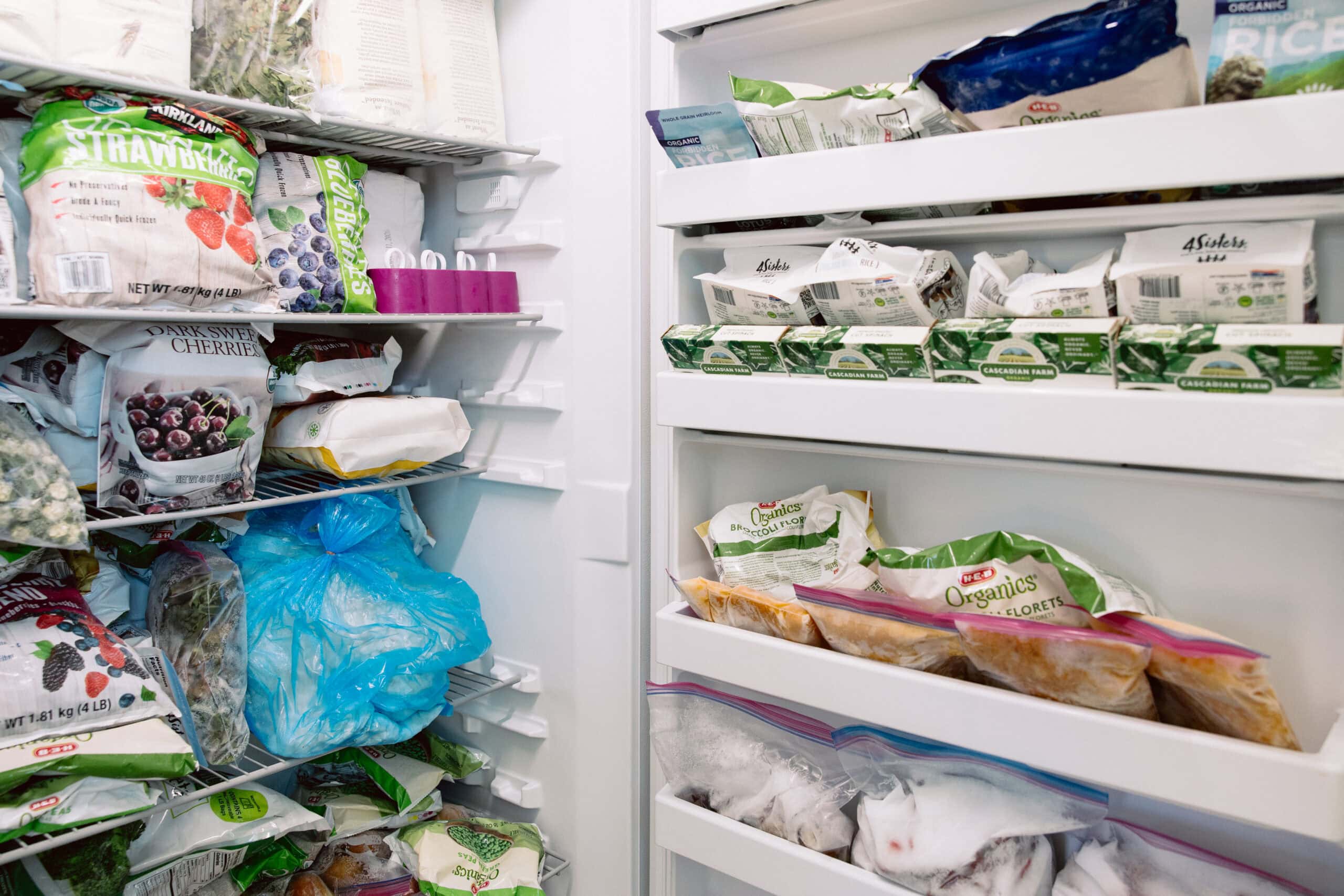
- It requires freezer space and electricity
- It’s reliant on electricity, making it a less resilient option that’s vulnerable to power outages (depending on how full your freezer is, in a power outage, your food might start to thaw within just 12–24 hours)
- The shelf life is limited to 8–12 months, since quality declines after that (though many foods may still be edible)
- Freezer burn is a real risk if food isn't packaged well
Now that we’ve looked at the advantages and disadvantages that each preservation strategy offers, let’s consider how someone with experience would decide which to go with given the food in front of them.
Should I can or freeze?
When you’re facing a mountain of peas or potatoes, you just want to know what preservation method works for that item. Certain foods are best preserved by canning, others by freezing, and some do fine with either. The table below provides a short list of popular foods alongside the recommended preservation strategy (or strategies, in some cases).
Keep in mind that the term “canning” encompasses both water bath canning and pressure canning, but these methods are not interchangeable. Water bath canning is intended for high-acid foods (think berries and pickles), while pressure canning is necessary for low-acid foods (like meat and most vegetables). As Carolyn Thomas emphasizes in her “Pressure Canning” class, if a food is marked under the Pressure Canning column below, it’s not an option to water bath can it instead. And she would know, since she has been teaching hundreds of thousands of people over the past 10 years how to pressure can successfully through her website and YouTube channel, “Homesteading Family.”
| Food Item | Canning | Freezing | |
| Water Bath | Pressure | ||
| Berries | X | X | |
| Broccoli | X | ||
| Carrots | X | X | |
| Corn | X | X | |
| Green Beans | X | X | |
| Greens, blanched | X | ||
| Peas | X (by far) | ||
| Peppers | X | X | |
| Pickles | X | ||
| Potatoes | X | X | |
| Squash | X | ||
| Stone Fruits | X | X | |
| Tomatoes | X | X | |
After years of working through their harvests, many canners have memorized the list. If you’re not there yet, just print out this chart, tape it to the inside of a kitchen cabinet, and use it as a reference guide.
One of the most important things to know before you start canning is that you should always use tested, approved recipes from trusted sources. Unlike cooking, canning has real safety stakes, where the wrong recipe or process can result in spoilage or, in rare cases, serious foodborne illness. The good news is that the National Center for Home Food Preservation (NCHFP) maintains a free, comprehensive database of tested recipes for everything from tomatoes to green beans to jams. When in doubt, start there. Visit the NCHFP at nchfp.uga.edu.
Pressure Canning
Join Carolyn Thomas from Homesteading Family as she shows you how to fill your pantry with safe, healthy, and delicious pressure-canned foods!
Deciding Between Canning and Freezing
When in doubt, here's a simple rule of thumb: freeze what you'll eat in the next six months, and can what you want to store for a year or more. Freezing gives you fresher taste and faster turnaround; canning gives you shelf-stable security that doesn't depend on a working freezer.
And when the harvest is coming in faster than you can deal with it? Freeze first. Freezing is always the faster route, and frozen vegetables can absolutely be thawed and canned later. So if you're overwhelmed in July, throw everything in the freezer and save the canning for a slow winter afternoon.
Let those four factors — end goals, time, storage space, and equipment — guide you, and let the most limiting one make the decision for you. Freezer packed? Sounds like you'll be canning. Short on time? Freezing is the way to go.
Let's look at two different hypothetical gardeners and consider how they tackle their green bean and tomato harvests.
Scenario one: Emily’s Green Bean Preservation Strategy
As Emily’s green beans start to come in, she sets aside the first picking to freeze. Those three pounds (1.4 kg) will be for eating soon, served blanched or sautéed as a side dish.
A few weeks later, once the bulk of the crop is ready, she will transition to canning the green beans. The 10 pounds (4.5 kg) she harvests during that second picking will go into the pantry for winter soups and casseroles.
As green bean season winds down, Emily will again freeze a batch of green beans – this time 5 pounds (2.3 kg) – for the sake of variety and to replace part of the frozen first picking that her family has begun to eat through.
She likes the flexibility of preparing green beans both ways – in soups or as a side – so she uses both preservation methods. This works for her and her family, since they enjoy eating green beans in any form, whether from the freezer or the pantry.
Scenario two: Joan’s Tomato Preservation Strategy
This year, Joan is gearing up for a large tomato harvest. She planted several varieties to produce throughout the summer and into the early fall.
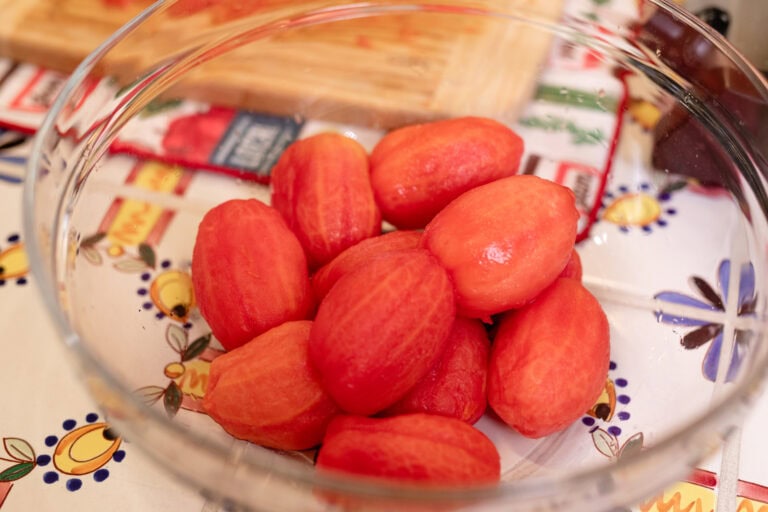
When the early tomatoes are ready to pick, she decides to freeze them whole because she doesn’t have enough for a canning batch just yet, and she’s determined not to go through the effort of canning until she has a large enough haul.
Once mid-summer arrives, her tomato plants hit their peak, and she’s able to harvest 30 pounds (13.6 kg). With this big batch, it’s worth the time to can these as sauce and salsa. But the late-season harvest is modest, by comparison – just a couple of pounds – so she again finds herself freezing this small amount.
These are just two possibilities for how someone might approach a large green bean or tomato harvest. They’re not the only options, and it’s worth stating that there’s really no wrong way to tackle this preservation dilemma. The key is to notice that flexibility and switching back and forth is totally normal. The goal is food on the shelf or in the freezer – not perfection.
FAQs
Yes! You can use both methods for the same harvest, or use them in sequence. For foods that do fine with either method, you can split your harvest, canning part and freezing part. The chart above shows many foods for which both strategies work well.
Canning wins for soups and stews. Canned vegetables are already shelf-stable, ready to dump directly into a pot, and don't take up valuable freezer space. Green beans, carrots, potatoes, and tomatoes all can beautifully for use in soup. The softer texture from canning actually works better in dishes that are cooked over a long period.
On the other hand, freezing is a more versatile technique and better for stir-fries, casseroles, side dishes, or any time you want vegetables that taste nearly fresh.
Freezing is much faster. If there’s no blanching required, you could get some vegetables stored in the freezer in as little as 30 minutes. If you need to blanch, cool, and drain, assume it will take up to an hour. But even with blanching time, many people lean on this option when the harvest is coming in fast and furious.
Tip: If you need to buy yourself more time before you start canning and are temporarily in need of more freezer space, ask around to see if any neighbors would be willing to store part of your harvest in exchange for some of your homegrown preserved food. Building community-level resilience starts with befriending your neighbors!
In general, canning takes significantly longer, requiring 2–4 hours per batch to prep, fill jars, process in the canner, and cool. This includes the mandatory processing time, which must never be rushed.
Again, when overwhelmed, the smart strategy is to freeze everything now (the fast option), then can those vegetables during the winter when you have more time. You can absolutely use frozen vegetables in your canning, just thaw them first.
An average chest freezer (15–20 cubic feet) holds 400–600 pounds of food, or enough for a year's worth of vegetables for a family of four if you're strategic.
If your freezer is already full or you don't have one, then canning is your preservation path. Jars sit on pantry shelves and survive power outages. If you live in a storm-prone area and often face downed power lines, canned foods will be your lifeline.
If you have abundant freezer space, then opt for freezing. It’s faster, easier, and retains more nutrition than canning.
For freezing, you only need two things: an upright or chest freezer, and freezer bags or containers.
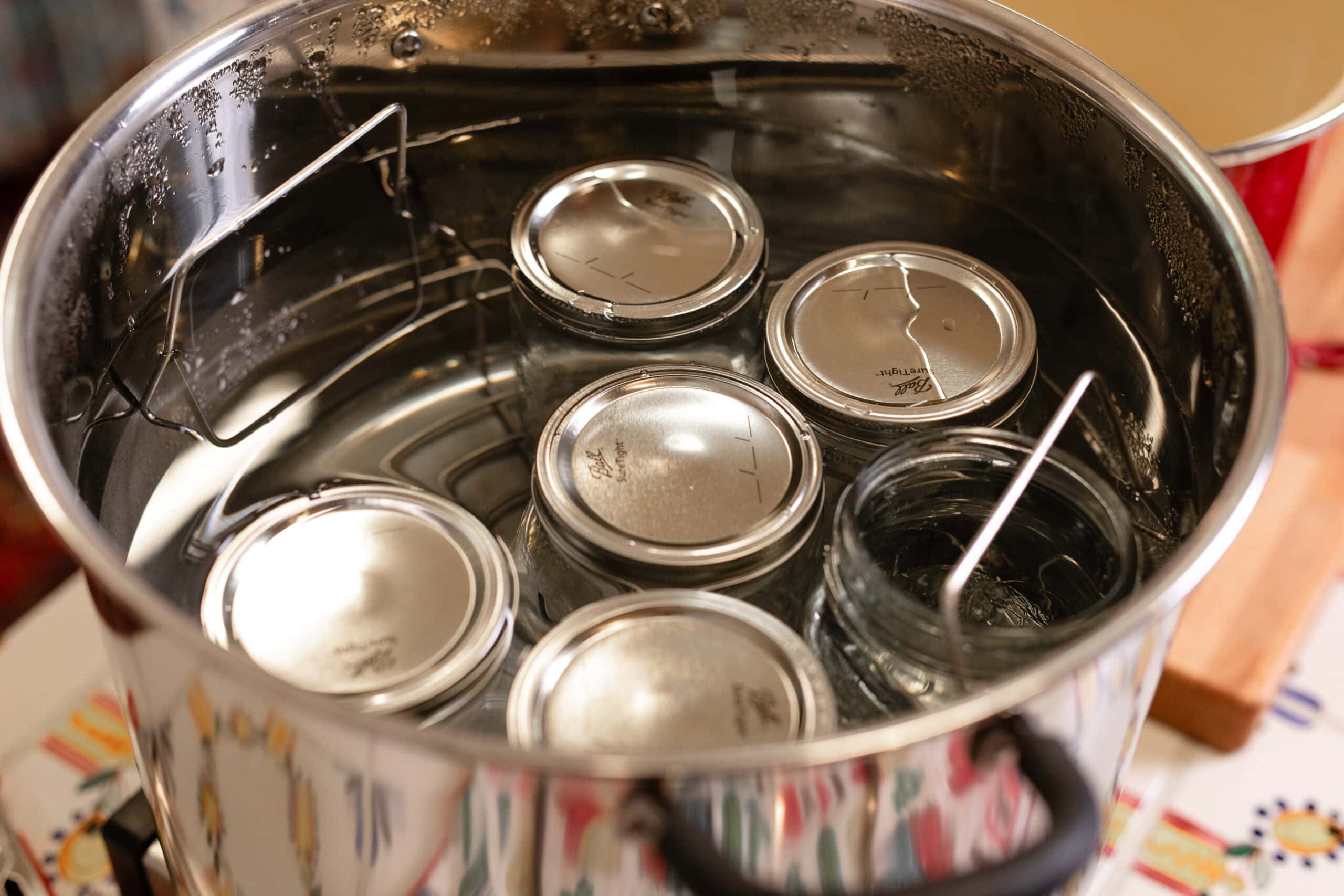
For water bath canning, you need:
– Large stockpot (any pot that fits jars with 2 inches of water over the tops)
– Canning jars, lids, and bands
– Jar lifter or sturdy tongs
For pressure canning (low-acid vegetables), you need:
– Pressure canner (a specialized piece of equipment, $80–200)
– Jars, lids, bands
– Jar lifter
What if you’re not ready to buy canning equipment? Freeze everything this year. Commit to learning how to can next year when you're ready to invest the time and money. As we’ve discussed, your frozen vegetables can be canned at a later date if needed.
One More Thing
Just because a food can be preserved multiple ways doesn't mean you have to use all of them. Be realistic about your future cooking plans and consider the way your family actually eats today. If your kids love fresh bell peppers but push cooked ones around their plate, load your freezer with peppers and skip the canning. If your family never touches green bean casserole, canning a year's worth of green beans probably isn't the best move.
The goal is a pantry and freezer that your family will actually eat their way through, not a perfectly preserved harvest. Start with what feels manageable, and add methods as your confidence grows.
If you're feeling ready to try canning for the first time, we'd love to point you toward a great place to start. Mary Bryant Shrader of Mary's Nest, author of The Modern Pioneer Cookbook, walks you through water bath canning step by step in her class right here at the School of Traditional Skills. It's approachable, encouraging, and exactly the kind of foundation that makes everything else click. Check out Mary's Water Bath Canning class here.
Water Bath Canning
Fill your pantry with healthy, delicious “fast food” you make at home! Discover water bath canning and make safe, tasty canned fruits and veggies so you always have a delicious supply of tomatoes, pickles, jams, pie fillings, green beans, and much more!